

Daughters of the Unwritten, Episode III: Inherited Silence by Giulia Costantini
Photo credits: Image 1 Donatello Trisolino Image 2: Ylanite Koppens
This essay continues Giulia Costantini's ongoing series, Daughters of the Unwritten, an exploration of women's knowledge traditions, historical memory, and the spaces where wisdom survives beyond institutional authority.
In Episode I, The Witch as Body, Costantini examined how women's bodies became sites of suspicion, control, and accusation during periods of witch persecution. Episode II, Marginal Geographies, expanded that inquiry into the rural landscapes and peripheral territories where alternative forms of knowledge endured outside official structures.
Episode III, Inherited Silence, turns toward what remains after persecution itself. If knowledge was driven from the body and marginalized within the landscape, how did it survive? Costantini explores silence not as absence, but as transmission - a form of memory carried through gestures, warnings, habits, and family traditions. Moving beyond the archive, she asks what histories continue to live beneath language, preserved not through documentation, but through inheritance.
Together, these essays trace the pathways through which women's knowledge persisted: through bodies, through places, and through the silences passed from one generation to the next.
Episode III
Inherited Silence
Not everything that was lived was written. Many women left no books, no letters, no signatures that history could archive. What remained were fragments: warnings, gestures, silences passed quietly from one generation to another. Persecution does not only punish bodies. It also teaches people how to disappear.
When certain kinds of knowledge become dangerous, speech changes. Words grow smaller. Meanings become indirect. What was once spoken openly begins to circulate through whispers, proverbs, or half-explanations that conceal more than they reveal. Silence becomes a method of survival.
Historical archives often appear solid and authoritative. They promise documentation, evidence, clarity. But archives are also shaped by power. In the history of witchcraft accusations, many of the documents that survived were produced by courts, inquisitors, and clerics. The voices that remain in those records are often filtered through interrogation, fear, and coercion. What we read is not the full voice of the accused. It is the voice that was allowed to remain.
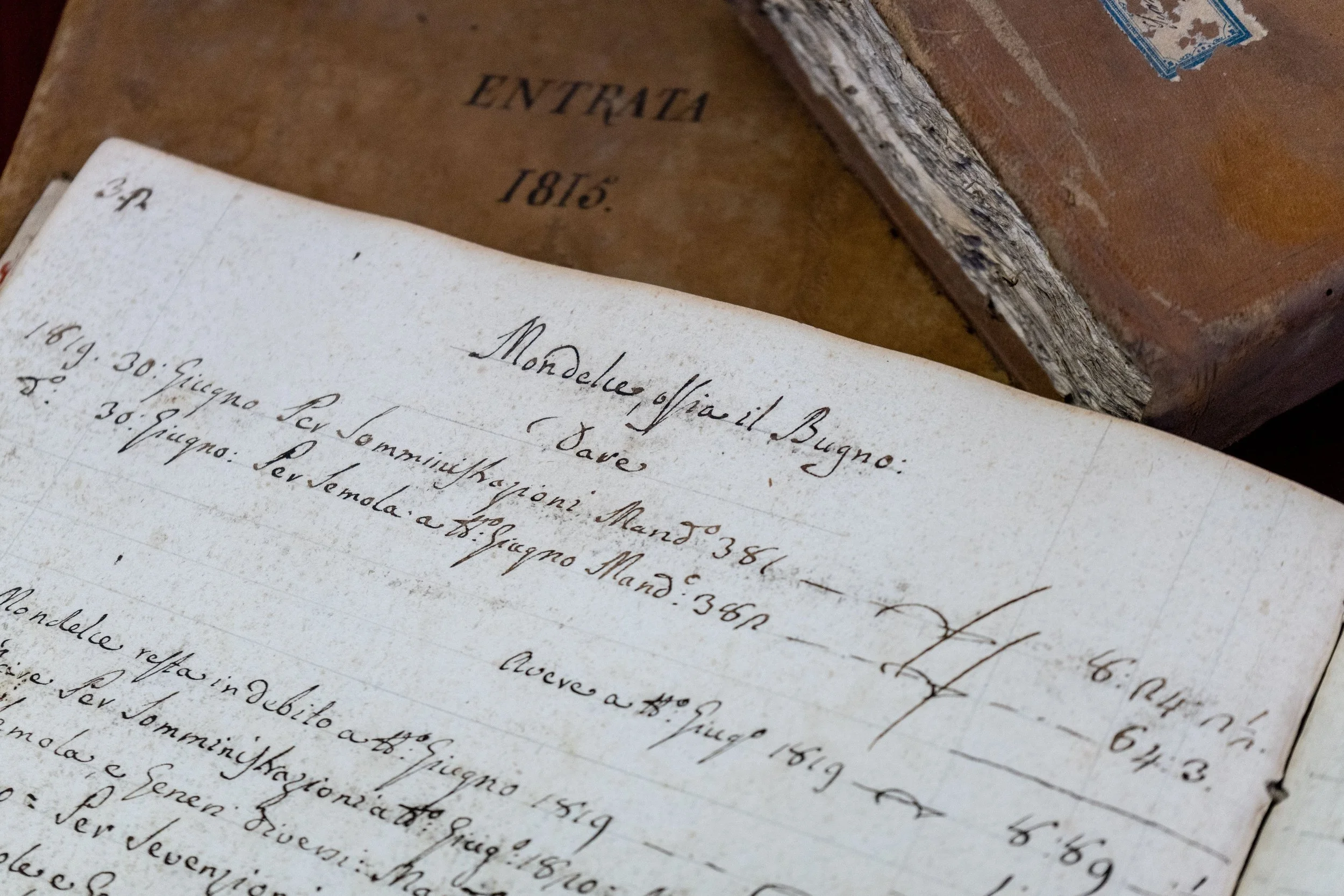
Even that fragile record has not always survived intact. When institutions collapsed or political orders shifted, entire collections of documents disappeared. In some parts of Southern Italy, records connected to inquisitorial activity were destroyed during reforms that dismantled those structures. With the burning of those registers, many names vanished.
The women who had once stood in those rooms, accused and questioned, disappeared a second time, this time from history itself.
Silence does not mean absence. It means displacement. When knowledge cannot remain in writing, it moves elsewhere. It migrates into gestures, habits, and emotional patterns that persist even when their origins are forgotten.
In many families, certain warnings circulate without explanation. Do not speak too loudly about certain things. Do not attract attention. Do not reveal what you know. These instructions often appear ordinary. Yet they carry the sediment of older fears. The memory of persecution does not always remain as a story. Sometimes it remains as a posture: the instinct to remain discreet, to observe before speaking, to protect knowledge by keeping it partially hidden.
Maternal lines have often carried this kind of transmission. Not necessarily through explicit teaching, but through atmosphere. A way of lowering the voice when discussing certain topics. A reluctance to explain where certain practices come from. A quiet insistence that some things are better kept within the family. This is not simply tradition. It is memory reorganized as caution.

In regions such as Ciociaria, where rural life preserved strong family networks and oral traditions, knowledge often moved along these intimate pathways. Protective gestures, small healing rituals, prayers murmured in moments of illness or fear - these practices were rarely explained in theoretical terms. They were simply done.
A grandmother tracing a sign over a child's forehead. A whispered phrase meant to ward off misfortune. A pause before naming certain forces believed to circulate through the world. These acts rarely appeared in official documents. Yet they persisted.
Silence can function as a kind of archive. Not an archive of paper and ink, but an archive of behavior. What is repeated without being fully explained often carries the weight of history.
This form of memory does not preserve precise information. It preserves orientation. It teaches how to move through the world. It teaches when to speak and when to remain quiet. When to share knowledge and when to protect it. When curiosity might become risk. These lessons are rarely formalized. They travel through intuition.
Modern scholarship often approaches silence as a gap that must be filled with interpretation. But silence is not always a void waiting for explanation. Sometimes it is an active strategy.
Communities that experienced persecution frequently developed ways of speaking indirectly. Stories become allegories. Rituals become habits that appear ordinary from the outside. Knowledge survives by becoming less visible. In this sense, silence is not the opposite of speech. It is another form of communication.
For those who inherit these silences, the experience can feel ambiguous. One grows up sensing that something exists beneath the surface of everyday gestures. Certain actions carry a gravity that is difficult to explain. Certain warnings feel older than the people who repeat them. The past is present, but in a fragmented form. Not as narrative, but as atmosphere.
The historian searches for documents. The archive demands evidence. But inherited silence does not easily translate into those categories. It remains embodied.
To write about these silences is therefore a delicate task. If one tries to fill them completely, something essential is lost. Silence protects as much as it obscures. It preserves knowledge precisely because it refuses to expose it fully. The challenge is not to replace silence with explanation. It is to listen to what silence already holds. To recognize that the absence of documentation does not mean the absence of history.
The daughters of the unwritten do not simply recover forgotten stories. They inherit the conditions that made those stories difficult to tell. Silence becomes part of their vocabulary. Not as submission, but as awareness. A recognition that knowledge has often survived by learning how to remain partially hidden. In that sense, silence is not empty. It is dense with memory.
It is the echo of voices that history attempted to erase, still resonating in gestures, instincts, and the fragile continuity of lived experience. What was never fully written was never fully lost.
Sources and References
This essay is informed by historical, cultural, and feminist scholarship on witchcraft persecutions, women's knowledge traditions, and Southern Italian folk practices.
Books
1. Serra, Pierluigi. Maghe e streghe d'Italia. Newton Compton Editori.
2. Federici, Silvia. Caliban and the Witch: Women, the Body and Primitive Accumulation. Autonomedia.
3. Federici, Silvia. La caccia alle streghe e la paura del potere delle donne. Accademia UNIDEE.
4. Ginzburg, Carlo. Ecstasies: Deciphering the Witches' Sabbath. University of Chicago Press.
5. De Martino, Ernesto. Sud e magia. Feltrinelli.
6. De Martino, Ernesto. La terra del rimorso. Il Saggiatore.
---
Academic and Research Texts
1. Forni, A. Donne, streghe e streghette nella letteratura per l'infanzia del secondo Novecento: dalla caccia alle streghe al femminismo magico. Quaderni di Intercultura.
2. Federici, Silvia. La caccia alle streghe e la paura del potere delle donne. Accademia UNIDEE.
---
Articles and Cultural Essays
1. Eleonora Derrico. "O sottomesse o streghe: le donne dalla caccia alle streghe a oggi."
2. The Vision. "Le femministe e la figura della strega."
3. The Vision. "La caccia alle streghe."
[https://thevision.com/attualita/caccia-streghe/](https://thevision.com/attualita/caccia-streghe/)
---
## Cultural and Historical Sources
1. "Janare di Benevento e leggende della stregoneria femminile."
2. "Donas de fuera."
[https://it.wikipedia.org/wiki/Donas_de_fuera](https://it.wikipedia.org/wiki/Donas_de_fuera)
3. Pink Magazine Italia. Historical articles on witchcraft and women's history.
[https://pinkmagazineitalia.it/donne/40436/](https://pinkmagazineitalia.it/donne/40436/)
4. Agoravox. "Le masciare: streghe del Sud Italia."
5. Strega in Biblioteca. "Streghe, maghe e donne ribelli."
---
Series Reference
1. Costantini, Giulia. Daughters of the Unwritten: Episode I - The Witch as Body. Published in Bruja Magazine, Issue 0003: Solar Venus (May 2026).
2. Costantini, Giulia. Daughters of the Unwritten: Episode II - Marginal Geographies. Published by Bruja Magazine (June 2026).
3. Costantini, Giulia. Daughters of the Unwritten: Episode III - Inherited Silence. Published by Bruja Magazine (June 2026).