

Daughters of the Unwritten: Episode II Marginal Geographies by Giulia Costantini
EDITOR'S NOTE
This essay continues Giulia Costantini's ongoing series, Daughters of the Unwritten, which explores the historical, cultural, and embodied dimensions of women's knowledge outside institutional authority.
In Episode I, The Witch as Body, published in the May 2026 issue of Bruja Magazine (Solar Venus), Costantini examined how the witch emerged not as a symbol but as an accusation directed toward women whose knowledge existed beyond sanctioned structures of power. The body itself became a site of conflict, carrying forms of wisdom that institutions sought to regulate, suppress, or erase.
Episode II, Marginal Geographies, expands that inquiry beyond the body and into the landscapes where such knowledge survived. Moving through the rural territories of Southern Italy, Costantini examines how fields, forests, village thresholds, and communal gathering places became repositories of memory, ritual, and observation. If the first essay asked how the female body became suspect, this installment asks how entire geographies came to be marked as dangerous when they sheltered forms of knowledge that existed beyond institutional control.
Together, these essays form part of a larger investigation into the spaces, both physical and symbolic, where women's knowledge has persisted across generations.
EPISODE II
Marginal Geographies
Knowledge does not only emerge where there are libraries. It also forms in kitchens where windows remain open to the damp air of the countryside. In courtyards where women speak quietly while preparing food. On dirt roads, in fields, near wells and riverbanks. Some forms of knowing grow far from institutions. They grow in places that official history later calls peripheral.
Maps suggest that knowledge travels from the center outward. Universities, courts, and academies appear as the engines of intellectual life. But much of what communities know about the body, the land, illness, fertility, and protection was never produced in those spaces. It was produced elsewhere.
If the witch was first constructed through the body, she was also constructed through place. Knowledge does not exist in isolation. It emerges within environments that shape how people observe, remember, and transmit what they know. The same authorities that sought to regulate certain bodies often sought to regulate the landscapes associated with them. As the witch became a figure of suspicion, the places where her knowledge circulated gradually became suspect as well.
In rural territories, knowledge developed through proximity: proximity to soil, to animals, to seasonal rhythms, to birth and death. Observation replaced documentation. Memory replaced archive. These geographies rarely entered official records. Yet they sustained entire communities.
Southern Italy offers many examples of such landscapes.
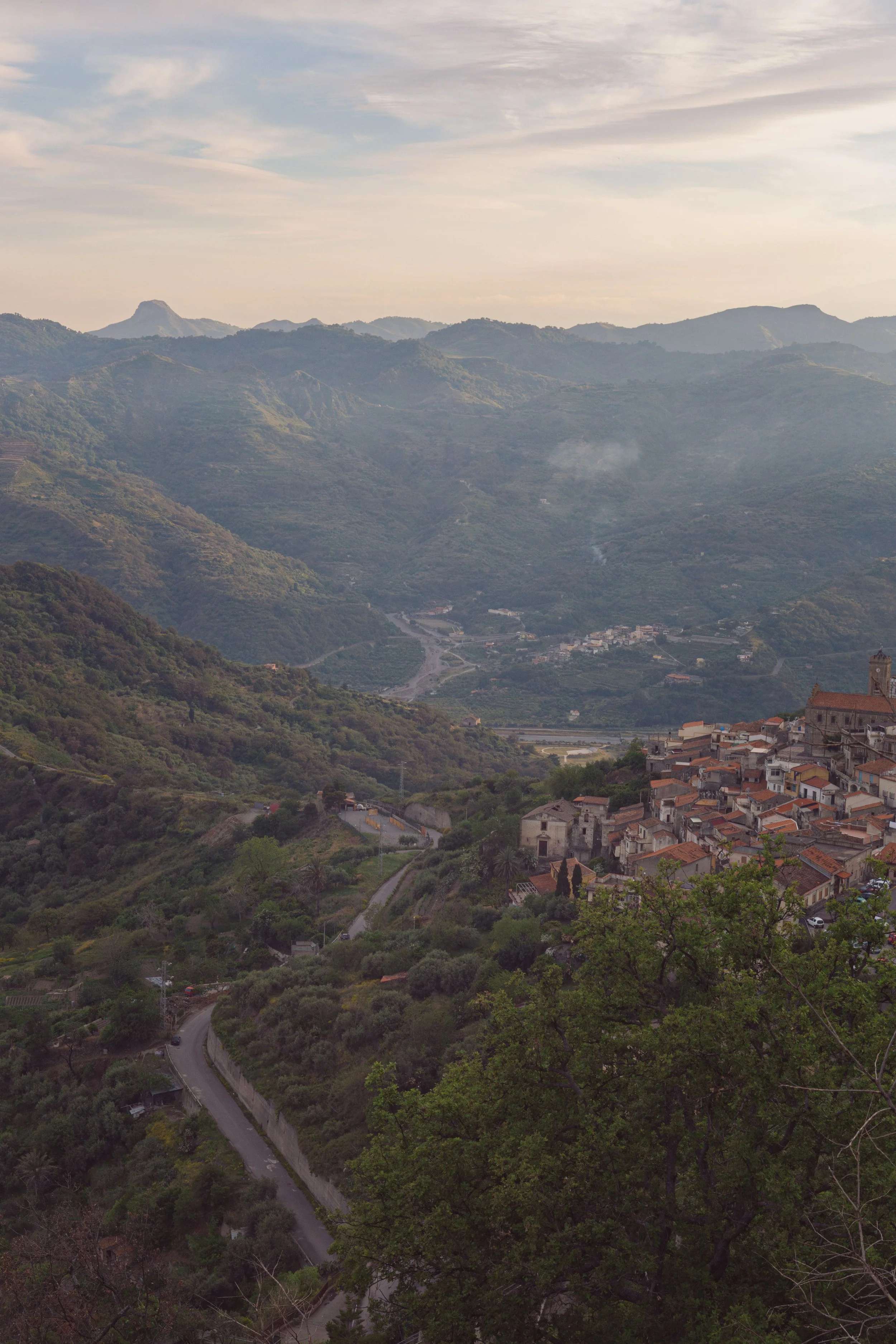
For generations, knowledge lived in the rhythms of the land. Giulia Costantini explores how memory, observation, and ancestral practice sustained communities beyond the reach of official records. Image above captures rual Southern Italy. Image courtesy Anton Cherednichenko. See more of his work at https://www.instagram.com/hrsart
In Benevento, stories circulated for centuries about women gathering beneath an ancient walnut tree for nocturnal rites. The image became famous in demonological literature: witches flying through the night to assemble in secret rituals. But landscapes are never neutral in the stories told about them.
What may once have been remnants of communal gatherings or seasonal celebrations gradually became reinterpreted through the language of fear. Sacred trees became diabolical meeting places. Night became evidence. The countryside itself became suspect. Through this transformation, the land was rewritten. Spaces that had once hosted ritual life were recast as territories of conspiracy.
The marginal geography of witchcraft was never random. Accusations often appeared in places where institutional authority was weaker: rural communities, mountain regions, agricultural zones where local traditions shaped everyday life. These spaces preserved forms of knowledge that did not pass through official channels. Women moved within these landscapes as keepers of small practices - herbal remedies prepared from plants gathered along paths, protective gestures whispered over children, ritual actions meant to counter misfortune or illness.
In many parts of Southern Italy such women were known as macàre or masciare. Their knowledge circulated quietly through villages, neither fully accepted nor fully condemned. They occupied a threshold. The community might depend on them while authorities distrusted them.
Similar dynamics could be found in Ciociaria, a region where rural life remained closely tied to cycles of land and family networks. Older women were sometimes called to perform simple acts of protection when illness or misfortune appeared without clear explanation. A hand placed on the forehead of a child. A whispered prayer. A bowl of water and oil used to read disturbances believed to come from the evil eye.

Giulia Costantini discusses the ancestral practice of reading water and oil - a folk tradition used for generations to identify disturbances believed to stem from the evil eye and other unseen influences. Image courtesy Ekaterina Mitkina. See more of her work at https://www.pexels.com/@elly-fairytale/ or see her on IG at https://www.instagram.com/elina_sazonova.
These gestures rarely appeared in official histories. They belonged to the everyday life of communities. They were transmitted quietly through observation rather than instruction. The knowledge embedded in them did not claim authority. It simply functioned. And precisely because it functioned without institutional validation, it remained invisible to the structures that defined legitimate knowledge.
Marginal geographies produce their own epistemologies. In these landscapes, knowledge is rarely abstract. It is relational. It emerges through attention to subtle changes: the way a plant grows differently after rain, the way an animal behaves before a storm, the way a body responds to certain herbs. This knowledge is empirical in its own way. But it does not translate easily into the language of institutions. It remains embedded in gestures, habits, and shared memory. The center often reads such knowledge as superstition. Yet what is dismissed as superstition is often a form of observation that never became formalized.
Marginality is not only geographical. It is also political.
When knowledge develops outside institutional structures, it risks being labeled illegitimate. The center defines itself by controlling what counts as truth. Everything else becomes folklore, rumor, belief. But the margin is not empty. It is simply not centralized. In the margin, knowledge circulates horizontally rather than vertically. It passes from neighbor to neighbor, from mother to daughter, from one generation to the next without needing authorization. It survives precisely because it remains flexible.
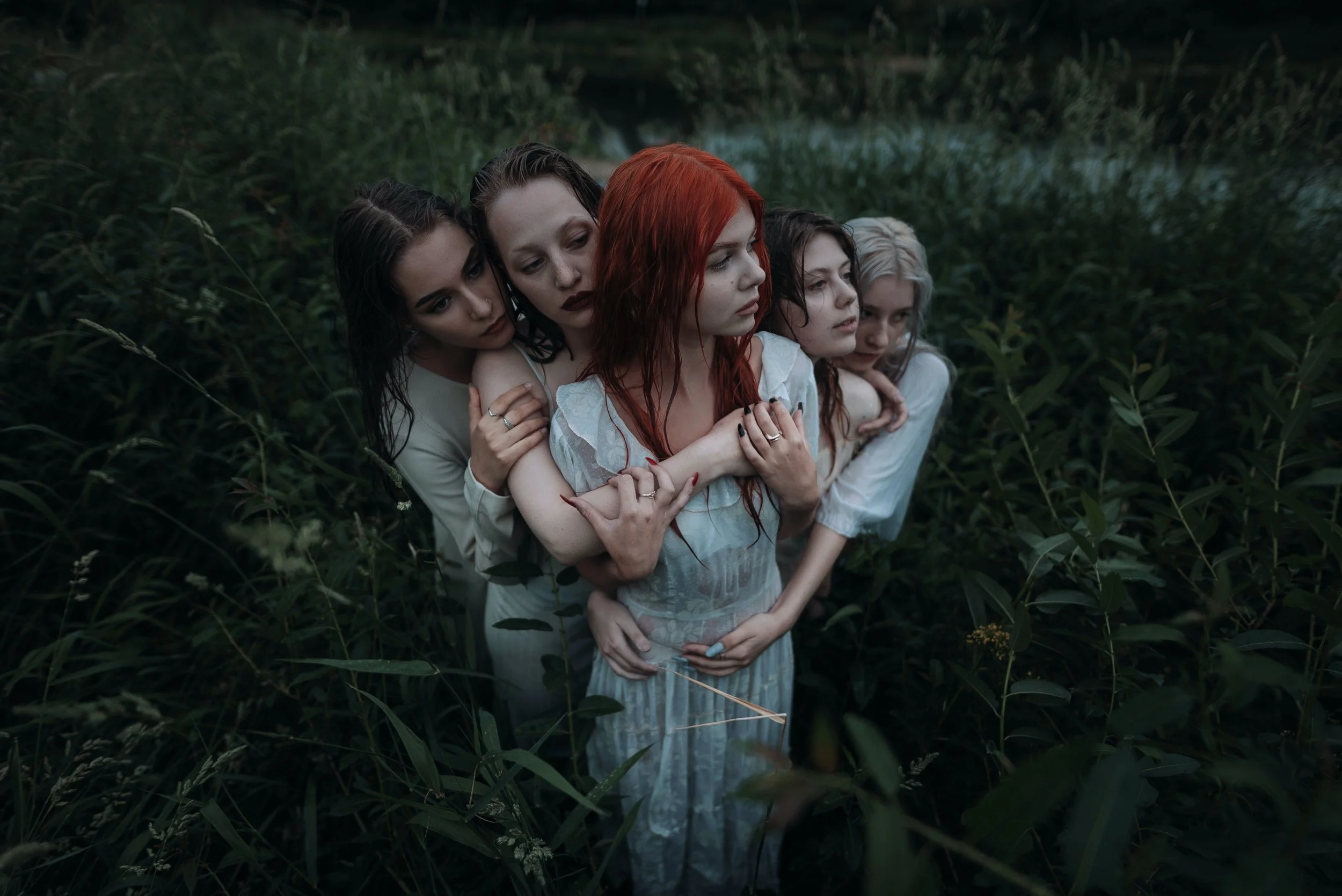
Image Courtesy Vladislav Nahorny
Even today these geographies continue to exist. Not necessarily in the same forms, but in the persistence of gestures and beliefs that resist full explanation. A plant gathered for healing. A protective phrase spoken without remembering its origin. A hesitation before certain crossroads or thresholds.
These are fragments of a knowledge that once belonged to landscapes rather than institutions. The margin preserves what the center forgets.
If the witch was historically produced as the dangerous body, the landscapes associated with her became dangerous spaces. Forest edges, village outskirts, abandoned fields - places where control seemed weaker - were transformed into symbolic territories of suspicion. Yet these same spaces also protected other ways of knowing. The margin allowed knowledge to remain incomplete, experimental, and adaptive. It allowed practices to evolve without needing theoretical justification. In this sense, marginal geographies are not simply locations on a map. They are conditions. They are spaces where knowledge can exist without needing to prove itself to authority.
To study these territories is not to romanticize them. Rural landscapes carry their own hierarchies, fears, and silences. But they also reveal something crucial: knowledge does not belong exclusively to institutions. It also belongs to places. To soil. To memory. To bodies moving through familiar paths.
The geographies that history called marginal were never empty. They were simply listening to different forms of knowledge. And perhaps this is where the witch still resides: not only in the body that remembers, but in the landscape that refuses to forget.
Sources and References
Daughters of the Unwritten draws from historical scholarship, feminist theory, folklore studies, and cultural histories of witchcraft, women's knowledge traditions, and Southern Italian folk practices.
Books
Serra, Pierluigi. Maghe e streghe d'Italia. Newton Compton Editori.
Federici, Silvia. Caliban and the Witch: Women, the Body and Primitive Accumulation. Autonomedia.
Federici, Silvia. La caccia alle streghe e la paura del potere delle donne. Accademia UNIDEE.
Ginzburg, Carlo. Ecstasies: Deciphering the Witches' Sabbath. University of Chicago Press.
Academic and Research Texts
Forni, A. Donne, streghe e streghette nella letteratura per l'infanzia del secondo Novecento: dalla caccia alle streghe al femminismo magico. Quaderni di Intercultura.
De Martino, Ernesto. Sud e magia. Feltrinelli.
De Martino, Ernesto. La terra del rimorso. Il Saggiatore.
Articles and Cultural Essays
Eleonora Derrico.
"O sottomesse o streghe: le donne dalla caccia alle streghe a oggi."
https://www.eleonoraderrico.it/o-sottomesse-o-streghe-le-donne-dalla-caccia-alle-streghe-a-oggi/The Vision.
"Le femministe e la figura della strega."
https://thevision.com/cultura/femministe-streghe-rogo/The Vision.
"La caccia alle streghe."
https://thevision.com/attualita/caccia-streghe/Cultural and Historical Sources
1."Janare di Benevento e leggende della stregoneria femminile."
https://www.ambasciator.it/anare-benevento-leggende-stregoneria-femminile/2. "Donas de fuera."
https://it.wikipedia.org/wiki/Donas_de_fuera3. Pink Magazine Italia.
Historical articles on witchcraft and women's history.
https://pinkmagazineitalia.it/donne/40436/4. Agoravox.
"Le masciare: streghe del Sud Italia."
https://amp.agoravox.it/Le-Masciare-Streghe-dal-Sud-Italia.html5. Strega in Biblioteca.
"Streghe, maghe e donne ribelli."
https://www.stregainbiblioteca.it/opinionista/streghe-maghe-e-donne-ribelli-i-nostri-consigli-di-lettura/6. Episode I: The Witch as Body appeared in Bruja Magazine Issue 0003, Solar Venus (May 2026).