
SPIRITUALITY | The Sacred Practice of Ancestral Remembrance
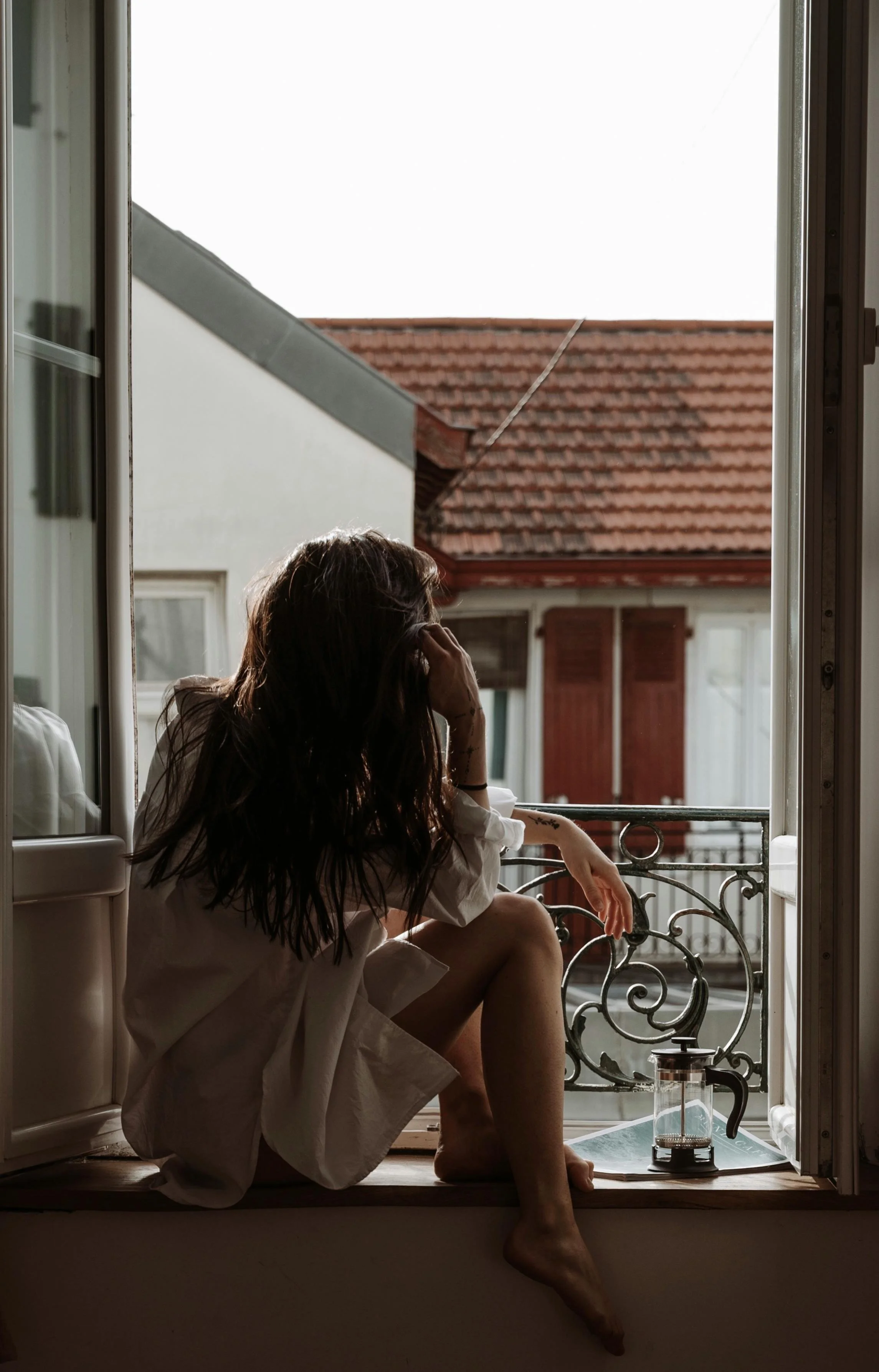
Photography Credit: hello aesthe via Pexels
Long before photographs preserved faces and written records carried names across generations, people remembered their dead through ritual. They spoke their names. They prepared food. They returned to burial places. They kept objects that had belonged to them. Across cultures and centuries, death rarely meant that a person's relationship with the living simply disappeared. Instead, remembrance became one of humanity's oldest spiritual languages.
Ancestral remembrance exists in many forms throughout the world, from African and African diasporic traditions to Indigenous practices, Asian household ancestor rites, ancient Mediterranean customs and the Catholic remembrance of the dead. These traditions are not interchangeable, nor should their ceremonies be removed from their cultural and religious contexts. Yet beneath their differences is a remarkably persistent human impulse: to remember the people whose lives made our own possible.
For some, this remembrance is explicitly religious. For others, it is cultural, familial or deeply personal. An ancestor does not have to become a deity for their memory to become sacred.
Sometimes remembering is itself the ritual.
Veneration Is Not Worship
Ancestor veneration is frequently misunderstood, particularly when traditions outside mainstream Western Christianity are described from the outside.
Veneration does not necessarily mean worship.
Depending upon the tradition, ancestors may be honored, consulted, prayed for, spoken to, remembered through offerings or acknowledged as continuing members of a family or community. The precise meaning of these practices varies considerably.
This distinction matters because the language historically used to describe Indigenous and African religions was not always neutral. Practices involving ancestors were sometimes categorized broadly as superstition, witchcraft or idolatry by outsiders who interpreted them through their own religious frameworks.
Understanding ancestral spirituality therefore begins with allowing traditions to define themselves.
A glass of water placed beside a grandmother's photograph does not automatically carry the same theological meaning as an offering made within an initiated religious tradition. Lighting a candle for someone who has died does not make every person performing the act a practitioner of the same faith.
Context matters.
The Ancestor Beyond Blood
We often imagine ancestry exclusively through bloodlines, but remembrance can be larger than genealogy.
There are biological ancestors, certainly, but there are also cultural ancestors, artistic ancestors, spiritual elders and people whose lives created possibilities that later generations inherited.
A writer may recognize the authors who made her voice possible. An artist may feel indebted to creators she never met. Communities remember elders, teachers, activists, healers and caretakers whose influence extends beyond their immediate families.
This does not mean claiming another person's lineage as our own.
It means recognizing inheritance in its many forms.
We inherit recipes and gestures. Songs and sayings. Ways of braiding hair. Ways of mourning. Family stories whose details have changed with every retelling. We inherit survival strategies alongside wounds. Sometimes we even inherit silence, discovering that what a family refuses to discuss can travel through generations as powerfully as the stories it preserves.
Ancestral remembrance asks us to become conscious of these inheritances.
Not everything inherited must be kept.
When the Ancestors Were Complicated People
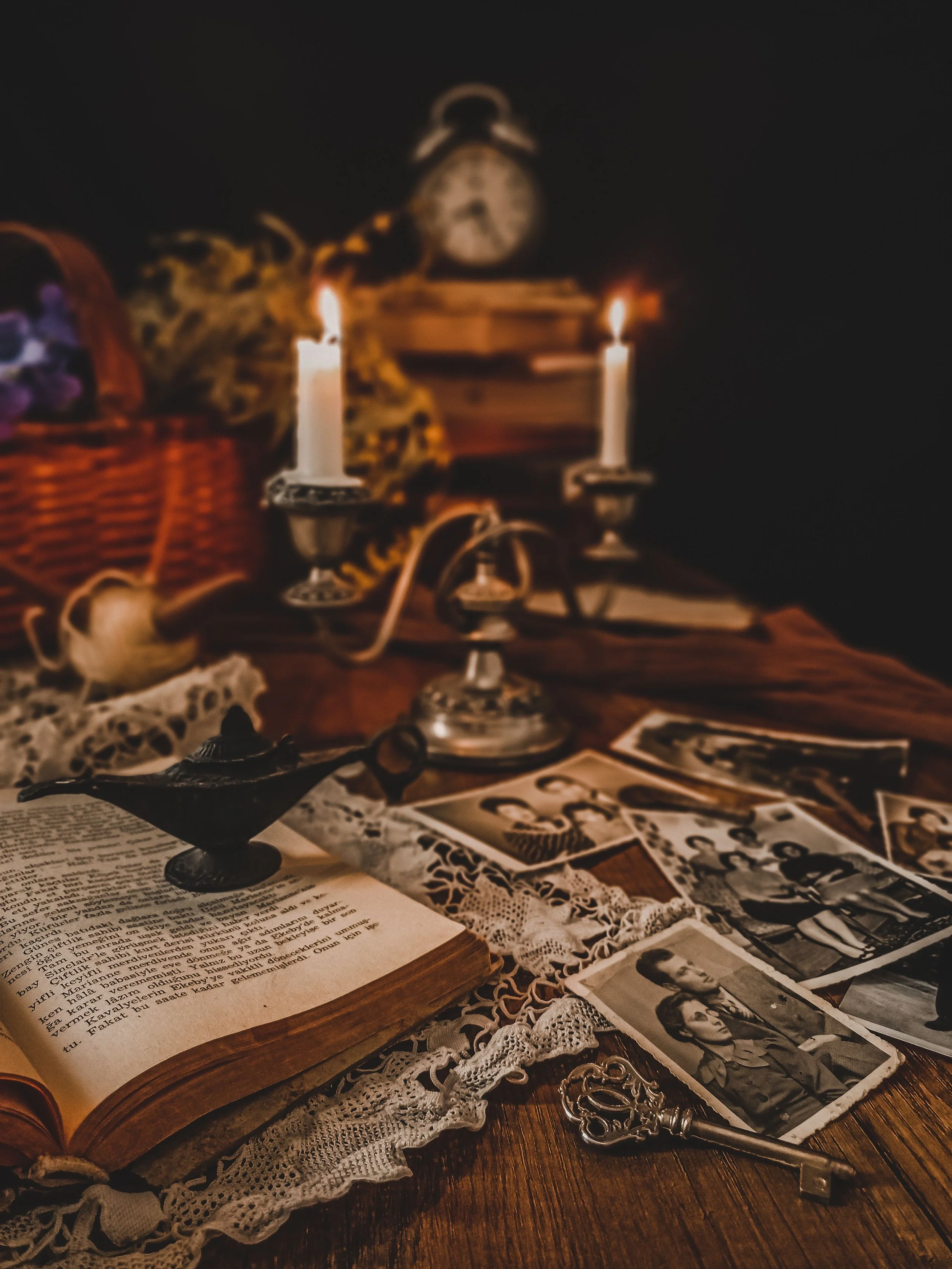
There is a tendency to romanticize the dead.
Death can soften memories. Family stories become polished through repetition until complicated people are transformed into symbols. But ancestry is rarely that simple.
Some people come from families marked by estrangement, abandonment, violence or secrets. Some know almost nothing about their biological lineage. Others may know exactly where they came from and still feel no desire to honor particular individuals within it.
Spirituality should not require us to fictionalize our histories.
You are allowed to remember an ancestor without excusing them.
You are allowed to acknowledge what someone survived while also acknowledging what they caused.
And you are allowed to decide that a particular person does not belong within your personal spiritual practice.
Ancestral remembrance can include boundaries.
In fact, one of the most meaningful ways to honor a lineage may be to refuse to continue what harmed it.
Breaking a cycle is also an ancestral act.
Creating a Space for Remembrance
An ancestral space does not have to be elaborate.
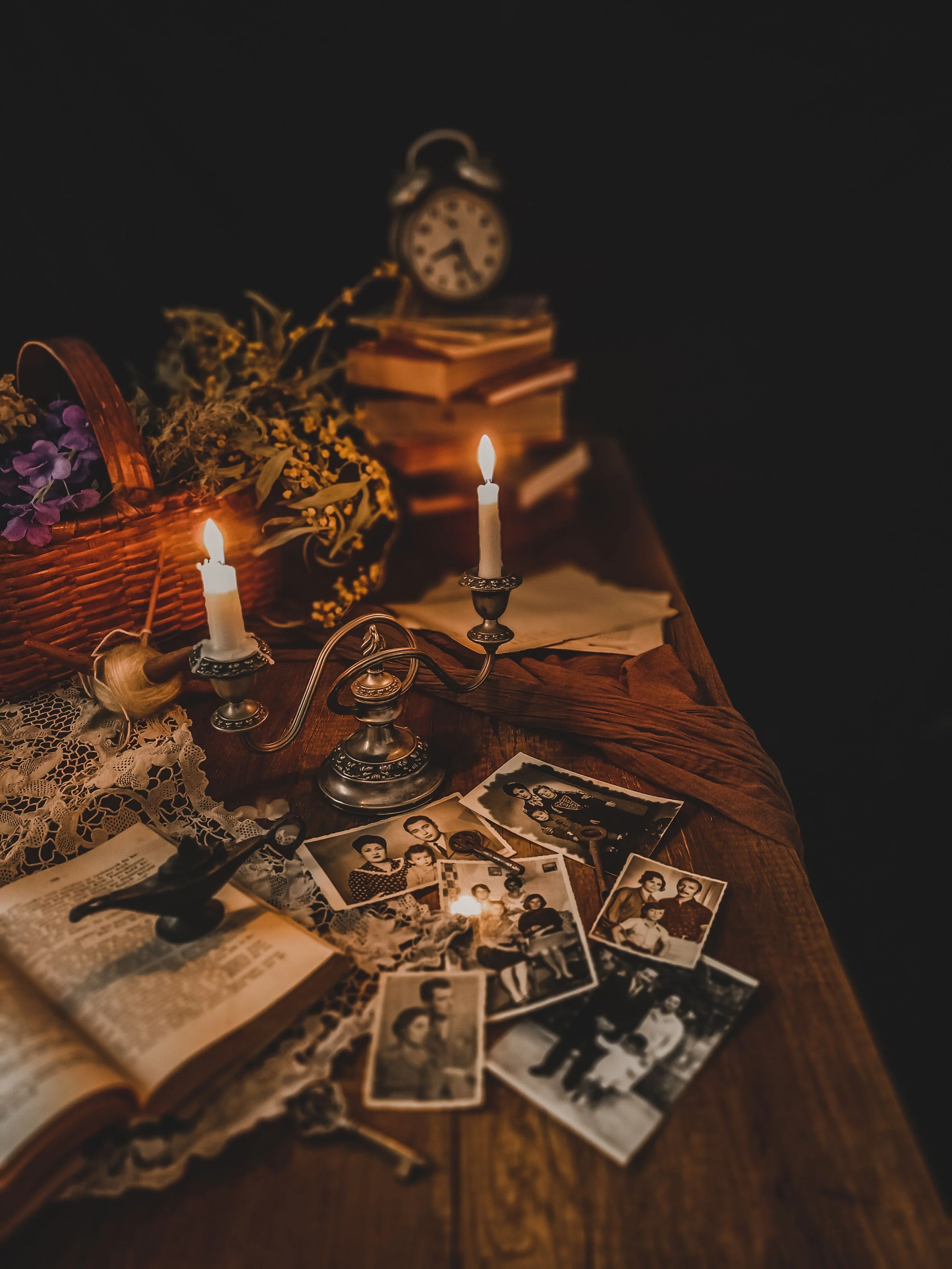
It may be a permanent altar, but it can just as easily be a small temporary arrangement created when you feel called to remember.
Begin with what actually belongs to your story.
A photograph.
A handwritten recipe.
A piece of jewelry.
A letter.
A family Bible or book.
A flower associated with someone you loved.
A glass of fresh water.
An object inherited from someone who came before you.
Rather than collecting symbols because they appear "spiritual," choose objects whose meanings you understand. Ancestral practice becomes more intimate when the objects present have histories rather than simply aesthetics.
You might sit before this space and speak a person's name aloud.
Tell them what has happened.
Thank them for something they gave you.
Cook something they once prepared.
Play their favorite music.
Write down a memory before you forget it.
Call an older relative and ask a question you have never thought to ask.
Spiritual remembrance does not always require supernatural certainty. You do not have to know precisely what happens after death to recognize that memory continues to shape the living.
The Offering of Memory
Perhaps the most precious ancestral offering is attention.
Family histories disappear remarkably quickly when nobody records them. Names vanish. Photographs become faces no one can identify. Recipes disappear because the person who made them never measured anything. Stories become fragments.
There is sacred work in preservation.
Ask elders where they were born.
Ask what their mothers cooked.
Ask what frightened them when they were young.
Ask what songs were played in their homes.
Ask about the people whose photographs have been sitting in boxes for decades.
Write down the answers.
Record voices, with permission.
Label photographs.
Learn the names.
Preserve the recipes.
Because ancestral remembrance is not concerned only with death.
It is also concerned with keeping something alive.
A Simple Practice of Remembrance
Choose one person from your family or personal lineage whom you wish to remember.
Place an object associated with them somewhere quiet. If you have nothing that belonged to them, write their name on a piece of paper.
Set a glass of fresh water beside it.
Sit quietly and think about what traveled from their life into yours. It may be something physical, such as your hands, your hair or the shape of your face. It may be a skill, a temperament, a recipe, a story or even a lesson learned from something they did wrong.
Then say:
I remember what came before me.
I honor what gave me life.
I keep what nourishes.
I release what should end with me.
I carry forward what deserves to continue.
Leave the space for as long as feels appropriate, then return the water to the earth or dispose of it respectfully according to your own beliefs and traditions.
There is no requirement to turn the dead into saints.
There is no requirement to inherit every burden they carried.
The work of remembrance is more discerning than that.
We can love what came before us without becoming imprisoned by it. We can preserve the stories worth telling and end the ones that have caused enough pain. We can speak the names that deserve to remain in the room.
Because eventually, every generation becomes an ancestor.
And perhaps one of the questions of spiritual inheritance is not only who do we remember?
It is also:
What are we leaving behind that will be worth remembering?