

When the Season Changes Before You Do | Spirituality
The Spiritual Meaning of Thresholds
Photography by Vedara Adamchuk
There is a particular strangeness to the end of a season. The light changes before we are ready for it. Evenings arrive a little earlier. The air begins to carry something unfamiliar. A landscape that seemed permanent only weeks ago starts preparing for its next form, and we are reminded that nature has never required our permission to change.
Human transitions are rarely as orderly.
We like beginnings and endings when they are clearly marked. A wedding, a funeral, a graduation, a birth, a final day at work, the closing of a door. These moments give us something tangible to point toward and say: this is where one life ended and another began. Yet many of our most important transitions offer no ceremony at all. They begin quietly, long before we have language for what is happening.
Sometimes the season changes before we do.

The Space Between What Was and What Will Be
A threshold is traditionally understood as the piece of wood or stone beneath a doorway, but the word has accumulated a much larger symbolic meaning. A threshold separates one space from another. To cross it is to leave somewhere while simultaneously entering somewhere else.
This is why thresholds appear so often in mythology, religion, folklore, and ritual. Doorways, gates, bridges, rivers, crossroads, caves, shorelines, dawn and dusk all occupy spaces between established states. They are neither entirely one thing nor the other.
Anthropologists have used the word liminality to describe this condition of being between states, particularly within rites of passage. The concept was developed through the work of Arnold van Gennep and later Victor Turner, who examined transitional periods in which an old identity or social position has been left behind while the new one has not yet been fully established.
Outside formal ritual, life contains countless versions of this experience. A relationship may be emotionally finished months before it officially ends. A person may no longer recognize herself in a career she has not yet left. A child grows independent while a parent struggles to understand who she is without being needed in the same way. A belief system begins falling apart before another understanding of the world has taken its place.
These are threshold periods. They can feel unsettling precisely because there is no stable identity available on either side.
We Are Taught to Rush Through the In-Between
Uncertainty makes us impatient. Once we realize something is ending, we often want to know immediately what will replace it. We want the next relationship, the next purpose, the next home, the next identity, the next version of ourselves.
The spiritual world can intensify this pressure. Endings are quickly reframed as manifestations of something better. Loss becomes redirection. Confusion becomes awakening. Every closed door is expected to reveal another one almost immediately.
Sometimes those interpretations become meaningful later. In the middle of a transition, however, they can prevent us from experiencing what is actually happening.
Not every ending needs to be redeemed while it is still occurring.
There are experiences that deserve to remain complicated. We can know that a relationship needed to end and still grieve it. We can choose a new life while mourning the one we left behind. We can understand intellectually that change is necessary while feeling emotionally unprepared for it.
The threshold does not require us to pretend that leaving is easy simply because staying was no longer possible.
Nature Does Not Transition Without Loss
Seasonal change gives us a more honest metaphor.
Autumn is beautiful because things are dying.
The colors we admire appear as leaves stop producing chlorophyll. Plants withdraw energy. Fruit ripens and falls. Seeds scatter. The landscape releases what it cannot carry into winter.
There is beauty in this process, but beauty does not erase what is being lost.
Our personal transitions can work the same way. Becoming someone new often requires relinquishing identities that once protected us. Growth may change relationships we expected to keep forever. A boundary can create peace while simultaneously ending intimacy. Healing may reveal that some environments only felt like home because we learned how to survive inside them.
Change is not always evidence that something was wrong with what came before. Sometimes a season simply completes itself.
There is a difference.
The Spiritual Importance of the Threshold
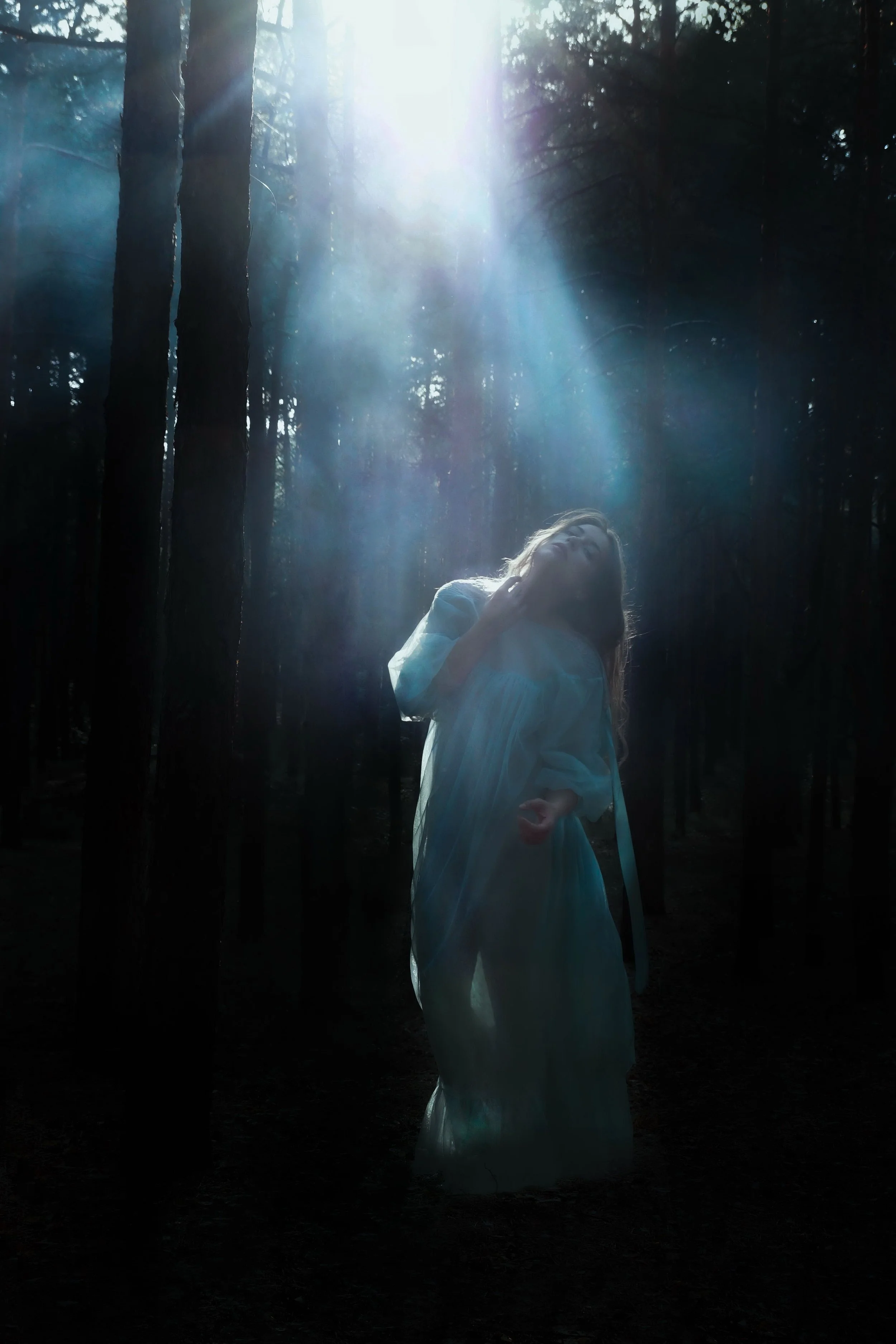
Across cultures, thresholds have often been treated as spiritually significant places. Doorways have been blessed or protected, crossroads associated with decisions and encounters, and rites of passage constructed around symbolic movement from one state into another. These traditions vary enormously, but they share an understanding that transitions deserve attention.
Modern life does not always give us rituals for the quieter transformations.
There may be no ceremony for realizing you no longer believe what you once believed. No gathering for the final day you allow someone to speak to you in a certain way. No procession marking the moment you stop waiting for an apology. No official observance for the morning you realize the dream you spent years pursuing no longer belongs to you.
Yet these moments can divide a life just as clearly as the milestones we formally recognize.
Perhaps ritual exists partly because human beings need ways to acknowledge invisible change. Lighting a candle, writing something down, taking a final walk through a place, cleaning a room, cutting one's hair, preparing a meal, planting something, packing away an object, or simply speaking an ending aloud can give physical form to an internal transition.
The ritual does not create the change. It witnesses it.
When Your Inner Season Hasn't Caught Up
The natural world moves according to conditions rather than sentiment. August does not remain because we are not ready for September.
Our internal lives are different.
We can continue emotionally inhabiting a season that has already ended around us. Sometimes this is grief. Sometimes nostalgia. Occasionally it is fear. We may continue performing an old identity because it is familiar, even after it has become uncomfortable.
This does not mean we are failing to move forward. The psyche does not operate according to a calendar.
There can be wisdom in allowing our internal season to change slowly.
The danger comes when honoring the past becomes an attempt to remain inside it permanently. Memory can become a home, but it can also become a room without doors.
Eventually, every threshold asks for movement.
You Do Not Need to Know What Comes Next
Perhaps the most uncomfortable part of transition is that recognition often arrives before direction.
You can know that something is over without knowing what should begin.
You can know that you have changed without knowing who you are becoming.
You can feel yourself standing at the edge of something new without being able to see its shape.
This is where the threshold becomes spiritually interesting. It removes the certainty of the old without immediately providing the security of the new. For a period of time, identity becomes less fixed. Possibility expands, but so does vulnerability.
We often interpret this absence of clarity as a problem to solve. Yet it may simply be the natural condition of transition.
A doorway is not meant to be a destination. Neither is it meaningless because we have not crossed it yet.
There is value in noticing where we are.
At the Edge of September
The final day of August is not dramatically different from the first day of September. There is no visible line running through the earth. The transition exists because we have chosen a way of measuring time, yet the symbolism remains useful.
We are moving toward another season.
Soon the year will begin its visible descent. Gardens will change. Light will retreat earlier. Harvest will give way to decay, and the landscape will begin releasing what it no longer needs.
Perhaps we can allow ourselves the same consideration.
Before rushing toward what comes next, we can look back at what this season contained. What grew? What failed to grow? What surprised us? What exhausted us? What have we been carrying simply because we have not stopped long enough to realize we are allowed to put it down? A threshold does not demand that we have answers. It only asks that we recognize where we are standing.
The season may change before you do.
Let it.
You can meet it when you are ready.