
Zora Neale Hurston and the Magic of Folklore: The Woman Who Preserved Hoodoo Traditions
Long before spiritual traditions like rootwork, hoodoo, and ancestral folk practices were discussed openly in books or academic spaces, one woman was quietly documenting them with care and respect. While much of the world dismissed these traditions as superstition, she recognized them as something else entirely: cultural knowledge.
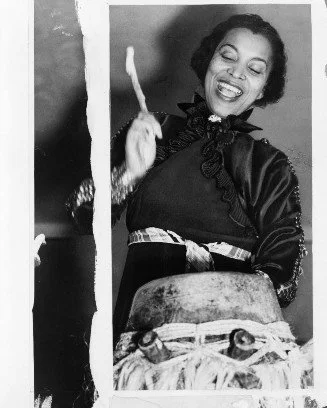
Zora Neale Hurston did not simply study folklore. She preserved the living spiritual traditions of the African diaspora at a time when they were rarely taken seriously.
Today she is widely known as the author of the classic novel Their Eyes Were Watching God, but her work extended far beyond literature. Hurston was also one of the first Black women anthropologists in the United States, and her research took her deep into the spiritual practices of the American South and the Caribbean.
What she discovered there would change how future generations understood magic, folklore, and cultural memory.
A Childhood Surrounded by Stories
Hurston grew up in Eatonville, Florida, one of the first self governed Black towns in the United States. Storytelling was woven into daily life there. Front porches became stages where people shared folktales, jokes, spiritual beliefs, and oral histories passed down through generations.
From an early age Hurston learned that stories carried power. They preserved memory, identity, and knowledge that did not always appear in official histories.
This early exposure shaped the work she would later pursue as both a writer and anthropologist.
Documenting Hoodoo in the American South
In the 1930s Hurston began traveling through Florida, Alabama, and Louisiana collecting folklore and spiritual traditions. She immersed herself in communities where hoodoo, a system of African American folk magic, remained part of everyday life.
Unlike many researchers of her time, Hurston did not approach these traditions as an outsider looking down on them. She lived among the people she studied and allowed practitioners to teach her their methods and beliefs.
Her book Mules and Men became one of the most important records of hoodoo ever written.
Within its pages she documented:
spiritual baths used for cleansing and protection
herbal mixtures and root work
candle rituals and charms
beliefs about luck, fate, and spiritual influence
What made Hurston’s work remarkable was not just the information she recorded, but the respect she showed toward the people who shared it.
She treated their knowledge as wisdom rather than superstition.
Journeys Into Caribbean Spiritual Traditions
Hurston’s research eventually took her beyond the American South. In the late 1930s she traveled to Haiti and Jamaica to study spiritual traditions connected to the African diaspora.
Her experiences there became the basis for another important book, Tell My Horse.
In Haiti she attended Vodou ceremonies and observed rituals that honored ancestral spirits. She documented how spiritual practices shaped everyday life and community structure.
These journeys allowed Hurston to show readers something rarely acknowledged at the time: that African derived spiritual traditions were complex systems of belief with their own philosophies, ethics, and cultural significance.
Magic as Cultural Memory
Hurston understood that folklore was more than entertainment. It carried the memory of a people.
Stories, rituals, and spiritual practices preserved knowledge that could survive even when formal history ignored or erased it. Through her writing she ensured that these traditions would not disappear.
Her work helped future generations recognize that hoodoo, Vodou, and other folk spiritual systems were not relics of the past. They were living traditions shaped by resilience and adaptation.
The Legacy She Left Behind
For many years after her death in 1960, Hurston’s work was largely forgotten. It was not until the late twentieth century that scholars and readers began rediscovering the depth of her contributions.
Today she is celebrated not only as a brilliant novelist but also as a cultural preservationist who safeguarded spiritual knowledge that might otherwise have been lost.
Zora Neale Hurston did not claim to be a mystic or a practitioner of magic. Yet in many ways she performed a different kind of magic altogether.
She listened.
She recorded.
She ensured that the voices and traditions of her community would continue to be heard.
And through that work, she left behind a legacy that still speaks today.