
REAL STORIES | E. Katherine Bates and the World She Could Not See
In Seen and Unseen, E. Katherine Bates recorded a world of séances, prophetic dreams, psychic phenomena and encounters she believed suggested something existed beyond ordinary perception.
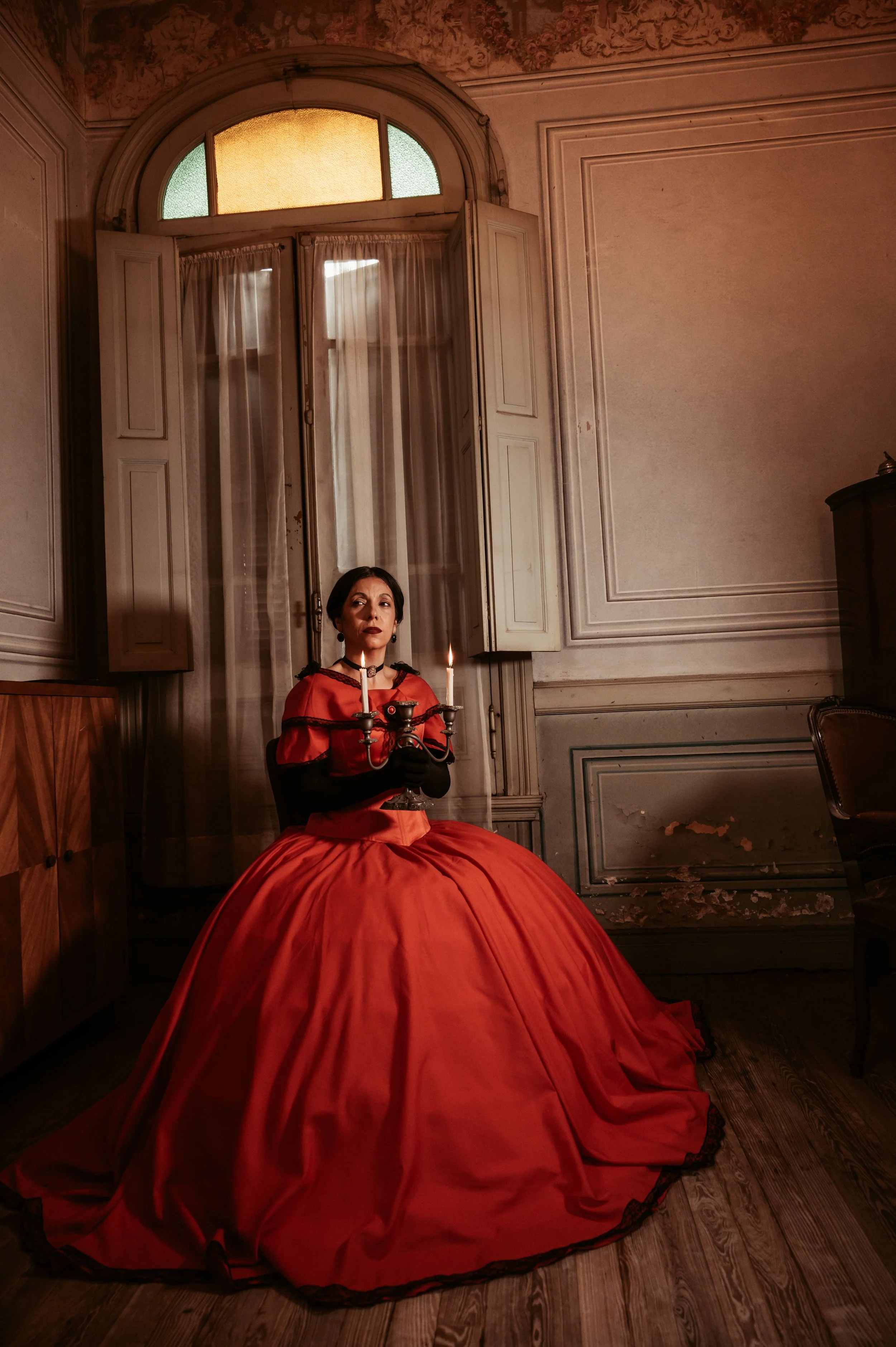
Photography by Patricia Bozan
There are people who experience one inexplicable event and spend the rest of their lives wondering what happened.
E. Katherine Bates was not one of them.
Her world seemed crowded with the unexplained.
Dreams appeared to anticipate death. Séances produced communications believed to come from people no longer living. Houses carried strange presences. Messages arrived through mediums. During years of travel, Bates encountered stories and experiences that repeatedly brought her to the same uncomfortable boundary between the world we can see and whatever might exist beyond it.
Eventually, she wrote them down.
Published in 1907, her book Seen and Unseen collected experiences involving Spiritualism, psychic phenomena, dreams, apparitions, telepathy and what Bates understood as evidence that human consciousness might extend beyond the physical world.
She did not present the book as fiction.
She presented it as testimony.
A Woman Interested in the Unexplainable
Emily Katherine Bates belonged to a period when Spiritualism had become an international phenomenon.
By the late nineteenth and early twentieth centuries, séances, mediums, automatic writing, table-turning and psychical research had entered drawing rooms, newspapers and serious intellectual debate. The possibility of communicating with the dead fascinated believers, skeptics, scientists and writers alike.
Women occupied a particularly interesting place within this movement.
At a time when women's public authority remained restricted in many areas of society, the séance room created an unusual space in which women could become mediums, interpreters and authorities on experiences that supposedly originated beyond the material world.
Bates entered this strange cultural landscape as both participant and observer.
And she traveled.
Her accounts move through Britain and across journeys involving America, Australia, New Zealand and India. Wherever she went, the possibility of another world seemed to follow.
When Dreams Become Warnings
Some of the most unsettling stories in Seen and Unseen concern dreams.
Most dreams disappear within minutes of waking. Others remain strangely vivid, carrying an emotional weight that feels different from ordinary dreaming.
Bates became interested in the latter.
Throughout her writings, dreams sometimes appear alongside deaths, warnings or events that seemed significant only after something happened in waking life.
This is one of the oldest forms of supernatural experience recorded across cultures: the dream that seems to know something before the dreamer does.
Was it coincidence?
Subconscious perception?
Memory rearranged after an event?
Or something else?
Bates lived during a period when these questions were increasingly being examined by organizations devoted to psychical research. People collected testimony involving apparitions, telepathy, deathbed experiences and precognitive dreams in an attempt to determine whether patterns existed within experiences usually dismissed as superstition.
Bates added her own experiences to that archive.
The Séance Room
Then there were the mediums.
To understand Bates's world, we have to enter the Victorian and Edwardian séance room.
Imagine a small gathering of people sitting together, often around a table, waiting.
Sometimes they waited for knocks.
Sometimes for movement.
Sometimes for a medium to enter trance.
Sometimes for words believed to originate from someone who had died.
Bates attended séances and recorded communications she found difficult to dismiss.
She was not alone in her fascination. Spiritualism attracted enormous audiences during this period, including writers, intellectuals and investigators who disagreed passionately over whether mediums demonstrated genuine paranormal phenomena, unconscious psychological processes or deliberate fraud.
Fraud did exist.
So did sincere belief.
And between those two realities existed an enormous territory of experiences people could not easily explain.
Bates was willing to enter that territory.
The Dead Were Not Necessarily Gone
At the center of Spiritualism was a radical proposition:
Death might change a relationship without ending it.
For believers, the dead remained capable of communicating with the living.
That idea transformed grief.
A séance was no longer merely entertainment or occult curiosity. For some participants, it offered the possibility of hearing from a parent, spouse, child or friend whose physical body had disappeared.
This helps explain why Spiritualism became particularly powerful in societies experiencing enormous mortality. War, disease, childbirth and childhood illness meant that death was an intimate presence in everyday life.
The possibility that the dead continued somewhere just beyond ordinary perception could be profoundly comforting.
But Bates's writing is compelling precisely because comfort was not the only thing she encountered.
The unseen could also be strange.
What Makes a Story Evidence?
Reading historical paranormal accounts creates an immediate problem.
Memory is imperfect.
People misunderstand events.
Coincidences happen.
Belief changes interpretation.
Fraud is possible.
And a story written decades ago cannot be placed inside a laboratory and repeated for us.
But dismissing every unusual experience creates another problem.
Human beings have been reporting apparitions, prophetic dreams, sensed presences, voices, deathbed visions and encounters with the dead for thousands of years.
The interpretation changes.
The stories remain.
Bates believed some experiences deserved investigation precisely because they did not fit comfortably within ordinary explanations.
Her writing therefore occupies an intriguing space between memoir and investigation.
She was not merely asking readers to believe in ghosts.
She was asking them to consider testimony.
The Woman Who Kept Looking
Perhaps the most interesting thing about Bates is not whether every event in Seen and Unseen happened exactly as she interpreted it.
It is that she kept looking.
Travel did not diminish her curiosity.
Neither did exposure to different beliefs.
She continued attending séances, listening to accounts, observing unusual events and considering whether consciousness might operate in ways human beings did not yet understand.
That willingness to remain uncertain is part of what makes historical supernatural writing so compelling.
There is an enormous difference between saying:
I know what exists beyond death.
and saying:
Something happened to me that I cannot explain.
The second leaves the door open.
Seen and Unseen
The title Bates chose for her book may ultimately contain its most important idea.
Our lives are divided constantly between what can be seen and what cannot.
We see bodies.
We do not see consciousness.
We see grief.
We do not see where love goes when the person receiving it dies.
We see someone sleeping.
We cannot enter the dream.
We see the room in which a strange experience occurs.
We cannot always determine what happened inside it.
More than a century after Bates recorded her experiences, many of the questions that fascinated her remain unresolved.
Do dreams occasionally anticipate events?
Can consciousness exist independently of the body?
Why do people near death sometimes report seeing deceased relatives?
Why do certain experiences of apparitions appear repeatedly across cultures?
Are these neurological phenomena?
Psychological phenomena?
Spiritual phenomena?
Something else entirely?
Bates believed there was more to reality than the visible world could account for.
Whether we believe her conclusions is another matter.
But that is the pleasure of reading a real supernatural account.
The witness tells us what she experienced.
History preserves the testimony.
And then the story passes to us.
We decide what we think happened.
About E. Katherine Bates
Emily Katherine Bates, generally published as E. Katherine Bates, was a British writer and traveler whose interests included Spiritualism and psychical phenomena. Her travels brought her into contact with mediums, séances and accounts of unusual experiences across several countries.
In Seen and Unseen, published in 1907, Bates gathered personal recollections and observations concerning Spiritualism, dreams, psychic experiences and phenomena she believed suggested the existence of realities beyond ordinary perception.
Her work offers a fascinating glimpse into the period when Spiritualism and early psychical research brought questions about ghosts, consciousness and communication with the dead into both private homes and public debate.
Source & Public Domain Credit
This article is based on E. Katherine Bates's Seen and Unseen, originally published in 1907.
The digitized edition is listed by Project Gutenberg as public domain in the United States, allowing the original historical text to be read and reproduced freely.
Author: E. Katherine Bates
Original Work:Seen and Unseen
Publication Year: 1907
Subject: Spiritualism, psychical phenomena and personal experiences
Copyright Status: Public domain in the United States

“Summer” by Edith Wharton
Originally published in 1917, Summer is Edith Wharton's only novel centered on the emotional awakening of a young woman. In this featured excerpt, readers are invited into a timeless story of longing, identity, freedom, and the quiet courage it takes to become oneself.
Image by Nastasya Banana
Note from Editor:
Every generation inherits stories that continue to speak long after their authors are gone.
Published in 1917, Summer is Edith Wharton's only novel centered on the emotional awakening of a young woman. Through its exploration of longing, identity, freedom, and the quiet courage it takes to become oneself, the novel remains as relevant today as it was more than a century ago.
For this issue of Bruja Magazine, we are sharing an excerpt from the novel at a pivotal moment in Charity Royall's journey—a moment where hope, desire, and self-discovery begin to reshape the life she has always known.
As you read, consider how every generation of women must eventually ask the same questions:
Who am I becoming? What life am I choosing? And what parts of myself have been waiting to awaken?
We invite you to experience Edith Wharton's timeless words and discover why Summer continues to resonate with readers over one hundred years after its first publication.
Originally published in 1917. Presented here as a public domain literary work.

He stopped and lifted his hat with a shy smile. "I beg your pardon," he said. "I thought there was no one here."
Charity stood before him, barring his way. "You can't come in. The library ain't open to the public Wednesdays."
"I know it's not; but my cousin gave me her key."
"Miss Hatchard's got no right to give her key to other folks, any more'n I have. I'm the librarian and I know the by-laws. This is my library."
The young man looked profoundly surprised.
"Why, I know it is; I'm so sorry if you mind my coming."
"I suppose you came to see what more you could say to set her against me? But you needn't trouble: it's my library today, but it won't be this time tomorrow. I'm on the way now to take her back the key and the register."
Young Harney's face grew grave, but without betraying the consciousness of guilt she had looked for.
"I don't understand," he said. "There must be some mistake. Why should I say things against you to Miss Hatchard--or to anyone?"
Tired of reading? Add this page to your Bookmarks or Favorites and finish it later.



The apparent evasiveness of the reply caused Charity's indignation to overflow. "I don't know why you should. I could understand Orma Fry's doing it, because she's always wanted to get me out of here ever since the first day. I can't see why, when she's got her own home, and her father to work for her; nor Ida Targatt, neither, when she got a legacy from her step-brother on'y last year. But anyway we all live in the same place, and when it's a place like North Dormer it's enough to make people hate each other just to have to walk down the same street every day. But you don't live here, and you don't know anything about any of us, so what did you have to meddle for? Do you suppose the other girls'd have kept the books any better'n I did? Why, Orma Fry don't hardly know a book from a flat-iron! And what if I don't always sit round here doing nothing till it strikes five up at the church? Who cares if the library's open or shut? Do you suppose anybody ever comes here for books? What they'd like to come for is to meet the fellows they're going with if I'd let 'em. But I wouldn't let Bill Sollas from over the hill hang round here waiting for the youngest Targatt girl, because I know him...that's all...even if I don't know about books all I ought to...."
She stopped with a choking in her throat. Tremors of rage were running through her, and she steadied herself against the edge of the desk lest he should see her weakness.
What he saw seemed to affect him deeply, for he grew red under his sunburn, and stammered out: "But, Miss Royall, I assure you...I assure you..."
His distress inflamed her anger, and she regained her voice to fling back: "If I was you I'd have the nerve to stick to what I said!"
The taunt seemed to restore his presence of mind. "I hope I should if I knew; but I don't. Apparently something disagreeable has happened, for which you think I'm to blame. But I don't know what it is, because I've been up on Eagle Ridge ever since the early morning."
I don't know where you've been this morning, but I know you were here in this library yesterday; and it was you that went home and told your cousin the books were in bad shape, and brought her round to see how I'd neglected them."
Young Harney looked sincerely concerned. "Was that what you were told? I don't wonder you're angry. The books are in bad shape, and as some are interesting it's a pity. I told Miss Hatchard they were suffering from dampness and lack of air; and I brought her here to show her how easily the place could be ventilated. I also told her you ought to have some one to help you do the dusting and airing. If you were given a wrong version of what I said I'm sorry; but I'm so fond of old books that I'd rather see them made into a bonfire than left to moulder away like these."
Charity felt her sobs rising and tried to stifle them in words. "I don't care what you say you told her. All I know is she thinks it's all my fault, and I'm going to lose my job, and I wanted it more'n anyone in the village, because I haven't got anybody belonging to me, the way other folks have. All I wanted was to put aside money enough to get away from here sometime. D'you suppose if it hadn't been for that I'd have kept on sitting day after day in this old vault?"
We have hundreds more books for your enjoyment. Read them all!
Of this appeal her hearer took up only the last question. "It is an old vault; but need it be? That's the point. And it's my putting the question to my cousin that seems to have been the cause of the trouble." His glance explored the melancholy penumbra of the long narrow room, resting on the blotched walls, the discoloured rows of books, and the stern rosewood desk surmounted by the portrait of the young Honorius. "Of course it's a bad job to do anything with a building jammed against a hill like this ridiculous mausoleum: you couldn't get a good draught through it without blowing a hole in the mountain. But it can be ventilated after a fashion, and the sun can be let in: I'll show you how if you like...." The architect's passion for improvement had already made him lose sight of her grievance, and he lifted his stick instructively toward the cornice. But her silence seemed to tell him that she took no interest in the ventilation of the library, and turning back to her abruptly he held out both hands. "Look here--you don't mean what you said? You don't really think I'd do anything to hurt you?"
A new note in his voice disarmed her: no one had ever spoken to her in that tone.
"Oh, what DID you do it for then?" she wailed. He had her hands in his, and she was feeling the smooth touch that she had imagined the day before on the hillside.
He pressed her hands lightly and let them go. "Why, to make things pleasanter for you here; and better for the books. I'm sorry if my cousin twisted around what I said. She's excitable, and she lives on trifles: I ought to have remembered that. Don't punish me by letting her think you take her seriously."
It was wonderful to hear him speak of Miss Hatchard as if she were a querulous baby: in spite of his shyness he had the air of power that the experience of cities probably gave. It was the fact of having lived in Nettleton that made lawyer Royall, in spite of his infirmities, the strongest man in North Dormer; and Charity was sure that this young man had lived in bigger places than Nettleton.
She felt that if she kept up her denunciatory tone he would secretly class her with Miss Hatchard; and the thought made her suddenly simple.
"It don't matter to Miss Hatchard how I take her. Mr. Royall says she's going to get a trained librarian; and I'd sooner resign than have the village say she sent me away."
"Naturally you would. But I'm sure she doesn't mean to send you away. At any rate, won't you give me the chance to find out first and let you know? It will be time enough to resign if I'm mistaken."
Her pride flamed into her cheeks at the suggestion of his intervening. "I don't want anybody should coax her to keep me if I don't suit."
He coloured too. "I give you my word I won't do that. Only wait till tomorrow, will you?" He looked straight into her eyes with his shy grey glance. "You can trust me, you know--you really can."
All the old frozen woes seemed to melt in her, and she murmured awkwardly, looking away from him: "Oh, I'll wait."
Why Women Need Celebration More Than Self-Improvement
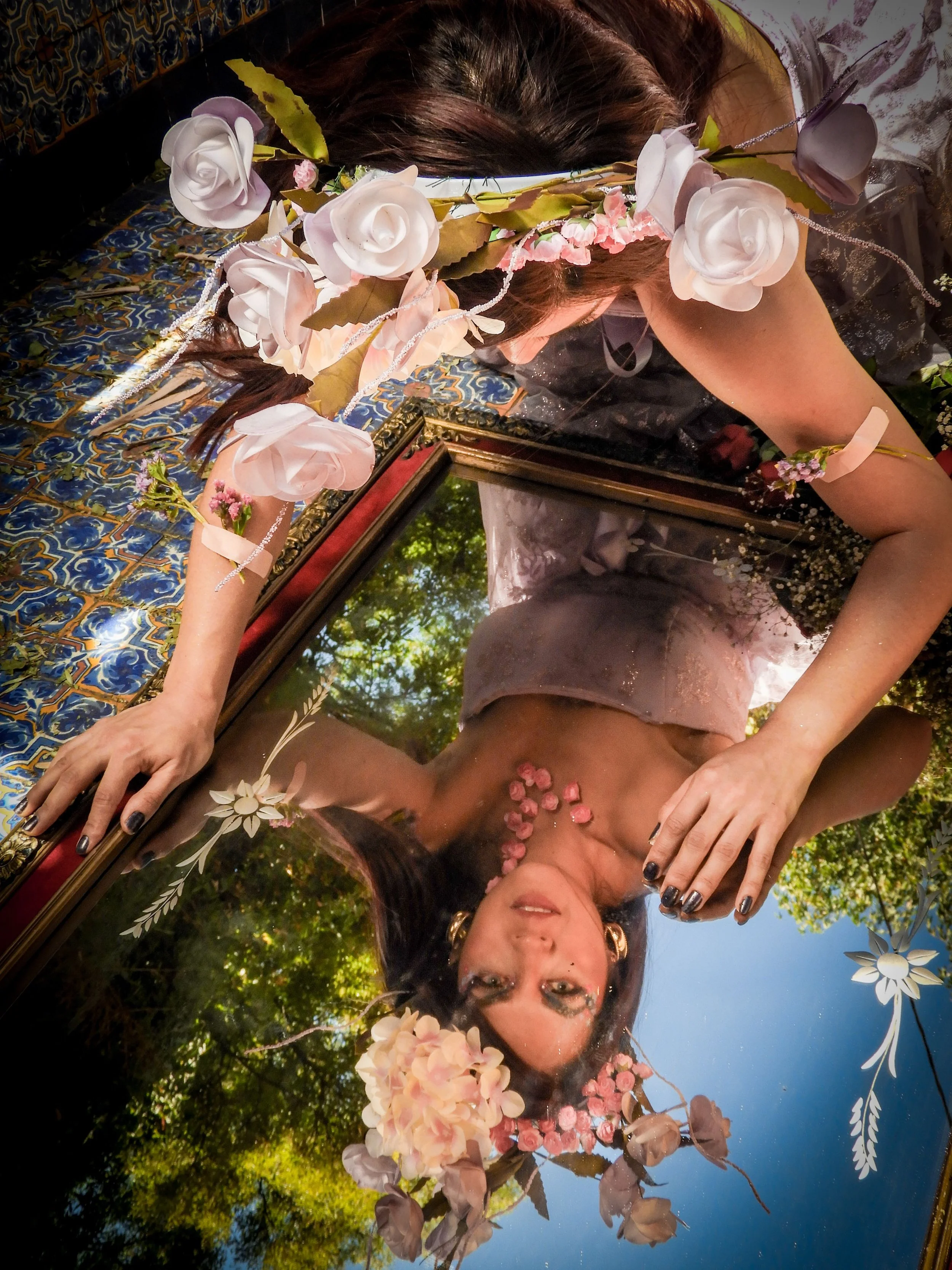
For generations, women have been told there is always another version of themselves waiting to be achieved. As June and the Summer Solstice approach, perhaps the greater lesson is not self-improvement, but self-recognition. A reflection on celebration, femininity, and the ancient wisdom of honoring who we already are.
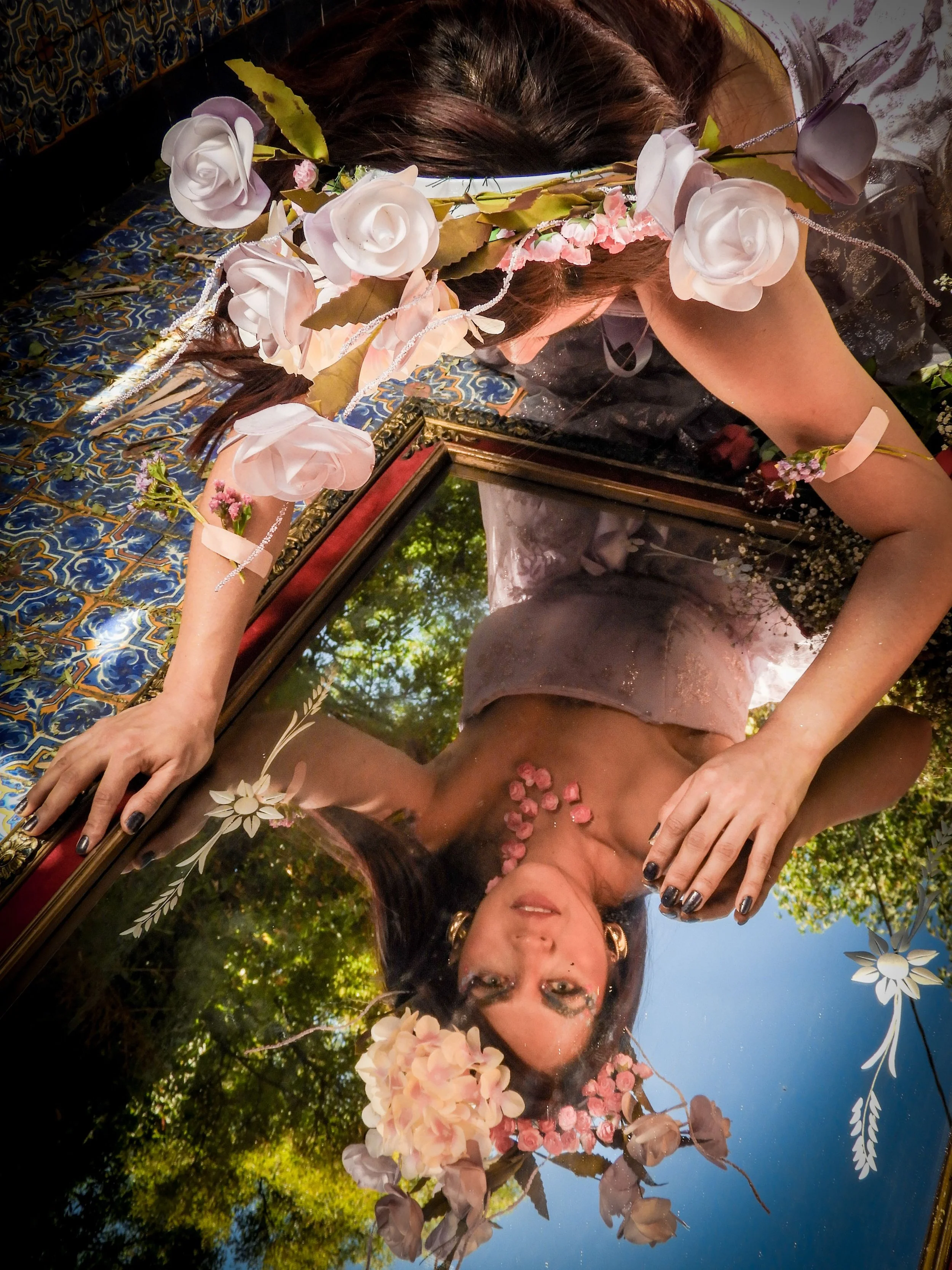
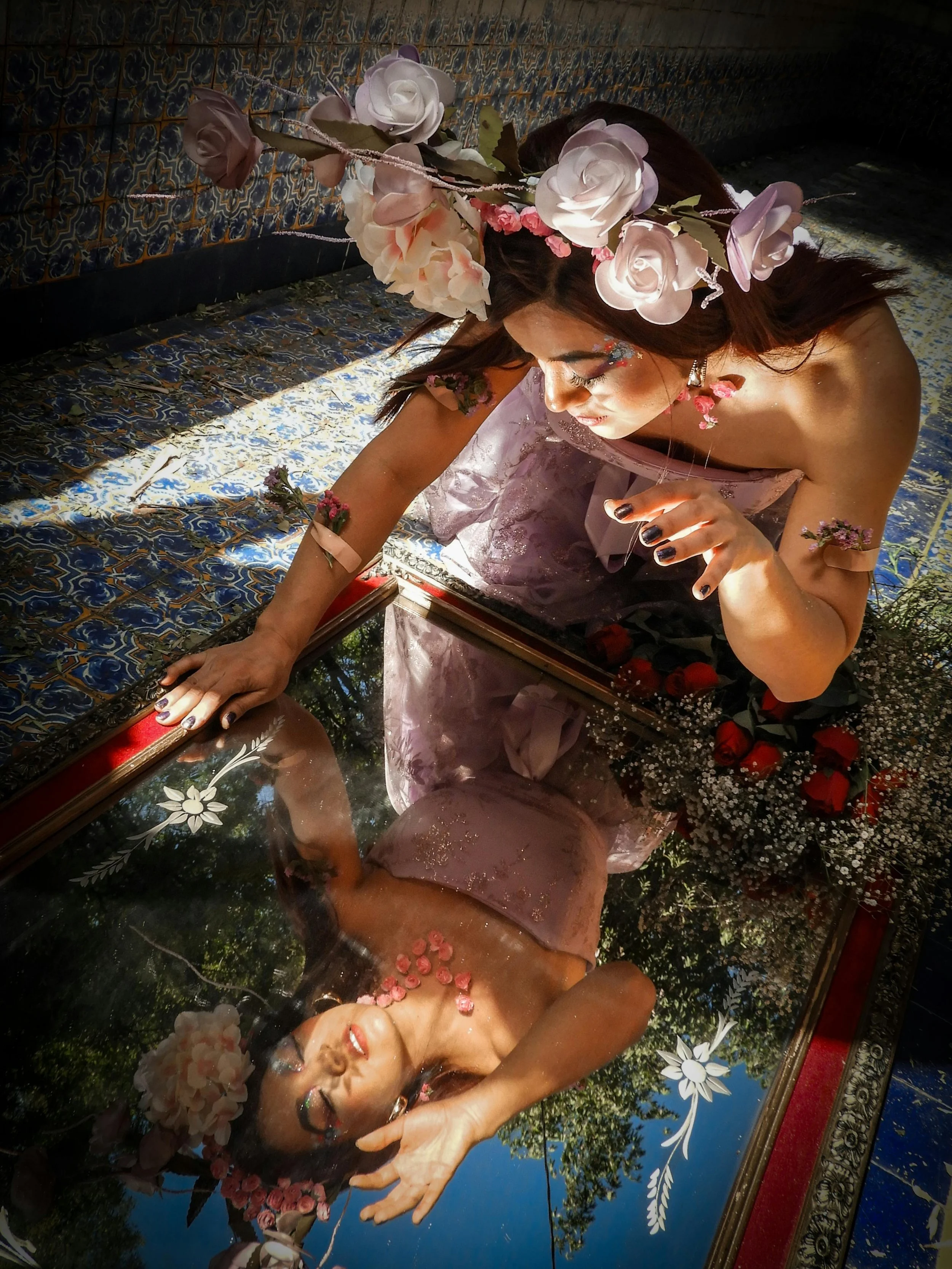
Photography by Ericka Sánchez
For as long as I can remember, womanhood has been a list of assignments.
Lose weight. Gain weight. Be softer. Don't cry. Cry more. Be stronger. Be ambitious... but not too ambitious. Don't intimidate. Stand up for yourself. Heal your trauma. Fix your habits. Improve your mindset. Be more positive. Be more aggressive. Learn the lesson. Become the best version of yourself.
The language changes with every generation, but the message remains remarkably consistent: there is always another version of yourself waiting to be achieved. And even as I write this, I think about the fact that within spiritual communities, the same pressure persists. The toxic positivity of staying positive in order to change. The rush to heal our wounds, balance our chakras, release our shadows, manifest our desires, and keep evolving.
Keep evolving.
Keep evolving.
While growth is an absolutely beautiful thing and is often necessary, it can become another form of striving that is just as toxic as the negativity or stagnation we are leaving behind. It can become another way for us to see ourselves as not enough. This is one of the reasons June is such an important month.
It is refreshing.
Because it reminds us that we are enough - in this time, in this moment, in this now - with simply a flower upon our heads and our faces turned toward the sun.
Historically, the days leading to the Summer Solstice were not dedicated to self-improvement. They were dedicated to celebration.
Across Europe, communities gathered beneath the lengthening daylight to dance, feast, weave flower crowns, sing, and honor the abundance of the season. Bonfires illuminated hillsides. Young women braided flowers and herbs into wreaths. Families remained outdoors long into the evening as the sun lingered on the horizon.
In our celebration, therein lies transformation.
In our celebration, therein lies recognition.
We look to the earth and see what is already happening. We recognize the Mother loving us back. The crops are growing. The flowers are blooming. The earth is alive. For one brief moment each year, people pause to acknowledge what already exists rather than obsess over what still needs to be changed.
In this era, we are masters of flaw recognition. We all know what we need to work on. We all know our insecurities and unfinished projects. We all know our emotional wounds and our goals for the next month and the next year. Hell, the next ten years. But can we say what we are proud of? We look to the birds and marvel at their wings and colorful plumage. Yet how often do we marvel at our own eyes or the sheen of our own hair? We look to the grass and see the green and are reminded of childhood, of rolling down hills without a care in the world. Yet do we marvel at the feet that have carried us through years and years of life without immediately pointing out that our manicure is two weeks overdue?
In June, I call upon women to be proud of themselves without hesitation. Do not celebrate your milestones with reluctance. Do not diminish your accomplishments. Remember, we are the light bearers. We are the life bearers, whether we choose to give life or not. We are the portals through which humanity itself enters this world. That is not a compliment. It is a truth that cannot so easily be brushed aside.
And while a billion-dollar industry exists to convince us that fulfillment lies just beyond the next purchase, the next certification, the next breakthrough, or the next transformational retreat, there is always the wind willing to acknowledge your beauty for free as it brushes your cheek with a summer kiss.
There is always another mountain. But there is rarely a moment to stand at the summit. The Summer Solstice offers an alternative philosophy. It offers self-love and recognition in the present moment. Nature never apologizes for its strength, its abundance, or its lack thereof. Does the sunflower question whether it deserves to turn its face toward the light? Does the oak tree spend its days wishing it were taller?
It simply is.
Perhaps this is why so many women feel drawn to flower crowns, garden gatherings, outdoor dinners, and seasonal rituals during this time of year. Beneath the aesthetics lies something deeper: the remembrance of a tradition and an ancient truth.
Celebration is not a reward for perfection. It is a practice of recognition. Celebration reminds us that though we may not have all the achievements we desire, we are still here. We are still living. We are still becoming.
There will always be time for improvement.
But June reminds us that there must also be time for celebration.
And perhaps the most important thing a woman can celebrate is not who she hopes to become, but who she already is.
When the Body Starts Screaming: May, Beltane, and the Female Cost of Ignored Pain
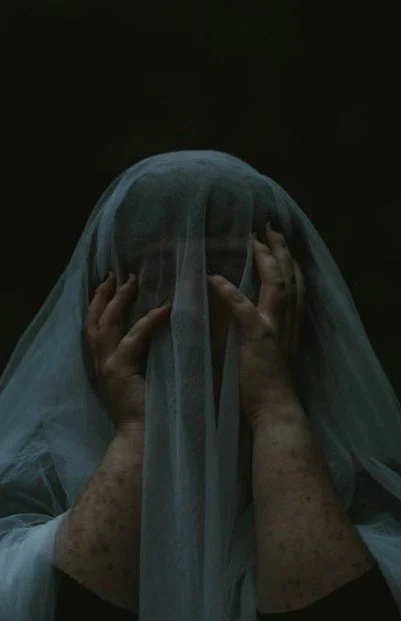
For centuries women have been taught to distrust this connection. Female discomfort has long been trivialized, romanticized, or pathologized. A woman in pain was dramatic. A woman emotionally perceptive was unstable. A woman highly sensitive to her environment was irrational. A woman whose body reacted visibly to stress was hysterical. We know the historical language well because women who listened too closely - to cycles, herbs, dreams, blood, intuition, weather, and the unseen shifts in atmosphere - were often the women pushed to the margins and called witches. Photo by Leo Gilmant
Photo by Léo Gilmant
May arrives dressed as renewal. The flowers bloom, the light changes, the earth softens, and everywhere there is an expectation that life should begin to feel lighter. Astrologically, May is a month of acceleration and emergence. We move through the embodied steadiness of Taurus - a sign deeply connected to the senses, the physical body, pleasure, appetite, and material existence - while approaching the mental quickening of Gemini. It is a seasonal threshold when what has been dormant no longer wishes to remain underground. Things surface in May. Emotionally, spiritually, and physically, this is often the month when what we have successfully buried begins to make itself known.
That is part of why May can feel strangely confronting for women.
Within pagan tradition, May also carries Beltane, the ancient fire festival historically observed at the beginning of the month to mark fertility, passion, sensuality, and the full return of life force after winter. Beltane was a celebration of vitality, but it was also a crossing point - an acknowledgment that the bright half of the year had begun and that dormant energy was once again moving. Fire rituals, purification rites, and communal observances all centered around one essential idea: life cannot remain suppressed forever. Nature pushes outward. Desire returns. The body wakes up.
Yet many women move into May not feeling invigorated, but exhausted. Instead of bloom, there is inflammation. Instead of sensuality, there is numbness. Instead of vitality, there is adrenal fatigue, anxiety, sleeplessness, unexplained tears, panic, weight retention, chronic pain, or the deep and unnerving sensation that something internally is no longer cooperating.
This is not incidental.
On the three-dimensional plane, May is Mental Health Awareness Month, and this week specifically is National Women’s Health Week, a national observance intended to remind women to schedule the appointments, screenings, and checkups they routinely postpone. But these observances, while practical, point to something much larger than annual medical housekeeping. They reveal a long-standing truth about female conditioning: women have been trained, historically and culturally, to delay attention to their own suffering until suffering becomes impossible to manage.
Women are expected to continue functioning while uncomfortable. We are taught to normalize fatigue, to dismiss hormonal shifts, to explain away anxiety, to minimize pain, to work through burnout, and to place the body’s complaints somewhere behind the needs of children, spouses, work, money, caregiving, logistics, and emotional labor. By the time many women seek help, the body is no longer signaling politely. It is interrupting.
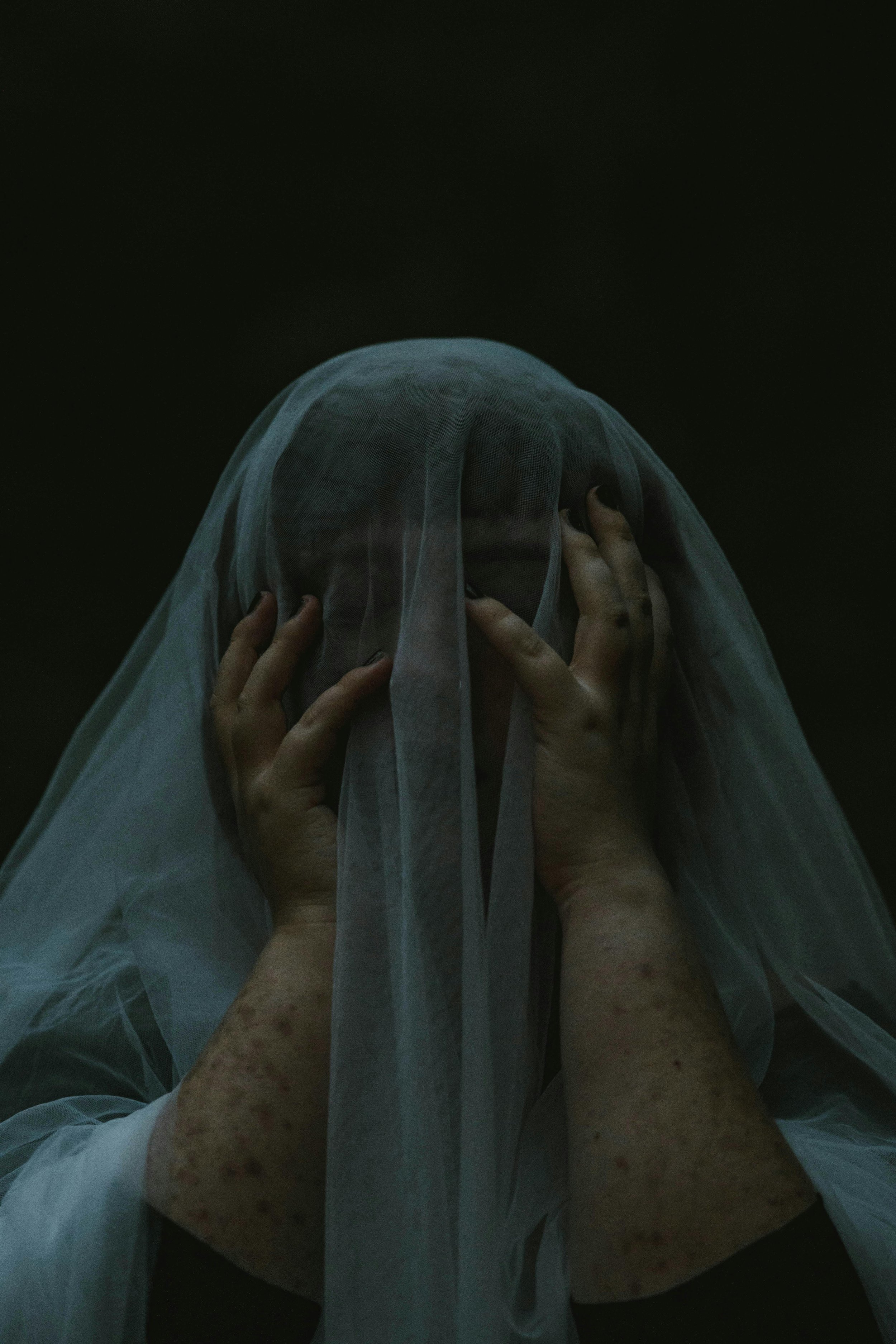
This is when the body starts screaming.
Sometimes that scream is medical: autoimmune flare, nervous system dysregulation, chronic migraines, gut dysfunction, hormonal collapse, unexplained inflammation, fertility struggles, or the kind of exhaustion that no amount of sleep seems capable of repairing. Sometimes the scream is psychological: panic attacks, rage, depression, emotional detachment, brain fog, or an inability to tolerate one more demand. More often than not, it is both. The body and the mind are not separate enough to suffer independently, no matter how modern medicine prefers to categorize them.
For centuries women have been taught to distrust this connection. Female discomfort has long been trivialized, romanticized, or pathologized. A woman in pain was dramatic. A woman emotionally perceptive was unstable. A woman highly sensitive to her environment was irrational. A woman whose body reacted visibly to stress was hysterical. We know the historical language well because women who listened too closely - to cycles, herbs, dreams, blood, intuition, weather, and the unseen shifts in atmosphere - were often the women pushed to the margins and called witches.
This is where the spiritual thread becomes impossible to ignore.
The witch archetype was never simply about occult aesthetics or ritual for ritual’s sake. At its oldest root, it was often the woman who understood that the body is not separate from intuition. She knew that symptoms arrive before collapse. She knew that grief lodges somewhere. She knew that anxiety changes breathing, that trauma changes digestion, that resentment changes hormones, that silence changes the nervous system, and that environments can make a body ill long before a physician can name why. Traditional women knew how to read the body symbolically and practically at once. The body was not just anatomy. It was messenger, warning system, weather vane, and archive.
Modern women, by contrast, are rewarded for severing that communication.
We are praised when we remain productive despite depletion. We are admired when we sacrifice sleep, appetite, boundaries, and emotional stability for everyone around us. We are considered strong when our suffering remains invisible. We wear overextension as discipline and dissociation as competence. Then we act surprised when the body eventually revolts.
But the body does revolt. It always does.
That is why May feels so symbolically appropriate for this conversation. Beltane asks us to look at life force. Mental Health Awareness Month asks us to look at what has been mentally buried. National Women’s Health Week asks us to look at what has been physically postponed. All three point to the same uncomfortable reality: women are often the last to grant themselves permission to investigate their own pain.
And pain, ignored long enough, does not disappear. It changes form.
It becomes insomnia. It becomes hormonal chaos. It becomes clenched jaws, inflamed guts, racing thoughts, sudden tears, sexual numbness, skin eruptions, migraines, shallow breathing, and a nervous system that never truly powers down. The body will continue translating what the conscious mind refuses to process until translation becomes disruption.
This is why so many women feel “off” in spring without understanding why. Spring is not only a season of blossoms. It is a season of emergence. The same earth that forces seeds upward also has a way of forcing buried truths to the surface. What winter allowed us to numb, spring often makes visible.
There is something deeply spiritual in recognizing that the scream is not the body betraying us. It is the body refusing to lie any longer.
Women have spent centuries being taught to ignore what is inside of us - instinct, intuition, fatigue, sadness, pain, resentment, and warning signs alike. We have been told to smile through it, organize through it, mother through it, work through it, and remain desirable through it. But there comes a point when the body stops negotiating with performance.
It raises its voice.
And perhaps that voice, however inconvenient, is not punishment.
Perhaps it is the first honest thing we have heard in years.
Real Life Integration: The Everyday Witch
There is a truth many of us avoid saying out loud.
We are all witches in one way or another.
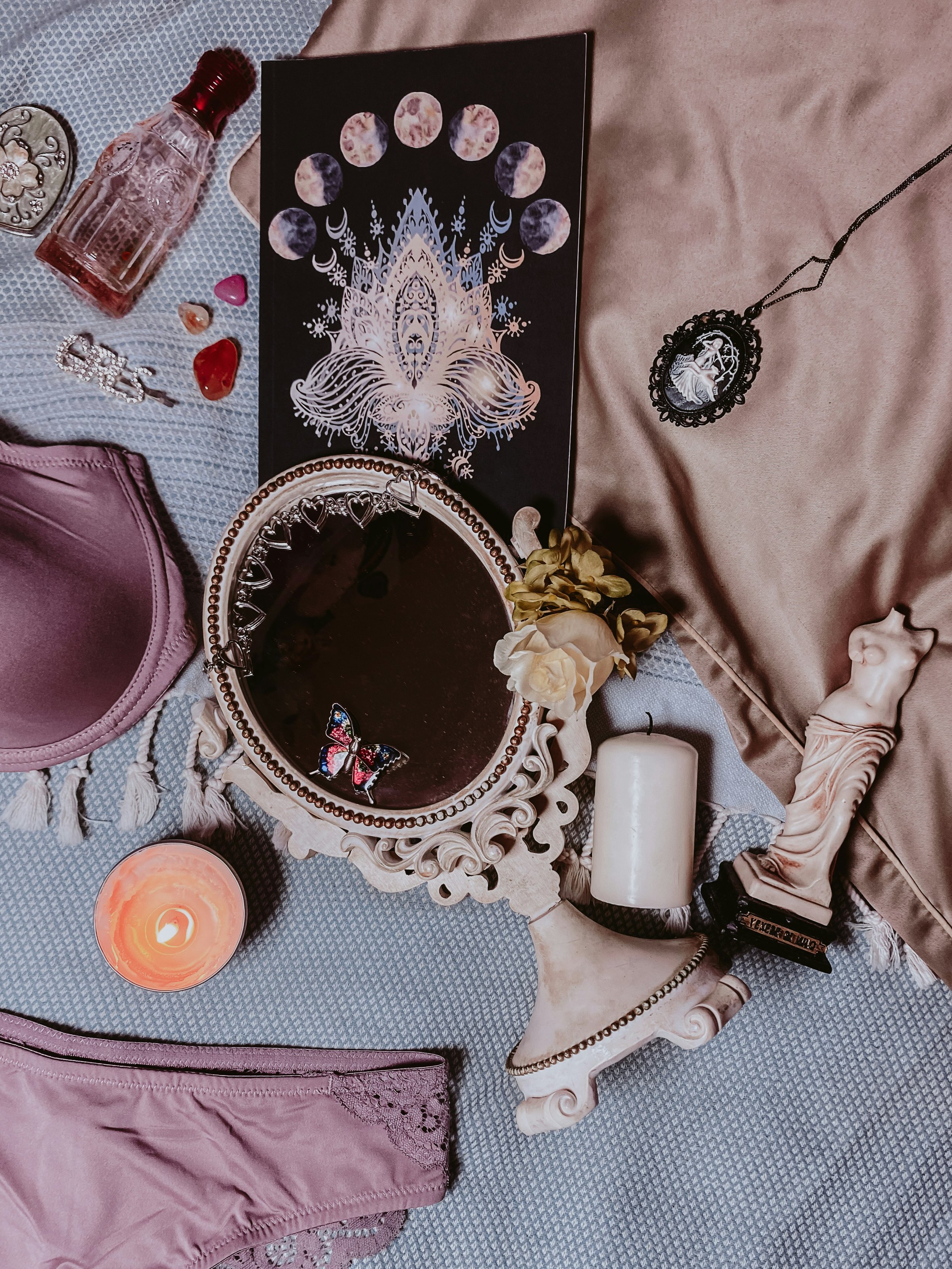
Some of us live fully in the craft with candles, herbs, sigils, covens, moon charts, and altar rooms that look like museums of inherited magic. Some of us are wild witches who practice in the quiet and the unseen. And many of us fall somewhere along that spectrum, moving back and forth depending on the season of our lives.
Written by Epifania Arriagada Photo by Emily Underworld