

Sole in Virgo: When a City Looks to the Stars| Art
Elisa Seitzinger Brings Zodiac, Tarot and the Occult Above Milan
There is something wonderfully strange about asking an astrological question about a building. Not who designed it, what period it belongs to, or what purpose it was meant to serve, but something we usually reserve for people: What is its sign?
That question sits at the heart of Sole in Virgo: La Galleria, lo zodiaco e i tarocchi, the solo exhibition by Italian artist and illustrator Elisa Seitzinger at HIGHLINE Milano. Curated by Flavio Di Renzo, the exhibition occupies the spaces above Milan's Galleria Vittorio Emanuele II and runs through October 4, 2026.

The answer to the exhibition's question is Virgo. The Galleria Vittorio Emanuele II was inaugurated on September 15, 1867, placing its symbolic birth beneath the sign of the Maiden. From that coincidence, Seitzinger and the exhibition construct something much larger: a conversation between architecture and astrology, Renaissance imagery and contemporary illustration, the rational city and the human desire to find meaning in the sky.
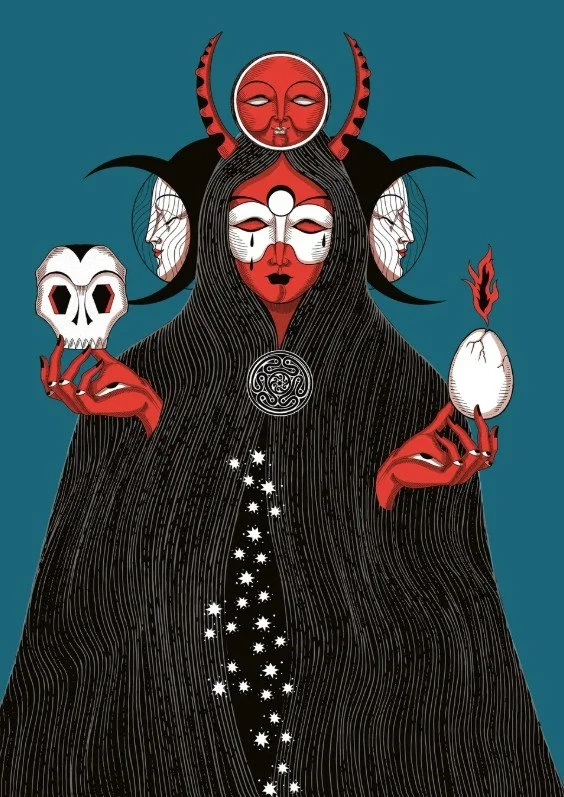
ECATE by Elisa Seitzinger. Limited-edition fine art print. Image courtesy of the artist’s official shop. View the work at Elisa Seitzinger’s official shop
A Virgo Made of Iron and Glass
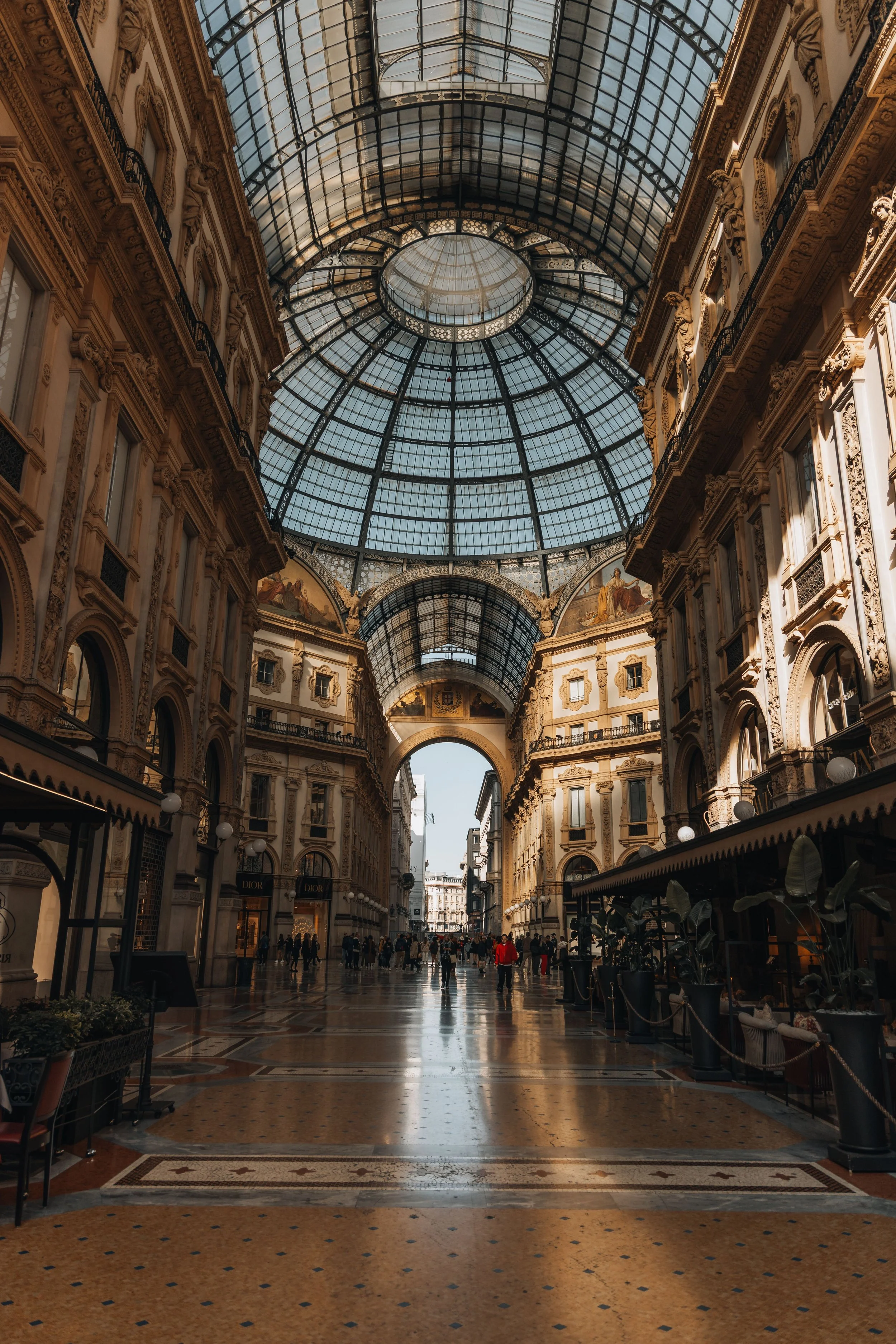
The idea becomes particularly compelling when considering the building itself. The Galleria is monumental, but it is also structured. Its great glass and iron vaults impose geometry upon light. Commerce, beauty, movement and function coexist inside an architecture built with extraordinary attention to proportion.
Seen through the symbolic language of astrology, Virgo suddenly feels less like an amusing coincidence.
Virgo is traditionally associated with discernment, order, attention and the relationship between usefulness and refinement. The exhibition uses the Galleria's September inauguration as a point of departure, treating the building almost as a living symbolic organism capable of entering into conversation with the zodiac.
This is not astrology being asked to prove something about architecture. It is art doing what art has always done: taking seemingly unrelated systems and placing them beside one another until a new way of seeing emerges.
A building acquires a birth date. A birth date acquires a constellation. A constellation becomes an archetype. Suddenly the architecture we thought we understood becomes strange again.
The Zodiac Above the City
The location matters. HIGHLINE Milano sits above the Galleria, where visitors can move through the restored Sala degli Orologi and along the elevated Skybridge. The exhibition therefore unfolds physically above the ordinary movement of the city. Visitors encounter zodiac imagery while suspended over Milan, placing the symbolic heavens above a very real landscape of streets, rooftops and human activity.
Seitzinger's visual language is particularly suited to this meeting of worlds. Her work draws heavily from symbolism, archetypal imagery and esoteric traditions while maintaining the precision of contemporary illustration. Within Sole in Virgo, twelve zodiac tapestries appear alongside works inspired by Petrarch's Triumphs, tarot imagery, an illuminated obelisk and a large representation of the Sun.
The result is not simply an exhibition about astrology. It is an exhibition about systems humans have created to understand existence.
The zodiac organizes the heavens. Tarot organizes archetypes into images. Architecture organizes physical space. Clocks organize time. Art reorganizes all of them.
Milan and the Tarot
The presence of tarot carries particular significance in Milan. Long before tarot became associated primarily with divination, elaborately illustrated cards were produced for the aristocratic courts of northern Italy. The Visconti and Sforza families are closely connected to some of the earliest surviving tarot decks, making Milan an important location in the history of tarot imagery.
Sole in Virgo acknowledges that history rather than treating tarot as an aesthetic object detached from its origins. The exhibition includes material examining the Milanese history of the cards and a handmade reproduction of the tarot associated with Filippo Maria Visconti, presented in collaboration with Il Meneghello Edizioni.
This historical context changes the experience of seeing tarot inside the Galleria. The cards are not visitors imported from some distant occult tradition. They belong to a visual history that has existed in and around Milan for centuries.
Their meanings, however, have never remained fixed.
Tarot has been game, artwork, aristocratic object, occult system, divination tool and instrument of introspection. Its ability to survive may come precisely from this capacity to change while retaining its recognizable symbolic language.
Why We Keep Returning to Symbols
Perhaps the most interesting question raised by Sole in Virgo has little to do with whether someone believes astrology can describe a building or tarot can reveal the future.
Why, in a culture overflowing with information, do we remain attracted to symbolic systems?
Seitzinger has connected contemporary interest in tarot with introspection and a renewed fascination with mysticism, suggesting that periods dominated by rationality and technological acceleration can also generate a desire for their apparent opposite.
We have more information available to us than any previous generation, yet information has not eliminated uncertainty. An algorithm can calculate the fastest route across a city but cannot tell us whether leaving is the right decision. A calendar can tell us exactly how much time has passed while remaining silent about whether we have spent that time well.
Symbolic systems operate in that gap.
They do not necessarily give us facts. They give us images through which we can ask questions.
The Hermit can become solitude. The Tower can become disruption. The Sun can become illumination. Virgo can become discernment. None of these images has to predict an event to provoke recognition.
Perhaps this is why old symbols continue finding new audiences. Their usefulness is not dependent upon remaining historically unchanged. Each generation looks into them and finds another reflection.
The Sun and the Clock
There is another layer to the exhibition that feels particularly appropriate. HIGHLINE includes the historic Sala degli Orologi, where machinery once helped synchronize Milan's public clocks. Within an exhibition concerned with zodiac cycles, tarot and celestial symbolism, a room dedicated to measuring time becomes almost impossible to ignore.
Astrology is, after all, inseparable from time. Birth charts freeze the sky at a particular moment. Zodiac seasons divide the solar year. Tarot readings frequently concern what has happened, what is happening and what may come. Human beings have spent centuries creating instruments for measuring time while simultaneously creating stories to understand what time means.
A clock can tell us the hour.
It cannot tell us what the hour means.
That remains our work.
Between the Visible and Invisible
One of the exhibition's most compelling tensions is the relationship between what can be physically observed and what humans construct symbolically around it. The Galleria exists. Its inauguration date exists. The stars exist. The historical tarot cards exist.
The meanings connecting them are something we create.
That does not necessarily make those meanings insignificant.
Art has always occupied the territory between object and interpretation. A painted flower is simultaneously pigment and symbol. A portrait is a person and an idea of that person. A building can be stone, iron and glass while also becoming memory, identity and mythology.
Sole in Virgo extends that possibility toward the heavens.
For a few months above Milan, a nineteenth-century shopping arcade becomes a Virgo. Renaissance cards become contemporary conversation partners. Zodiac figures hang above the city while an old clock continues marking ordinary human time.
Perhaps none of these systems has to explain the universe completely to remain valuable.
Sometimes a symbol only needs to interrupt the way we normally see something.
And perhaps that is enough.
Sole in Virgo: La Galleria, lo zodiaco e i tarocchi
Elisa Seitzinger
Curated by Flavio Di Renzo
HIGHLINE Milano, Galleria Vittorio Emanuele II
On view through October 4, 2026.