

REAL STORIES | Julian of Norwich and the Sixteen Visions That Changed Her Life
Photography by Ron Lach
More than six centuries ago, a woman lay gravely ill in medieval England believing she was about to die.
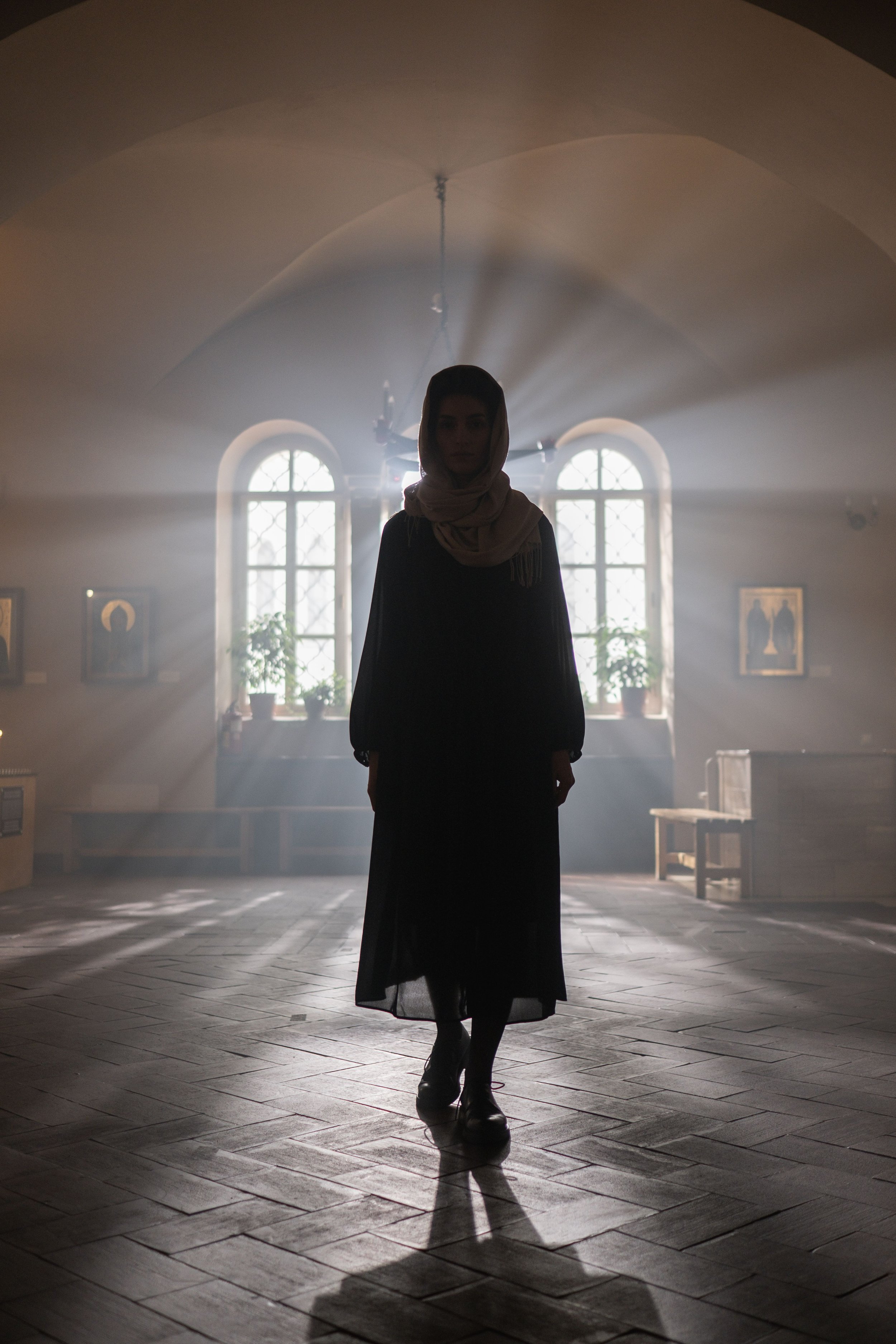
She was approximately thirty years old. We do not know the name she was given at birth. History remembers her instead as Julian of Norwich, the name associated with the church of St. Julian in Norwich, England, where she would later live as an anchoress, a woman who withdrew from ordinary public life in order to devote herself to prayer and contemplation.
But before Julian became one of medieval Christianity's most extraordinary mystics, she was a woman lying in a bed, surrounded by people who believed her life was ending.
Then she began to see things.
Julian would eventually describe sixteen revelations, or "showings," that she believed came directly from God. Her account became Revelations of Divine Love, a work now regarded as the earliest surviving book in English known to have been written by a woman.
Whether we approach Julian's experience through religion, mysticism, altered consciousness or the mysteries surrounding proximity to death, her story begins with something deeply human:
A woman believed she was dying.
And in that space between life and death, she experienced a world beyond the one everyone else could see.
The Illness
Julian dated her experience precisely.
It was May 13, 1373.
In her account, Julian explained that she had previously prayed for three particular spiritual gifts. Among them was an experience of severe bodily illness while she was still young, something she believed would bring her closer to an understanding of mortality and God.
At around thirty and a half years old, that illness came.
Her condition became so serious that those around her believed she would not survive. Julian described gradually losing physical sensation as death appeared to approach.
This is important when reading what happened next.
Her visions did not occur while she was peacefully sitting in contemplation.
They emerged during an experience she understood as the possible end of her life.
Sixteen Showings
Julian called what she experienced showings.
The first fifteen occurred over several hours, beginning in the early morning and continuing through approximately nine o'clock. A final revelation followed later. Over the years that followed, Julian continued contemplating what she believed she had been shown.
Her visions were intensely Christian. She saw imagery associated with Christ's suffering, blood, the Virgin Mary, sin, compassion and divine love.
But within those visions were also ideas that would make Julian remarkable even centuries later.
Again and again, she returned to love.
Not punishment.
Not terror.
Love.
Her mystical theology eventually developed around the conviction that divine love existed beneath everything, even when human beings could not understand suffering or see how something broken might ever become whole.
One of the messages associated with her revelations became the most famous expression of her work:
"All shall be well."
It is a remarkably hopeful conclusion from someone whose spiritual awakening occurred while she believed she was dying.
God as Mother
Perhaps one of the most fascinating elements of Julian's spirituality is her use of maternal imagery for the divine.
Living within medieval Christianity, Julian did not abandon Christian theology. Yet her understanding of God was not confined entirely to masculine imagery.
She wrote about Christ as mother.
Divine love could nourish, protect, birth and sustain.
For a woman writing in the fourteenth century, this was an extraordinary theological vision. The sacred, in Julian's understanding, could possess qualities her culture associated with motherhood while remaining fully divine.
It gives her work an unexpected resonance for modern readers interested in the feminine dimensions of spirituality.
Centuries before contemporary conversations about balancing masculine and feminine conceptions of divinity, a medieval woman sitting in spiritual isolation was already imagining sacred love through the body and language of motherhood.
The Hazelnut
Among Julian's most beautiful visions was something extraordinarily small.
She described seeing something in the palm of her hand resembling a hazelnut.
Looking at it, she wondered what it could possibly be.
Her answer was essentially everything that exists.
The tiny object seemed fragile enough that it might simply disappear. Yet Julian understood that it continued to exist because it was loved by God.
From something no larger than a nut, she drew an enormous spiritual conclusion.
Existence itself was held by love.
There is something strikingly modern about the image: the universe reduced to something small enough to rest in a woman's palm while still containing the mystery of creation.
Was It a Near-Death Experience?
It is tempting for a modern reader to place Julian's experience into contemporary categories.
Was she experiencing a near-death phenomenon?
Was her illness producing altered consciousness?
Were the visions neurological?
Were they religious experiences?
Or did Julian encounter precisely what she believed she encountered?
We cannot answer those questions with certainty.
And perhaps we do not need to.
The historical record tells us what Julian believed happened to her.
She experienced a devastating illness. She believed herself close to death. She received a sequence of visions. She survived. And rather than allowing the experience to disappear into memory, she spent years trying to understand it.
Her visions became the organizing spiritual event of her life.
That alone makes her story remarkable.
The Woman Behind the Visions
After her recovery, Julian eventually became an anchoress in Norwich.
Anchoresses occupied an unusual position in medieval religious life. They lived enclosed lives devoted largely to prayer, often in small rooms attached to churches. Yet enclosure did not necessarily mean complete disconnection from the community. People could visit an anchoress seeking spiritual counsel.
From that life of contemplation, Julian continued returning to the visions she had experienced.
Her surviving work exists in different forms, including a shorter account and a much more developed version reflecting years of contemplation.
She did not simply record what she saw.
She spent decades asking what it meant.
That distinction may be one reason her writing endured.
A Woman Writing Herself Into History
There is another extraordinary element to Julian's story.
She wrote it down.
Women's voices from medieval Europe survive far less frequently than men's, particularly voices describing their own interior spiritual experiences.
Julian preserved hers.
She recorded fear, illness, doubt, revelation and contemplation from the perspective of the woman who experienced them.
In doing so, she left behind something more intimate than doctrine.
She left testimony.
More than six hundred years later, we cannot enter the room where Julian lay believing she was dying. We cannot see what she saw or determine with certainty what produced the visions that followed.
We have only her words.
But perhaps that is what makes accounts like Julian's so compelling.
Real stories of mystical experience rarely arrive with proof neatly attached.
They survive because someone experienced something powerful enough to change the direction of a life and decided it was worth telling.
Julian survived her illness.
The visions survived Julian.
And centuries later, the woman who once believed she was disappearing from this world remains present through the story she refused to let disappear.
About Julian of Norwich
Julian of Norwich was an English Christian mystic and anchoress who lived during the fourteenth and early fifteenth centuries. Her exact identity and birth name remain unknown. Her writings grew from sixteen mystical revelations she reported experiencing during a severe illness in 1373.
Her Revelations of Divine Love is regarded as the earliest surviving English-language book known to have been written by a woman. Julian's spirituality emphasized divine love, compassion, hope and the maternal imagery of Christ.
Source & Public Domain Credit
This article is based on Julian of Norwich's own account in Revelations of Divine Love. The edition edited by Grace Warrack, first published in 1901, is listed by Project Gutenberg as public domain in the United States.
Original mystic and author: Julian of Norwich
Recorded visions: 1373
Source text:Revelations of Divine Love
Edition: Grace Warrack, 1901
Copyright status of sourced edition: Public domain in the United States