

The Three White Flames of May: A Photographic Exploration
Photography by Ann Bugaichuk
Why do women light three white candles at the threshold of Beltane?
Every year, as April closes and May begins, images begin circulating quietly through spiritual spaces: three white candles burning together on a windowsill, a kitchen altar, a bedside table, or in the center of a simple floral arrangement. To some, it looks like another minimalist witch ritual made for social media. To others, it feels deeply familiar, even if they cannot explain why. Three white flames in early May carry an old memory - one that belongs not to a single religion, but to centuries of layered female ritual, household blessing, and threshold observance.
The beginning of May has long been treated as a crossing point.
In the old Gaelic calendar, Beltane marked the opening of the bright half of the year. Traditionally observed on May 1, with many celebrations beginning at sundown on April 30, Beltane was a fire festival tied to fertility, protection, agricultural blessing, and the visible return of life after winter. Villages lit communal bonfires. Cattle were driven between flames to ward off disease. Hearth fires were relit from ceremonial fire. Homes, animals, and bodies were symbolically purified before entering the growing season. Fire was not decorative. It was a threshold technology - a way of cleansing what had stagnated and blessing what was about to expand.
Over time, as communal bonfires disappeared and Christianity folded itself over older pagan calendars, household ritual remained. Women did what women have always done: they translated public ceremony into domestic practice. Large fire became candle flame. Seasonal purification became home blessing. The sacred crossing was carried indoors.
This is where the three white candles begin to make sense.

The number three has ancient ritual significance across European folk practice. It marks completion, passage, and balanced union. In pagan symbolism it may represent the triple feminine current - maiden, mother, and crone - or body, mind, and spirit moving through one gateway. In Catholic folk households, where May became associated with Marian devotion, groups of white candles were also lit before household altars to invoke maternal protection, peace, and divine covering during the month dedicated to the Virgin. White cloth, white flowers, and grouped white lights became common visual language in May devotional practice.
What survives in modern folk magic is often not pure paganism and not pure Christianity, but the residue of women blending what worked.
Three flames.
White wax.
A prayer without needing formal liturgy.
A household pause at the entrance of May.

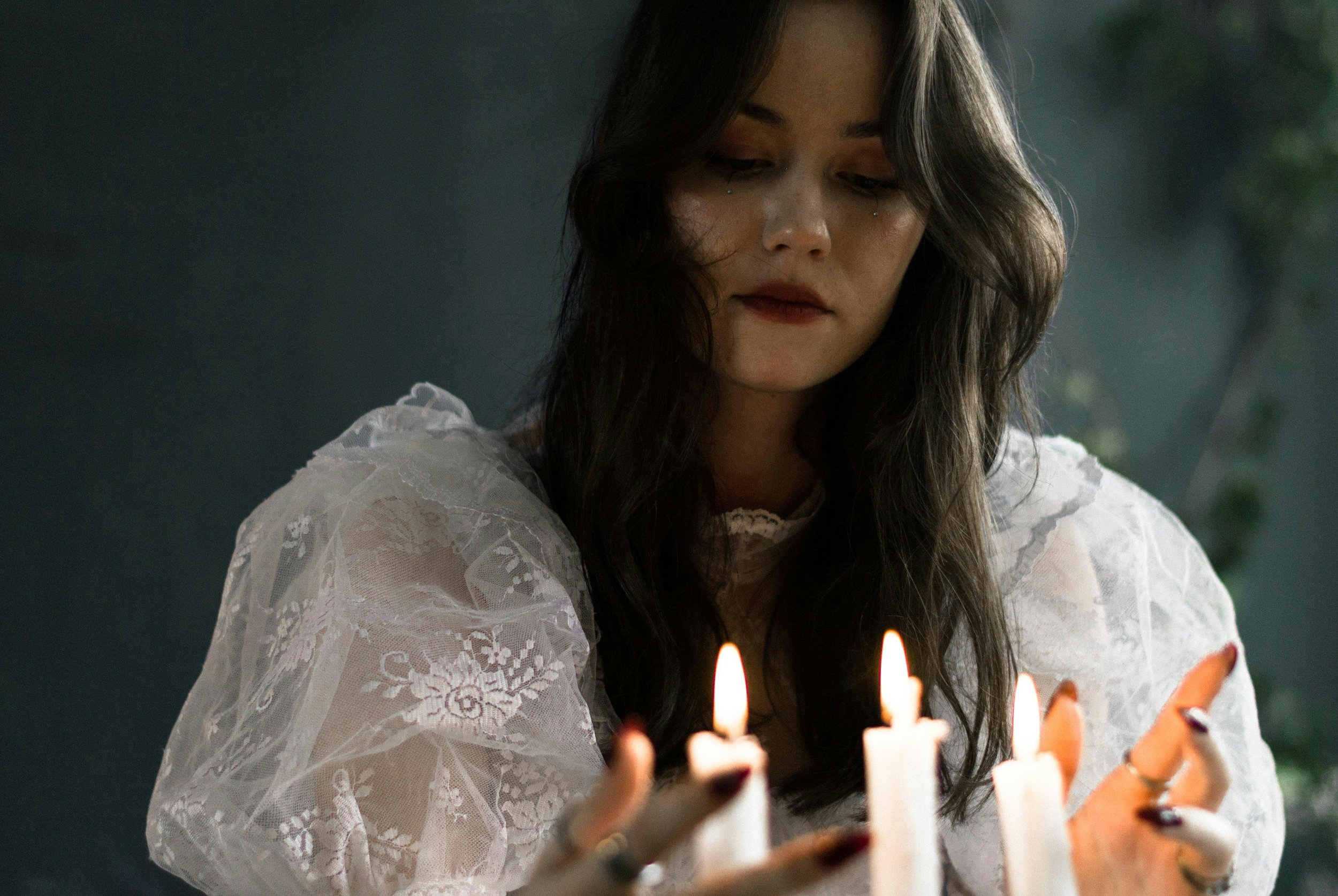

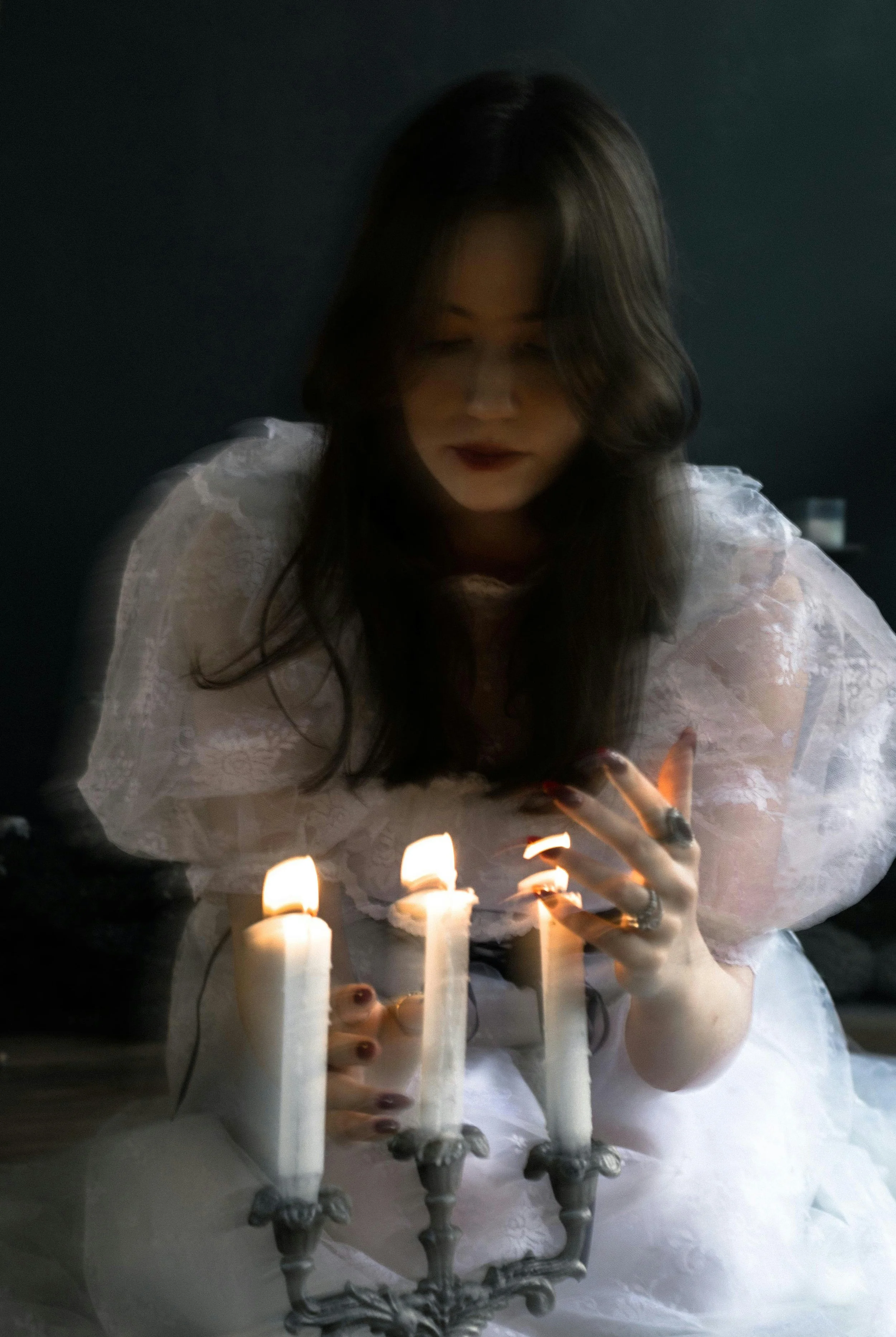


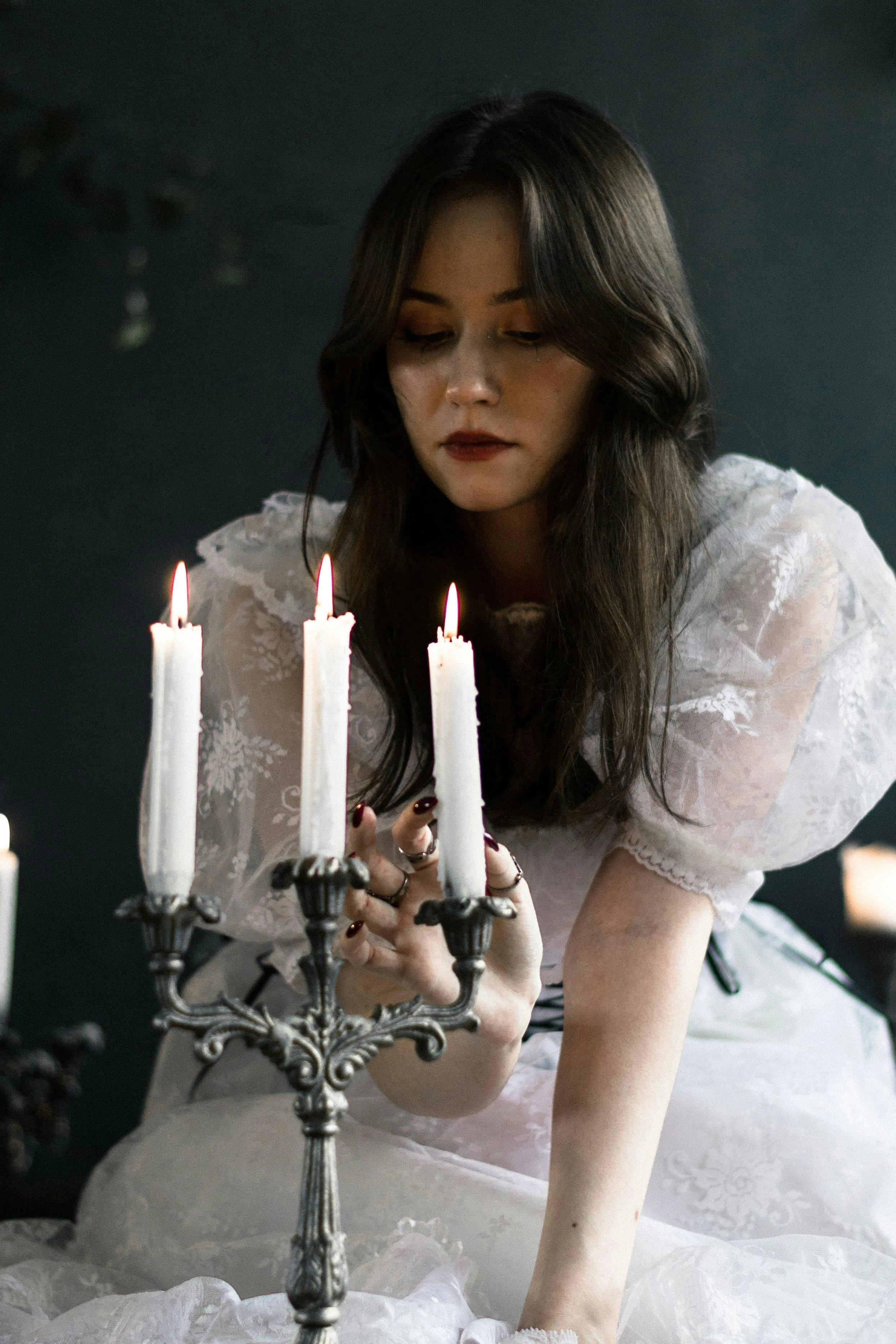
White matters here. Beltane is often commercially sold now in reds, pinks, and overt fertility symbolism, but the white flame belongs to another dimension of the season. White is purification before passion. It is clarity before abundance. It is the sweeping out of winter’s residue - emotional, spiritual, and physical - before inviting the life force of summer inward. White candles do not ask first for romance. They ask for clean passage.
This is why the ritual has persisted in quiet female circles for so long.
To light three white candles at the beginning of May is, symbolically, to bless three domains at once: the body, the home, and the road ahead. It is an acknowledgment that growth requires protection. New seasons are not entered casually. They are crossed with intention. Women historically understood that thresholds are spiritually sensitive places - doorways, solstices, births, deaths, marriages, first harvests, and the opening of summer. You do not simply walk through them. You mark them.
Three white flames mark May as a threshold worth noticing.
One for what is being cleansed.
One for what is being called back to life.
One for what must remain protected as it grows.
That may sound poetic, but it is also practical in the oldest folk sense. Seasonal rituals were never merely decorative acts of mysticism. They were nervous system anchors, domestic reset points, and communal agreements with time. They gave women a moment to stop, look at the household, look at themselves, and ask what energy they were carrying into the next chapter of the year.
May has always been associated with visible life returning - fields greening, animals breeding, flowers opening, longer light, warmer nights. But internally, women often reach May carrying the opposite: exhaustion, clutter, stagnant emotion, winter grief, creative drought, relational fatigue. The lighting of three white candles becomes a refusal to drag every dead thing from winter into summer.
It is a gesture of deliberate entry.
Not all old rituals survive because people remember the original theology behind them. Many survive because the body recognizes the usefulness before the mind recognizes the history. Women continue to gather flowers in May. Women continue opening windows. Women continue deep cleaning. Women continue changing linens, washing thresholds, burning herbs, and lighting candles when a season shifts. Much of this is dismissed as aesthetic, but beneath aesthetics lies inherited instinct: the home and the self need reorientation when the world changes.
Three white flames do exactly that. They say the house is awake now. They say what was heavy can leave. They say what is coming may enter blessed.
And perhaps this is why the image still feels hauntingly familiar even to women who have never formally practiced Beltane, never studied folk Catholicism, and never called themselves witches.
Some rituals remain in the hands long after the names are forgotten.