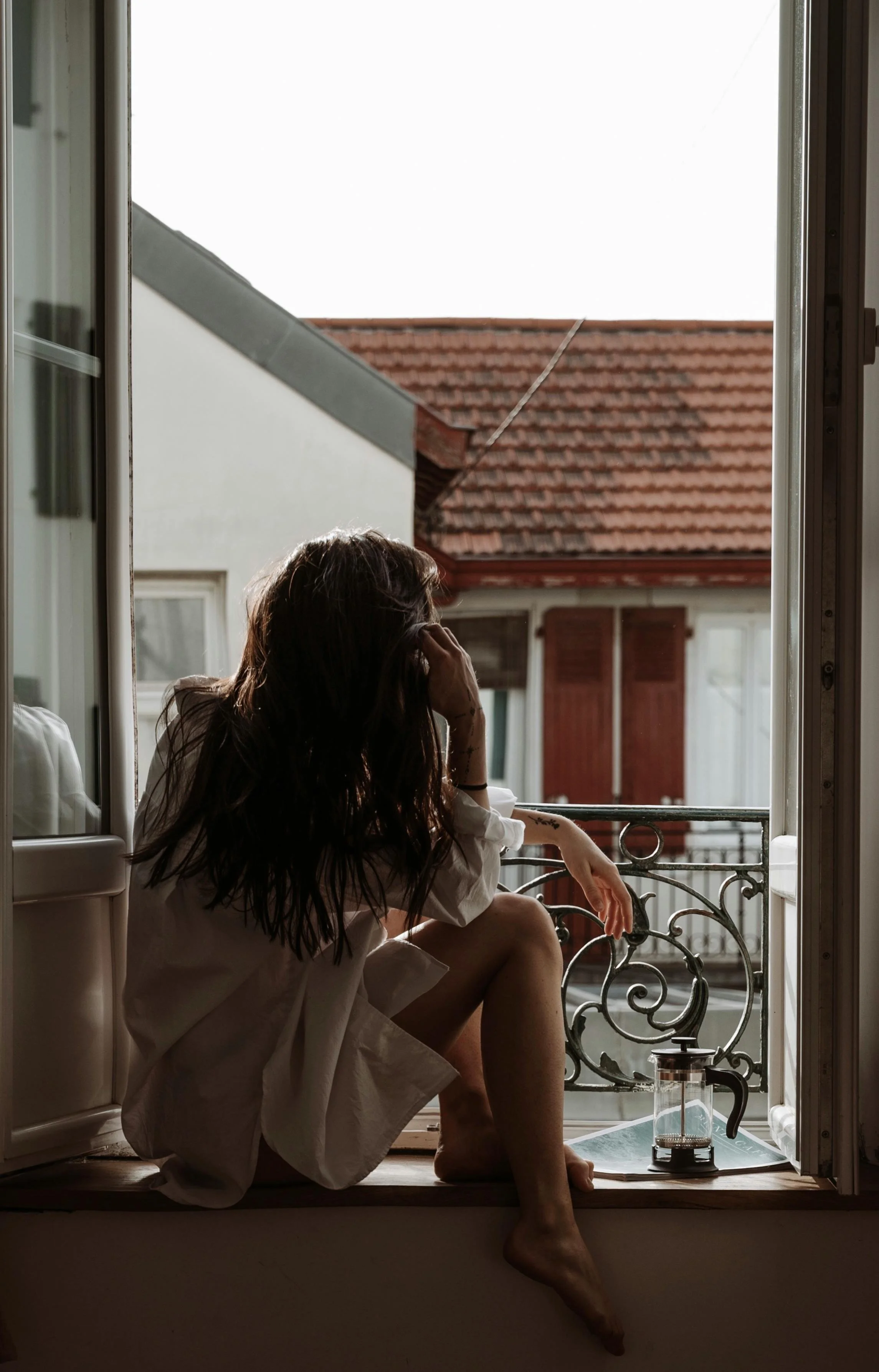

The September House: Decorating Between Harvest and Autumn
Photography by Olga Solo
September interiors do not need to announce autumn with a riot of orange leaves and seasonal signs. The more compelling approach is quieter. It is the house beginning to turn inward: dried grasses replacing summer flowers, vessels becoming darker and heavier, wood returning to prominence, and the first fruits of the harvest appearing almost incidentally on a table.
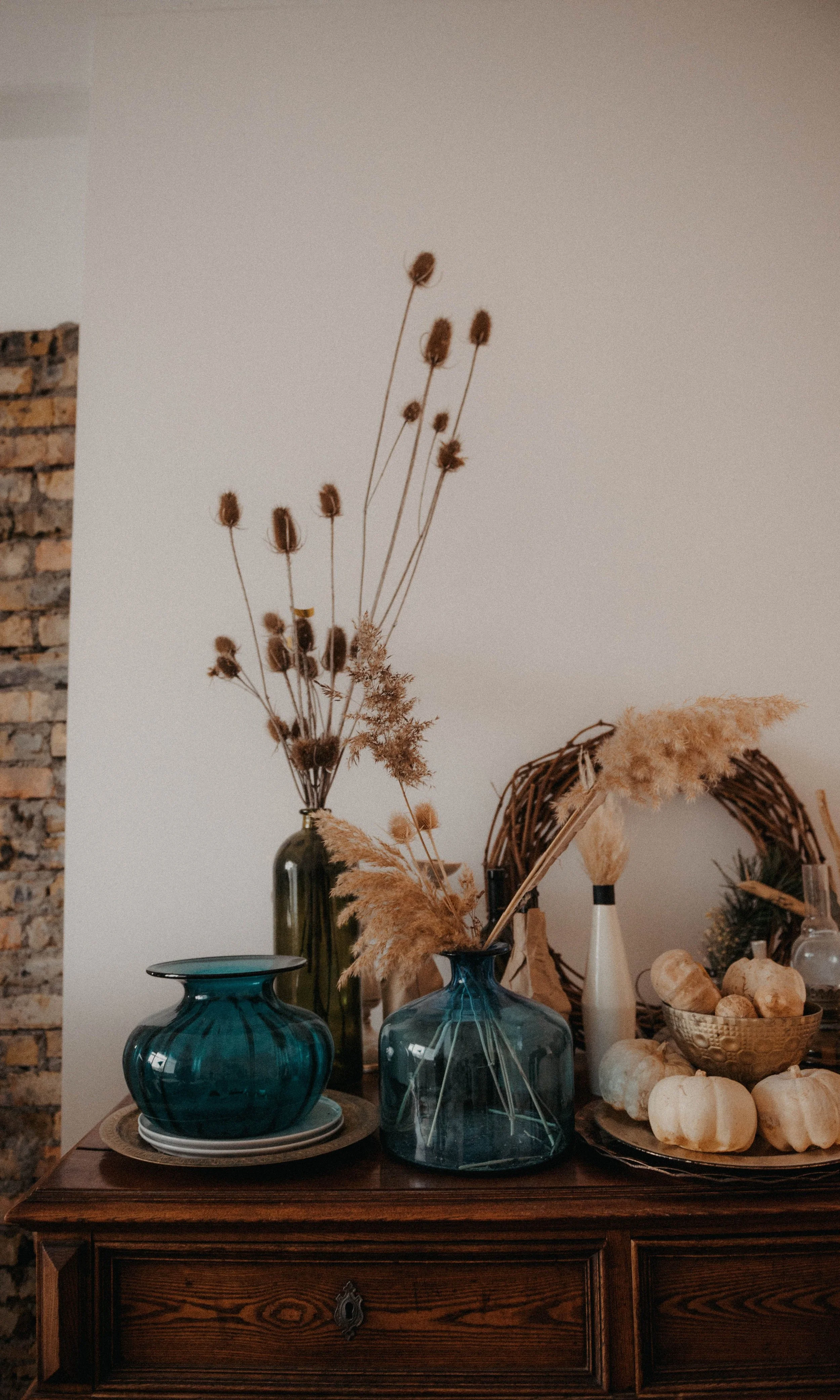
In this photographic series by Olga Solo, the season is built through restraint. Solo’s compositions pair smoky blue glass, dark wood, dried botanicals, pale gourds, earthen bottles and woven branches to create an interior that feels collected rather than decorated. Her work often leans toward visual storytelling, and that instinct is particularly effective here. (Pexels)
Olga Solo: Photographer
Decorating the Threshold Season
September occupies an unusual place in the decorative calendar. Summer has not entirely disappeared, but autumn has unquestionably arrived at the door. That tension is precisely what makes the month interesting. Rather than decorating for the autumn we imagine in October, September asks us to work with what is actually happening outside: grasses are drying, seed heads are forming, fields are turning gold and the harvest is beginning to move indoors.
Solo's arrangement understands this beautifully.
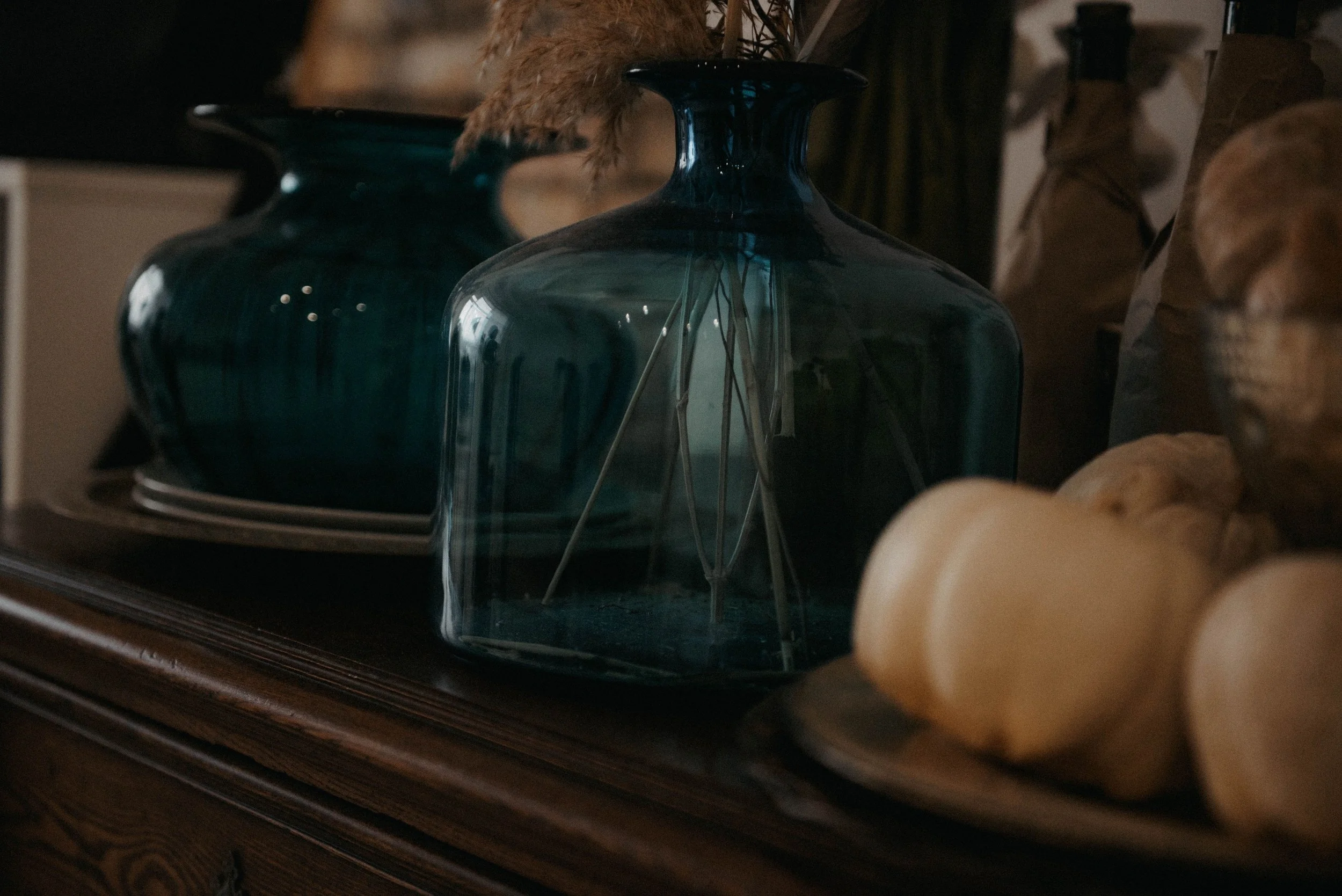
The dried teasel and tall grasses are not simply substitutes for flowers. They preserve the architecture of plants after their color has gone. Their stems introduce height and movement, while their muted browns soften the transition from the green of summer into the deeper palette of autumn. There is something almost sculptural about them. A handful of dried stems in a substantial glass bottle can command a room without the formality of a floral arrangement.
That is perhaps the first lesson here: do not over-arrange autumn.
Let things remain a little wild.
Blue Glass Against the Harvest
The most unexpected element is also the most sophisticated: blue.
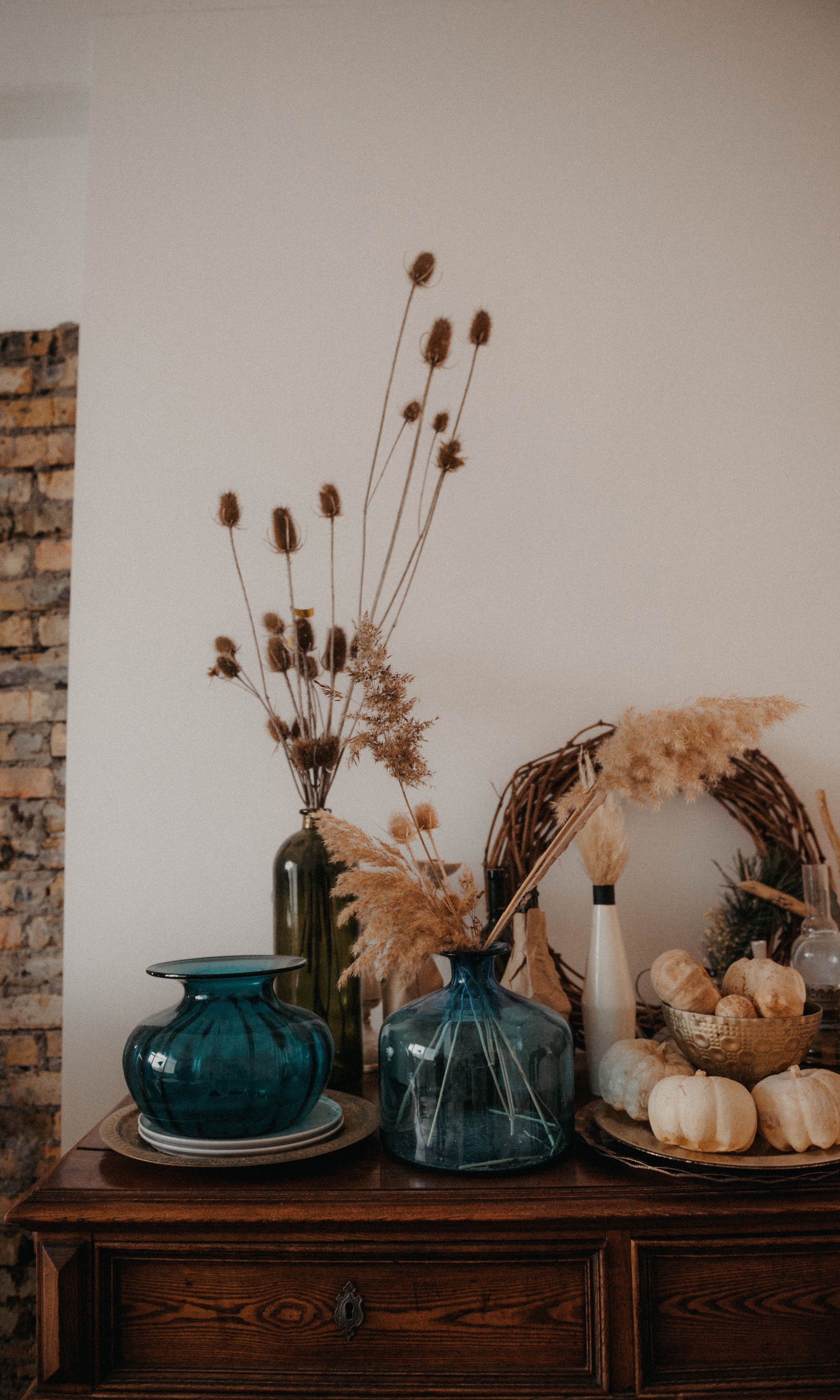
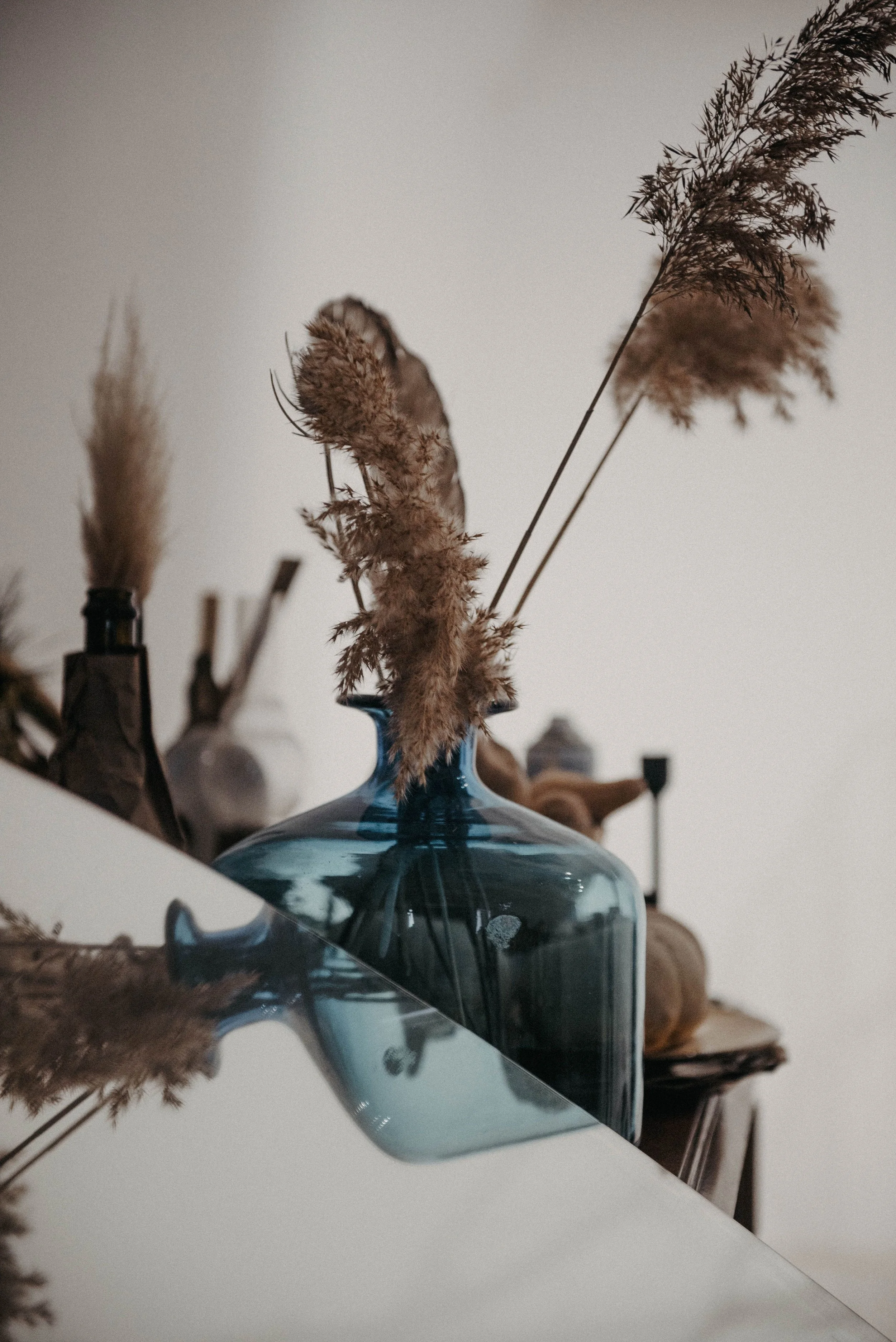
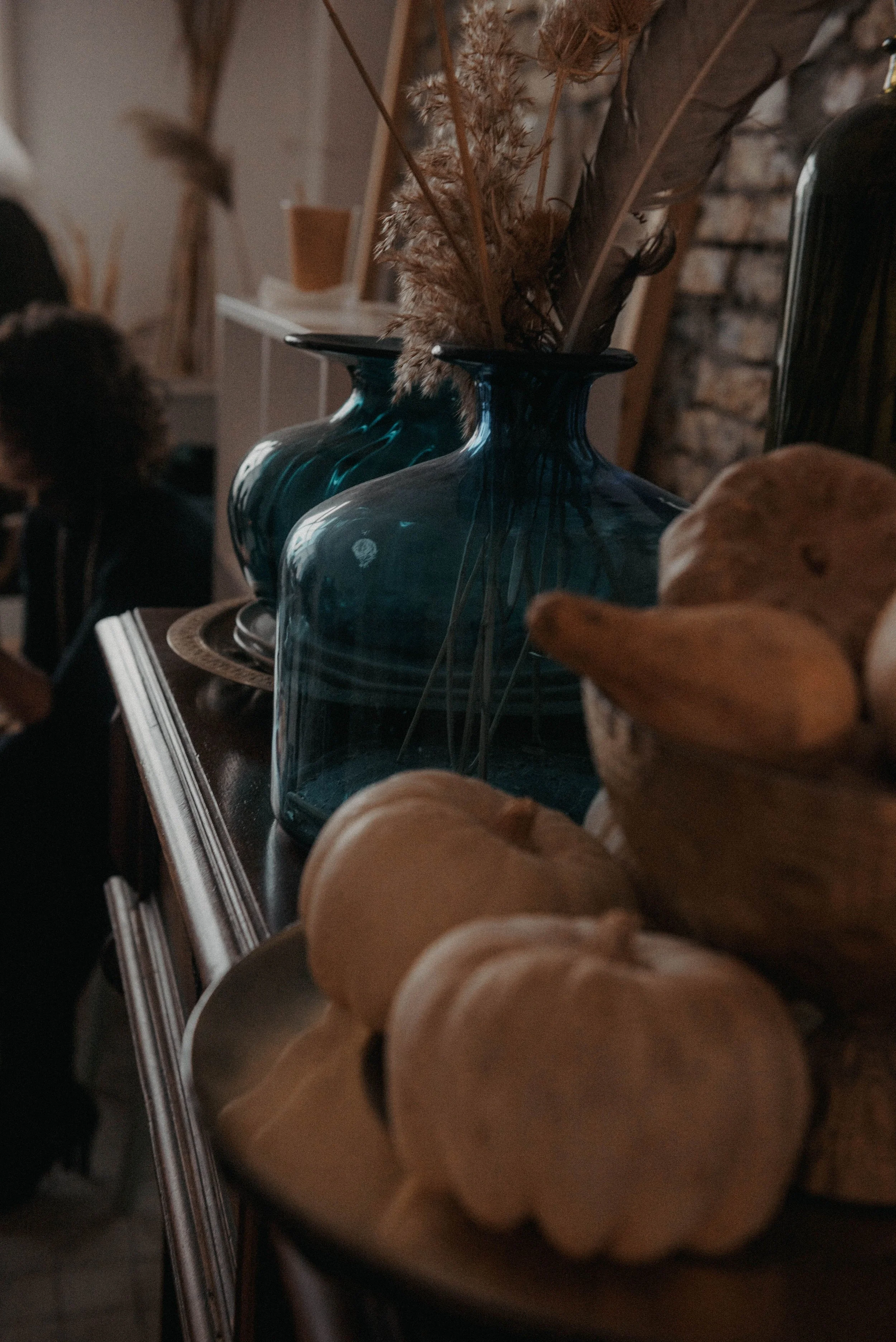
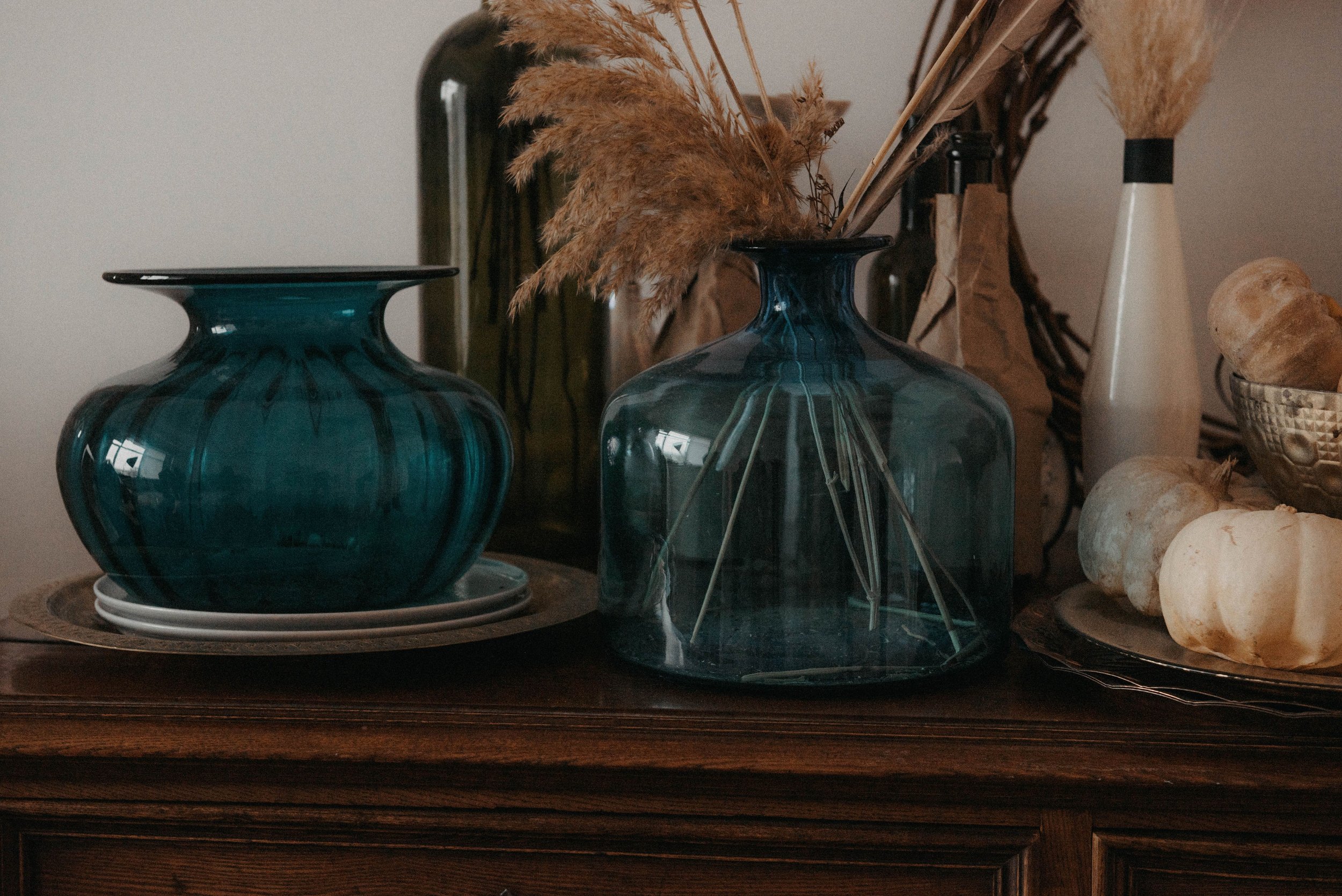
Autumn decorating is so often reduced to rust, pumpkin, mustard and brown that introducing deep teal glass immediately changes the conversation. Against warm wood and wheat-colored botanicals, the blue becomes cooler and richer. It prevents the room from becoming overly sweet or predictably rustic.
There is also a lovely visual contradiction at work. Glass feels luminous and almost watery, while the dried plants contained within it speak of the end of the growing season. One material catches light; the other has already surrendered to time.
For the home, this translates easily. You do not need matching vessels. In fact, you probably should not have them. Mix an oversized bottle with a rounded vase, an old ceramic piece or a vessel found secondhand. Repetition of color will create cohesion even when the shapes differ.
Bring the Harvest Inside
Then there are the pumpkins.
But importantly, they are not bright orange.
The pale cream and muted green gourds behave almost like still-life objects. Placed on pewter-toned plates and gathered beside aged glass and wood, they feel closer to an old European harvest painting than contemporary seasonal merchandise.
This is where autumn decorating becomes much more interesting: use the actual season as decoration.
Pears in a bowl. Apples piled on a platter. Squash on an old wooden table. Bundles of herbs drying in the kitchen. Seed heads clipped from the garden. Branches brought inside after a walk.
Historically, the household and harvest were not separate aesthetic worlds. The things being stored, dried and preserved for colder months naturally became part of the visual landscape of the home. Reintroducing that idea makes seasonal decorating feel less manufactured and more connected to place.
The Wreath Without the Front Door
Behind the arrangement, a simple woven wreath provides one of the strongest shapes in the composition.
It is nearly bare.
That restraint matters.
Instead of covering the wreath in ribbon, artificial foliage and ornaments, its woven branches remain visible, allowing the material itself to become decorative. A few dried grasses soften its upper edge, but the circular form remains dominant.
Indoors, a wreath does not have to belong on a door. Rest one against a wall above a console, place one behind bottles on a mantel, or hang an unadorned grapevine wreath above a dining table. Its circle quietly echoes one of the oldest seasonal symbols: recurrence. Growth, harvest, dormancy and eventual return.
Build With Texture Before Color
What makes these photographs particularly useful as design inspiration is that the room is not dependent upon a complicated color palette.
The real palette is texture.
Transparent glass. Rough dried grasses. Smooth pumpkins. Woven branches. Tarnished metal. Dark polished wood. Old brick.
These surfaces respond differently to light, which creates depth even within a restrained collection of brown, cream, green and blue.
This is an especially useful principle for September. Before reaching for overtly autumnal colors, change the textures in the room. Replace delicate summer flowers with dried stems. Bring back heavier pottery. Introduce baskets, darker wood, aged brass, linen and glass. Let natural materials establish the season before adding anything that explicitly says fall.
The effect is considerably more elegant.
A House That Knows the Season
Perhaps the most beautiful thing about Solo's photographs is that nothing appears to have been purchased simply because September arrived.
The arrangement feels accumulated.
That distinction is what separates seasonal decorating from seasonal consumption. A home can acknowledge the calendar without reinventing itself every three months. The same blue vase that holds tulips in April might hold dried grasses in September and bare branches in December. The wooden cabinet remains. The metal platter remains. Only what the landscape provides changes.
And perhaps that is the September house at its best.
Not yet the dark abundance of October. Not the theatrical harvest table of Thanksgiving. September is subtler: the first dried stalks clipped from the field, the first squash carried into the kitchen, the light becoming softer against colored glass.
It is a home beginning, almost imperceptibly, to prepare itself for autumn.
Photography: Olga Solo
View Olga Solo's photography on Pexels
Image source: Pexels. Photographs by Olga Solo.