
Why We Still Need Practical Magic
The Return of the Cult Witch Film Women Never Really Let Go Of
Some films stay lodged in female memory in ways that have very little to do with whether they were critically acclaimed, structurally perfect, or even particularly successful when they first appeared. Women keep them alive because of the feeling they create - a feeling tied to a room, a season, a version of ourselves, or a type of longing we do not often see reflected back at us. Practical Magic has belonged to that category for nearly three decades. Women have continued watching it through breakups, lonely apartments, stressful autumns, friendships, divorces, kitchen wine nights, and those periods of life when reality has become so aggressively practical that anything mystical feels like oxygen.
That enduring attachment is exactly why the upcoming release of Practical Magic 2 has generated such an outsized emotional response. Sandra Bullock and Nicole Kidman are returning to the Owens sisters this September, and the conversation online has felt less like excitement over a sequel and more like the reopening of a familiar sanctuary. Women remembered the house immediately. They remembered the kitchen, the midnight margaritas, the aunties, the herbs, the phone call spell, the sea wind, the female chaos of it all.
This is interesting because Practical Magic was not preserved by audiences for plot. Its original reviews were mixed, and as a film it has always been slightly uneven. But women were not holding onto narrative perfection. They were holding onto an atmosphere that mainstream female-centered cinema rarely offered then and still rarely offers now: a domestic world where women were allowed to be intuitive, messy, magical, grieving, sensual, frightened, irrational, and deeply interdependent without being punished for it.
The Owens home became one of the most recognizable witch houses in modern visual culture because it represented more than aesthetic fantasy. It represented female refuge. Every room felt inhabited by women rather than decorated for approval. This was not domesticity as performance. It was domesticity as organism - loud, herbal, emotional, medicinal, imperfect, and alive. The kitchen functioned as apothecary and confessional. The greenhouse felt like a nervous system. The entire house carried the suggestion that women could create an enclosed world capable of holding pain, pleasure, family dysfunction, intuition, and ritual all at once.
That vision landed harder than Hollywood probably intended.
Long before social media turned witchcraft into an algorithmic aesthetic, Practical Magic presented a form of feminine power that did not depend on becoming sharper, colder, or more masculine. Its magic was rooted in the domestic and the inherited. Plants mattered. Recipes mattered. Bloodlines mattered. Sisters mattered. Aunties mattered. Sensory life mattered. It suggested that women’s knowledge did not need institutional permission to be valid. It could live in touch, smell, repetition, moonlight, superstition, memory, and old household rituals.
This remains a powerful fantasy because modern womanhood leaves very little room for that type of life.
Women are now expected to optimize nearly every visible aspect of existence. Careers, children, marriages, health, aging, body image, finances, communication, spirituality, and self-improvement all arrive with a metric attached. Even wellness is often sold as another branch of labor. We are told to heal efficiently, meditate productively, exercise strategically, organize beautifully, and somehow remain emotionally available while doing it. The result is a female life that often feels managed but not nourished.
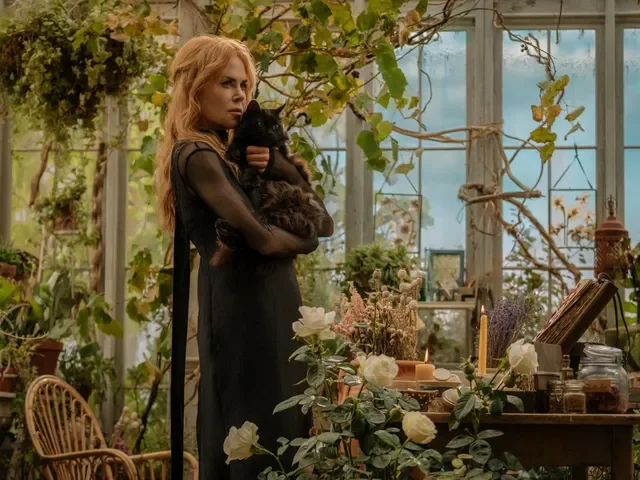
That is precisely why Practical Magic still lands.
It offers nourishment rather than performance.
The women in this film are not trying to become ideal. They are trying to survive curses, desire, grief, bad choices, family inheritance, and each other. They cook, they drink, they panic, they hide bodies, they fail romantically, they overreact, they cling to ritual, and they keep returning to female company as the one stable source of repair. For many viewers, that was the true seduction of the movie. Not the spells themselves, but the possibility that women together could create a livable emotional ecosystem.
Viewed from 2026, the sequel arrives at an especially revealing time. Hollywood may be trading on nostalgia, but female audiences are responding from a place of contemporary depletion. Burnout, caregiving fatigue, hormonal conversations, nervous system strain, digital overstimulation, and a collective exhaustion with hyper-visible adulthood have pushed many women back toward stories that imagine slowness, intuition, and enclosed female worlds. We are culturally surrounded by speed and optimization, which makes films centered on atmosphere, ritual, and inherited softness feel almost medicinal.
This helps explain why Practical Magic never faded into simple cult trivia. Women kept returning because it fed a longing larger than entertainment. It offered the fantasy that life could be tactile again. That homes could heal. That kitchens could hold more than meal prep. That female lineage could function as protection rather than burden. That women could be spiritually strange without becoming social outcasts. In a culture that has steadily stripped enchantment from domestic life, the film kept preserving it.
So while Practical Magic 2 is being marketed as a long-awaited sequel, what many women seem to be reacting to is something more intimate than continuation.
They are reacting to the return of a feeling.
A house full of women.
A kitchen full of herbs.
A world where intuition was useful.
A place where female disorder did not have to be hidden.
That kind of refuge has become increasingly rare, onscreen and off.
Maybe that is why the prospect of going back feels less like entertainment news and more like relief.