Preparing for Imbolc: The Tools and the Symbols
Imbolc is an ancient seasonal festival observed around February 1st and 2nd, marking the midpoint between the Winter Solstice and the Spring Equinox. It is a quiet threshold in the Wheel of the Year, when the deepest darkness has passed and the first subtle signs of returning light become noticeable. Imbolc is not the arrival of spring, but the moment when winter begins to soften and life stirs beneath the surface.
Historically rooted in Celtic tradition, Imbolc is closely associated with the goddess Brigid, a deity of hearth fire, healing, poetry, fertility, and sacred craft. Brigid embodies the liminal nature of this season, standing at the doorway between dormancy and growth, between winter’s stillness and spring’s awakening. Preparing for Imbolc is therefore less about elaborate ceremony and more about gentle readiness. It is a time of cleansing, tending, and setting quiet intentions.
Preparation begins with the home.
In traditional practice, hearths were cleaned, ashes were cleared, and fresh fires were kindled. This physical cleaning symbolized the clearing of stagnant energy and the creation of space for new life. In modern homes, this may look like sweeping, wiping surfaces, washing linens, or opening windows briefly to invite in fresh air. The act itself is symbolic. It communicates willingness to receive renewal.
Candles are among the most important tools for Imbolc.
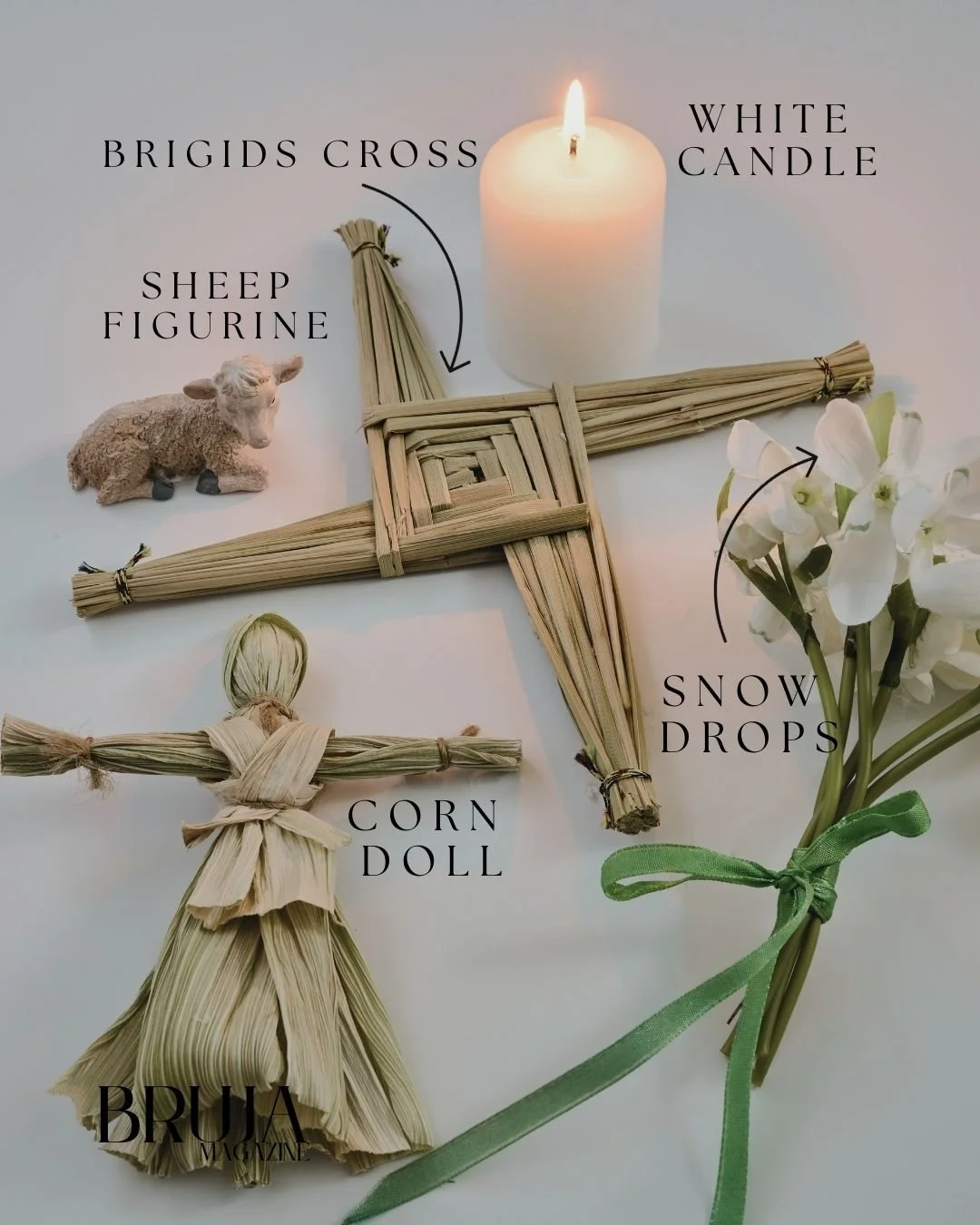
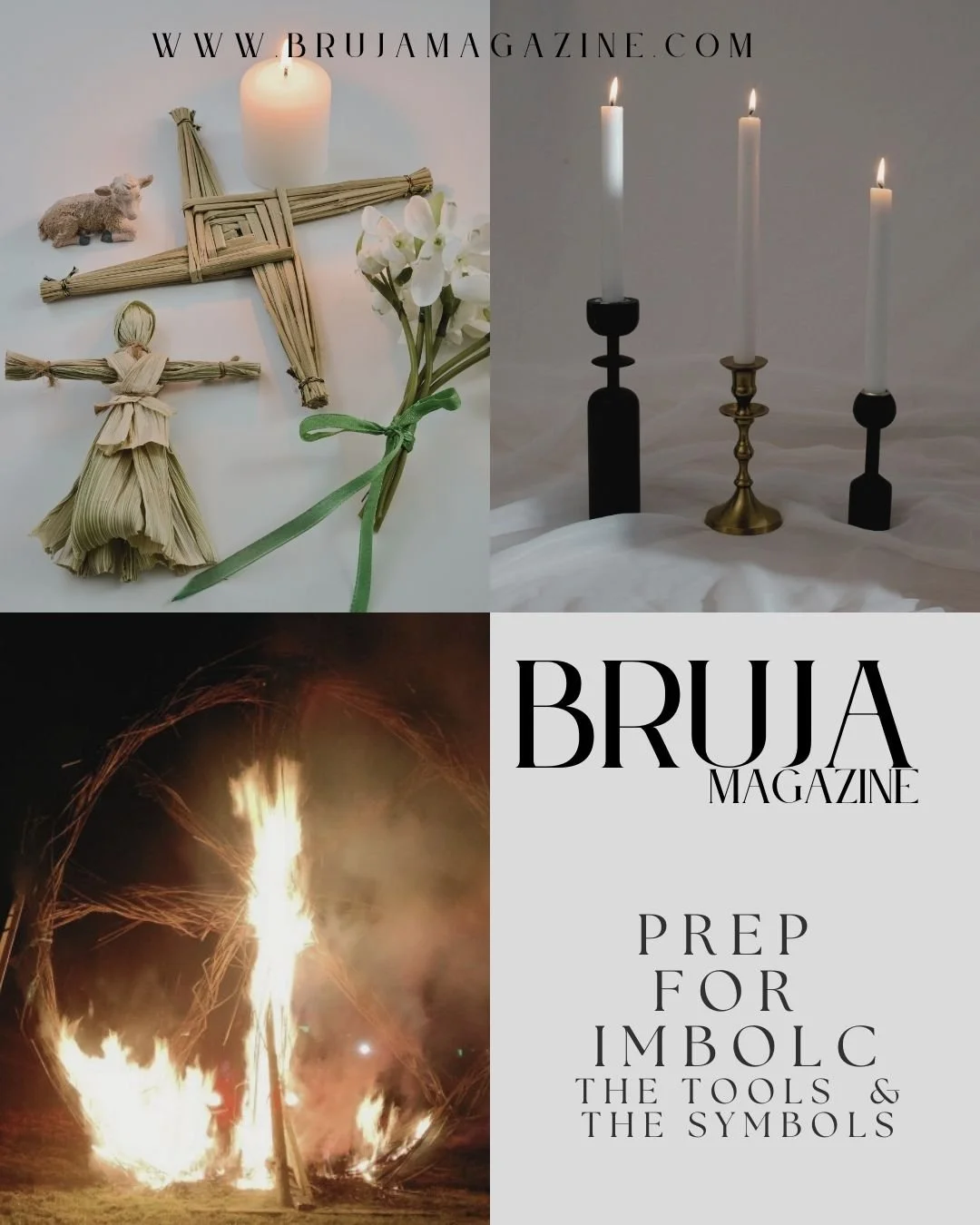
Imbolc is often called a festival of light, and candle flames represent the returning sun and Brigid’s sacred fire. Lighting candles at Imbolc honors the growing daylight and the spark of life rekindling within the land. White candles symbolize purity and new beginnings. Yellow or gold candles symbolize solar energy and warmth. Red candles represent hearth fire, vitality, and life force.
A central candle can be placed on an altar or table as the heart of the space.
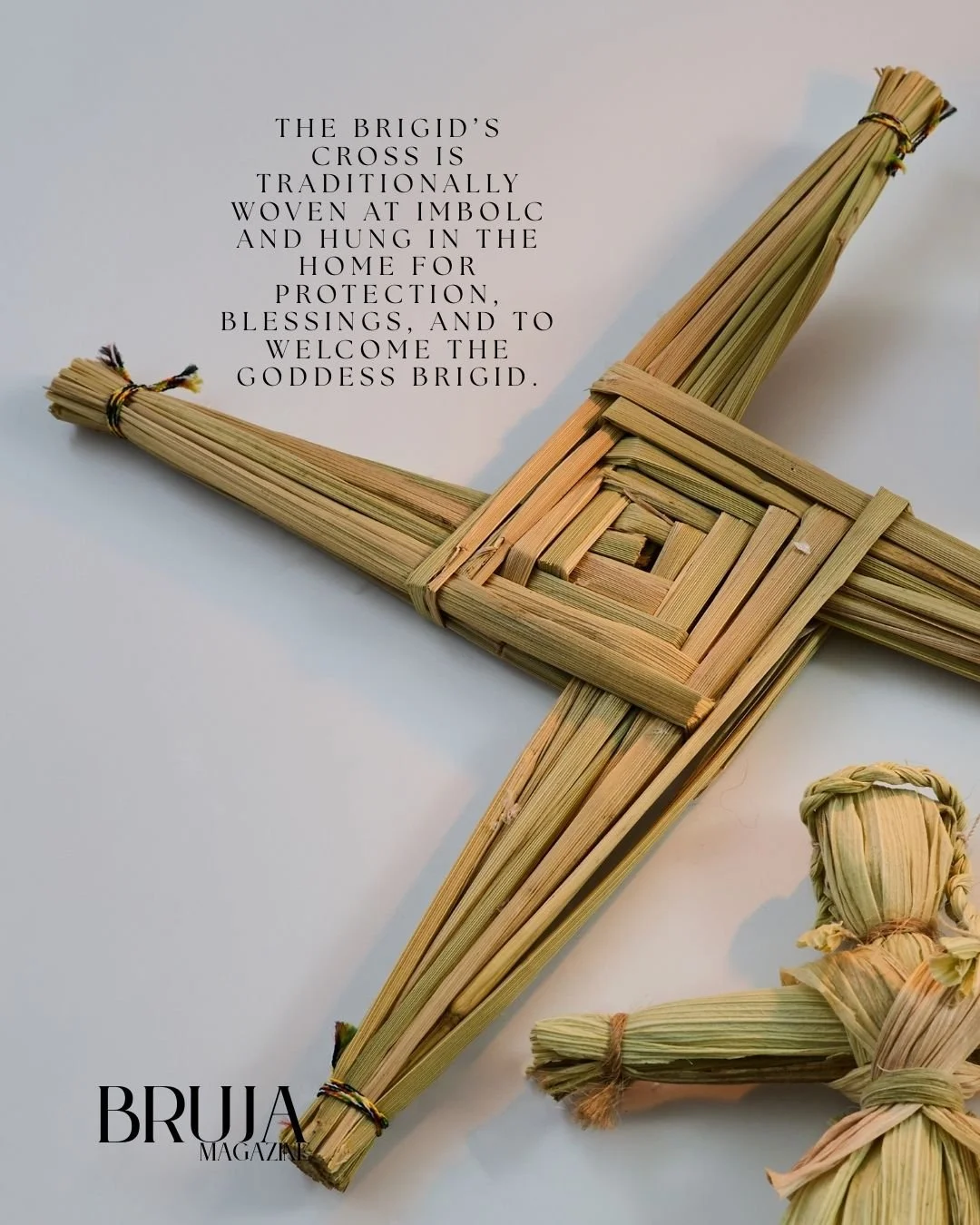
Brigid’s Cross is a traditional Imbolc symbol woven from straw, reeds, or grasses. Historically, these crosses were made at Imbolc and hung above doorways, windows, or hearths for protection and blessing. The cross represents the turning of the seasons, the wheel of the year, and the balance of elements. Creating or displaying a Brigid’s Cross is a way of inviting Brigid’s presence and acknowledging the seasonal shift.
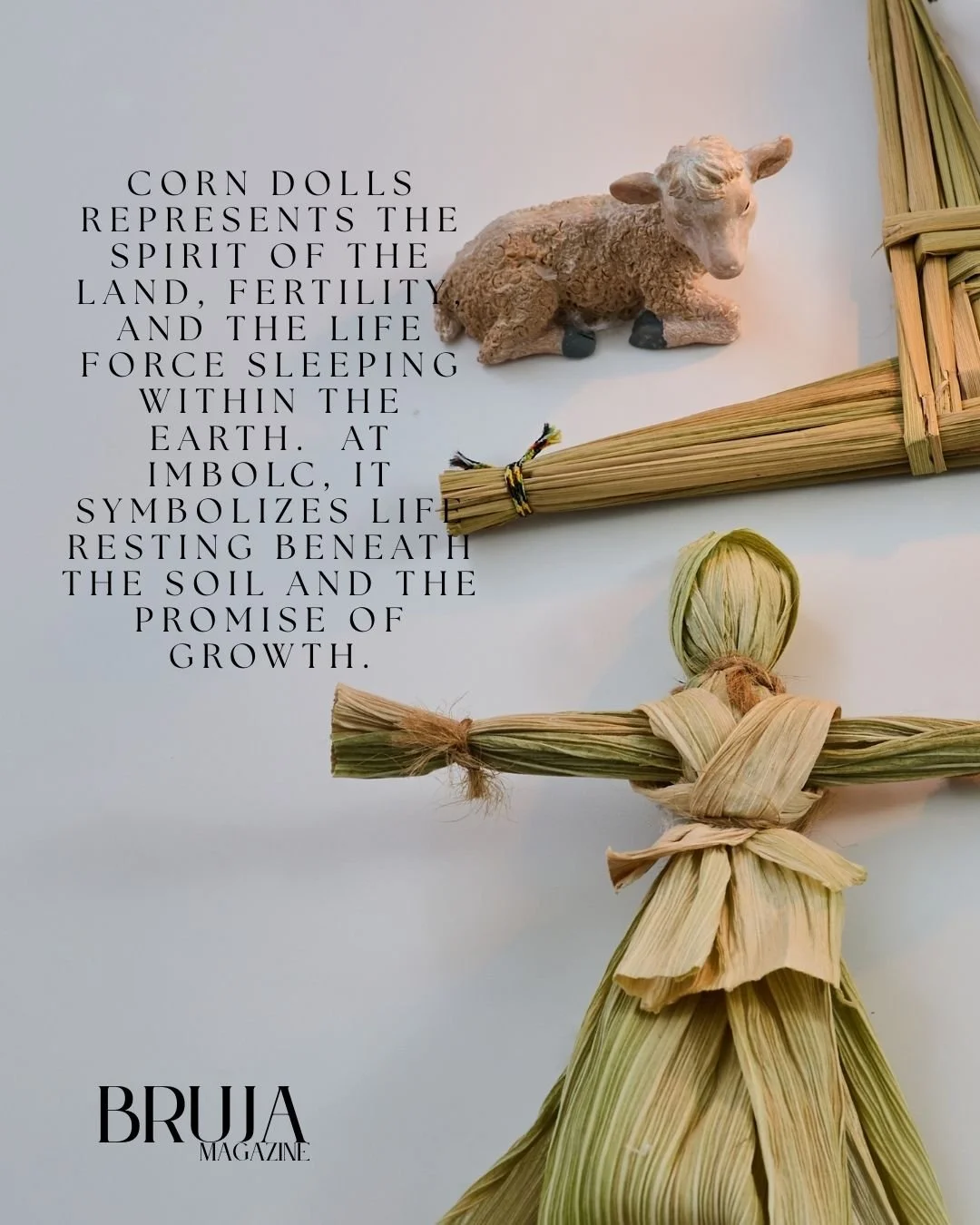
Corn dolls or straw figures are another common Imbolc symbol. These figures represent the spirit of the land and the life force resting beneath the soil. During winter, the earth appears barren, yet life is gestating underground. The corn doll embodies this hidden fertility. Placing a corn doll on an altar honors the unseen processes of growth and the promise of future harvest.
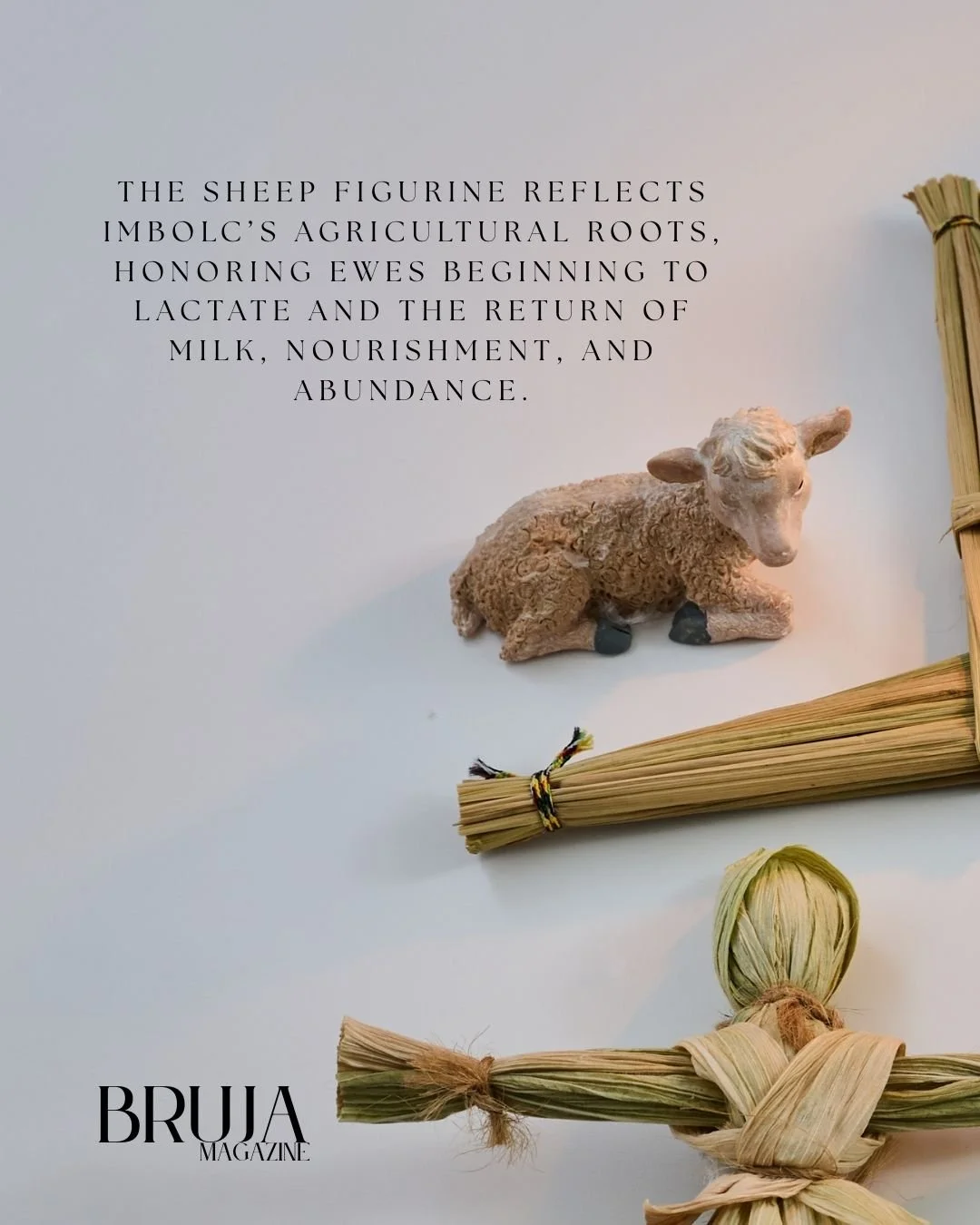
Sheep or lamb imagery carries strong Imbolc symbolism. The word Imbolc is connected to pregnancy and milk, referencing ewes beginning to lactate at this time of year. Sheep figurines, images, or symbols honor nourishment, maternal abundance, and the return of dairy to human communities. They reflect the agricultural reality that signaled fertility was returning to the land.
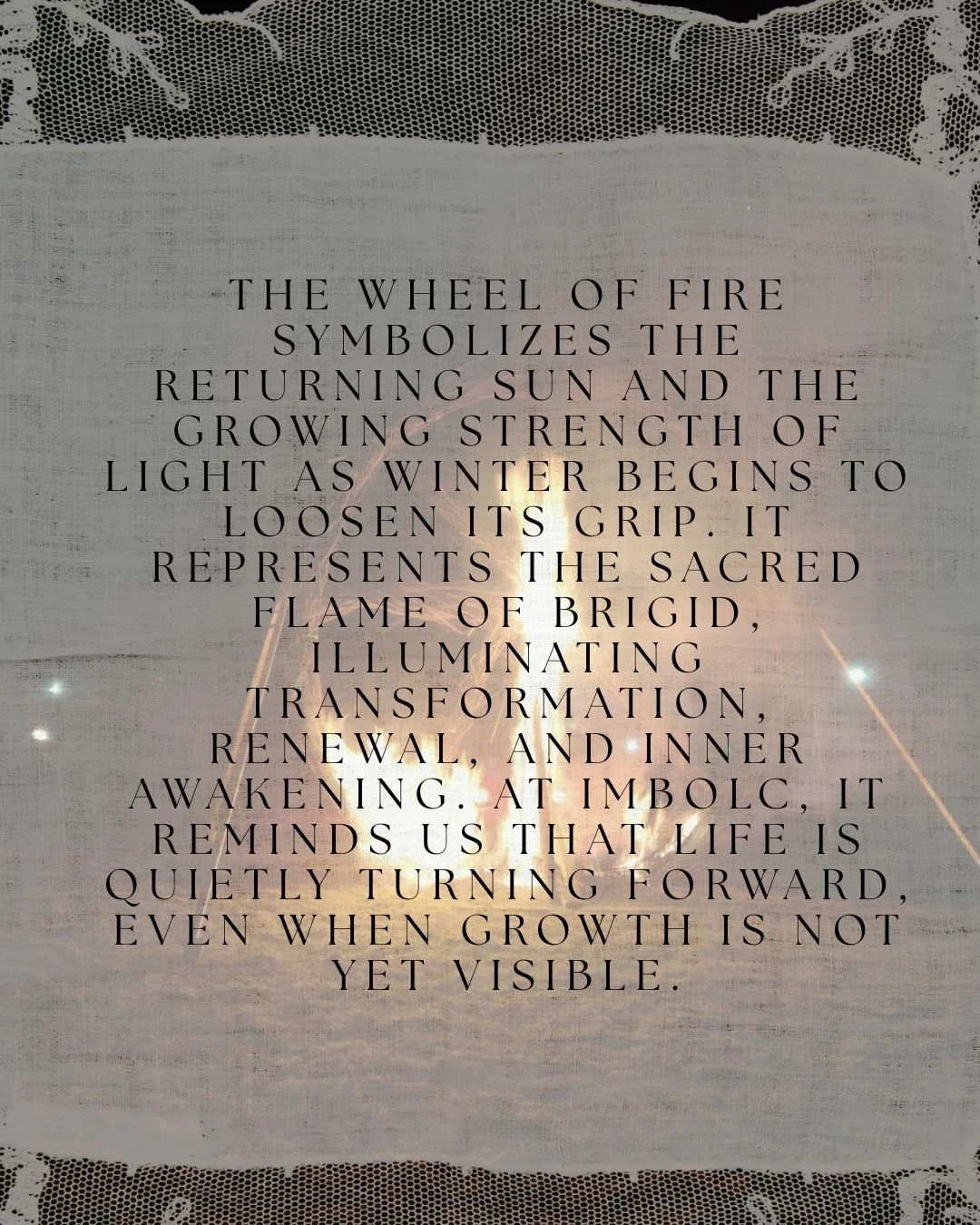
The Wheel of Fire, often represented as a sun wheel, woven disc, or circular symbol, represents the returning sun and the cyclical nature of time. It reminds us that the wheel of the year is always turning, even when change is subtle. At Imbolc, the Wheel of Fire emphasizes slow but steady movement toward light, warmth, and growth.
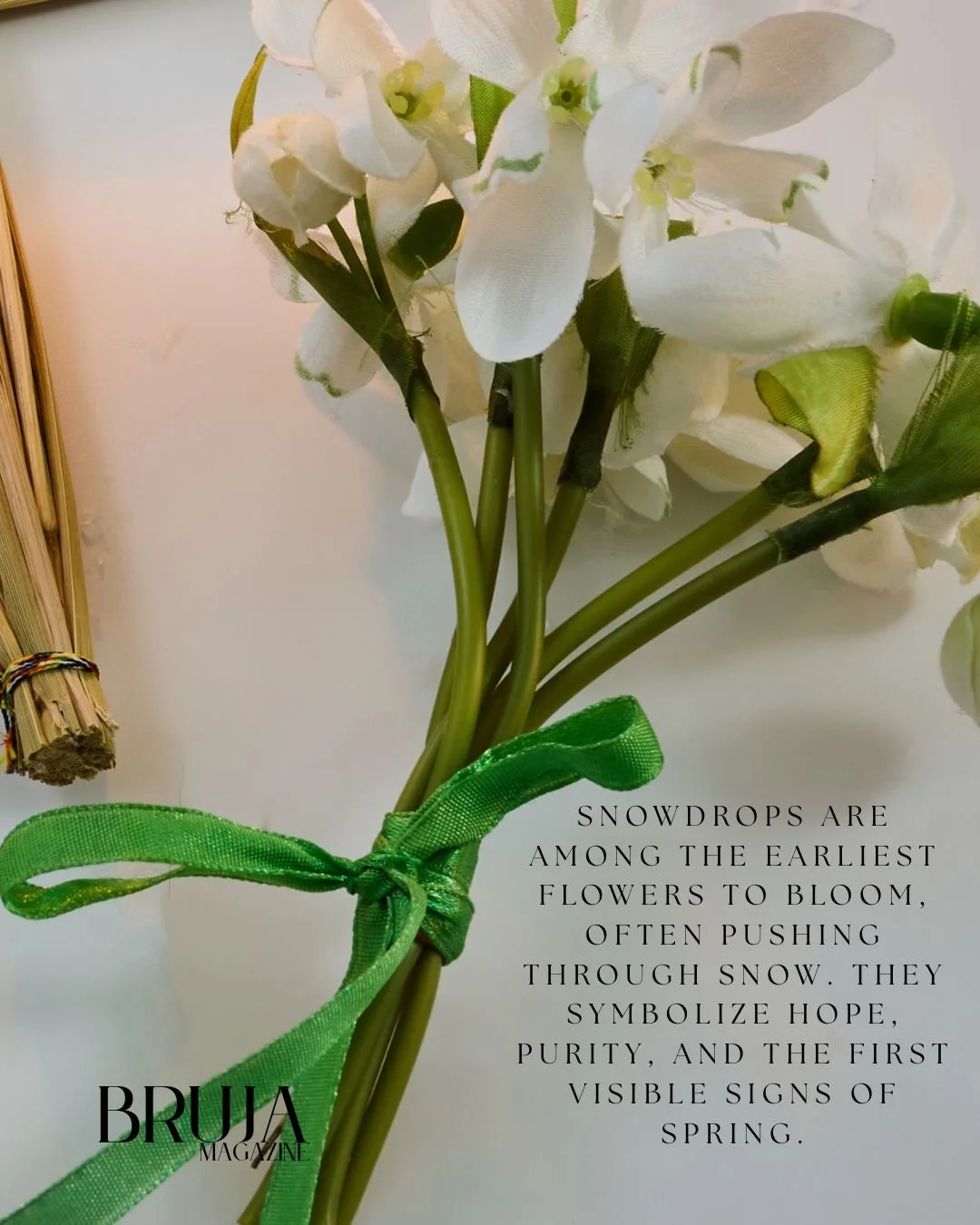
Fresh or dried flowers may also appear on an Imbolc altar, especially early bloomers such as snowdrops or white blossoms. These flowers symbolize hope, purity, and the first visible signs of spring. When fresh flowers are unavailable, dried herbs or greenery can stand in their place.
Dairy foods, bread, honey, grains, and citrus may be included as offerings or ritual foods. Milk, butter, and cheese symbolize fertility and nourishment. Bread and grains symbolize survival and continuity. Honey symbolizes sweetness returning and solar blessing. Citrus symbolizes the growing strength of the sun. These foods can be placed on the altar, shared in a simple meal, or consumed mindfully.
Water is another important element. A small bowl of water can represent purification, emotional renewal, and Brigid’s association with sacred wells. Some traditions include blessing water or washing hands as a symbolic cleansing before ritual.
Preparing for Imbolc is ultimately about inner orientation.