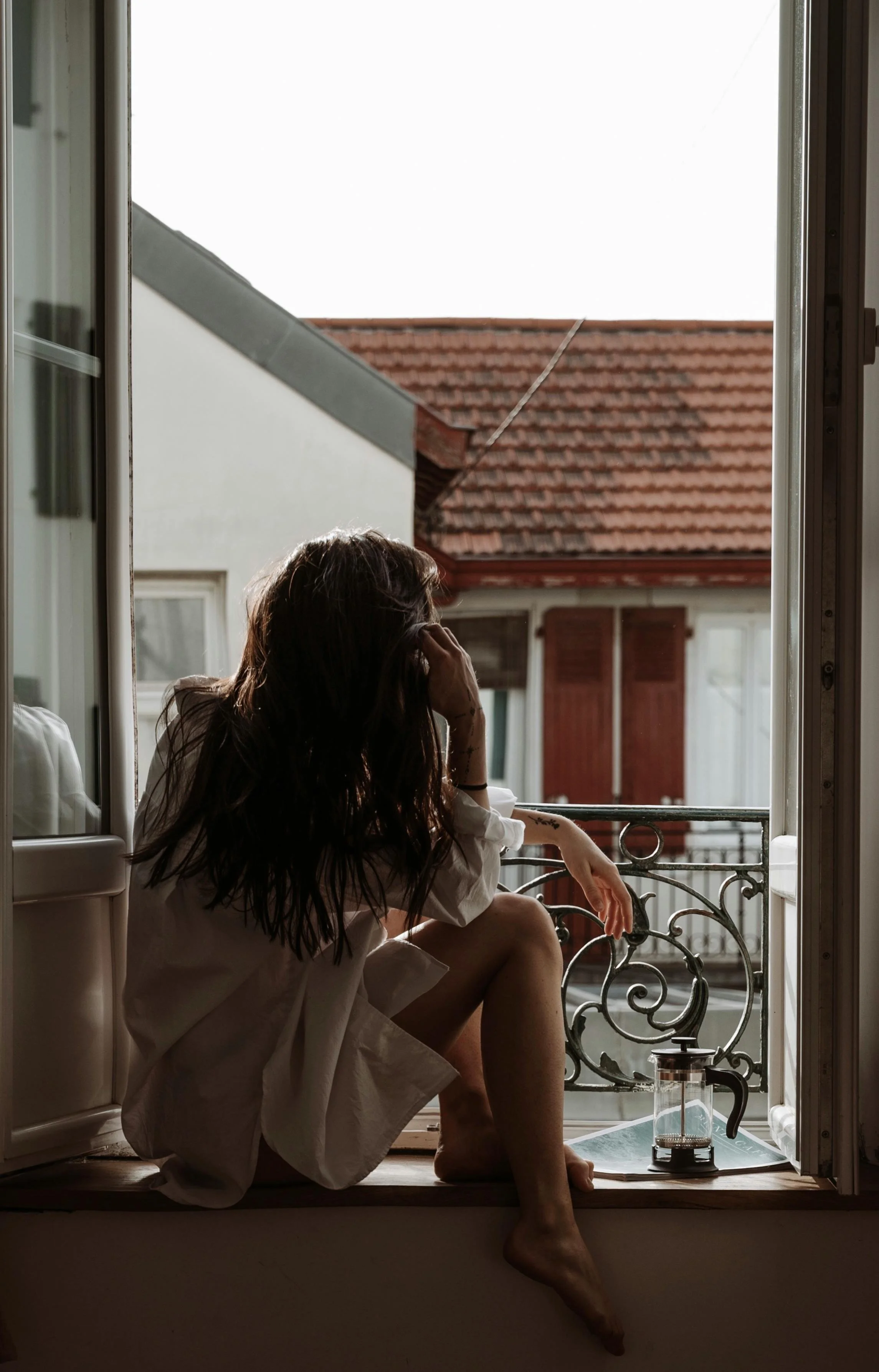

The Maiden at the Threshold: Entering Virgo Season Through the Lens of Konstantin Mishchenko | Photography
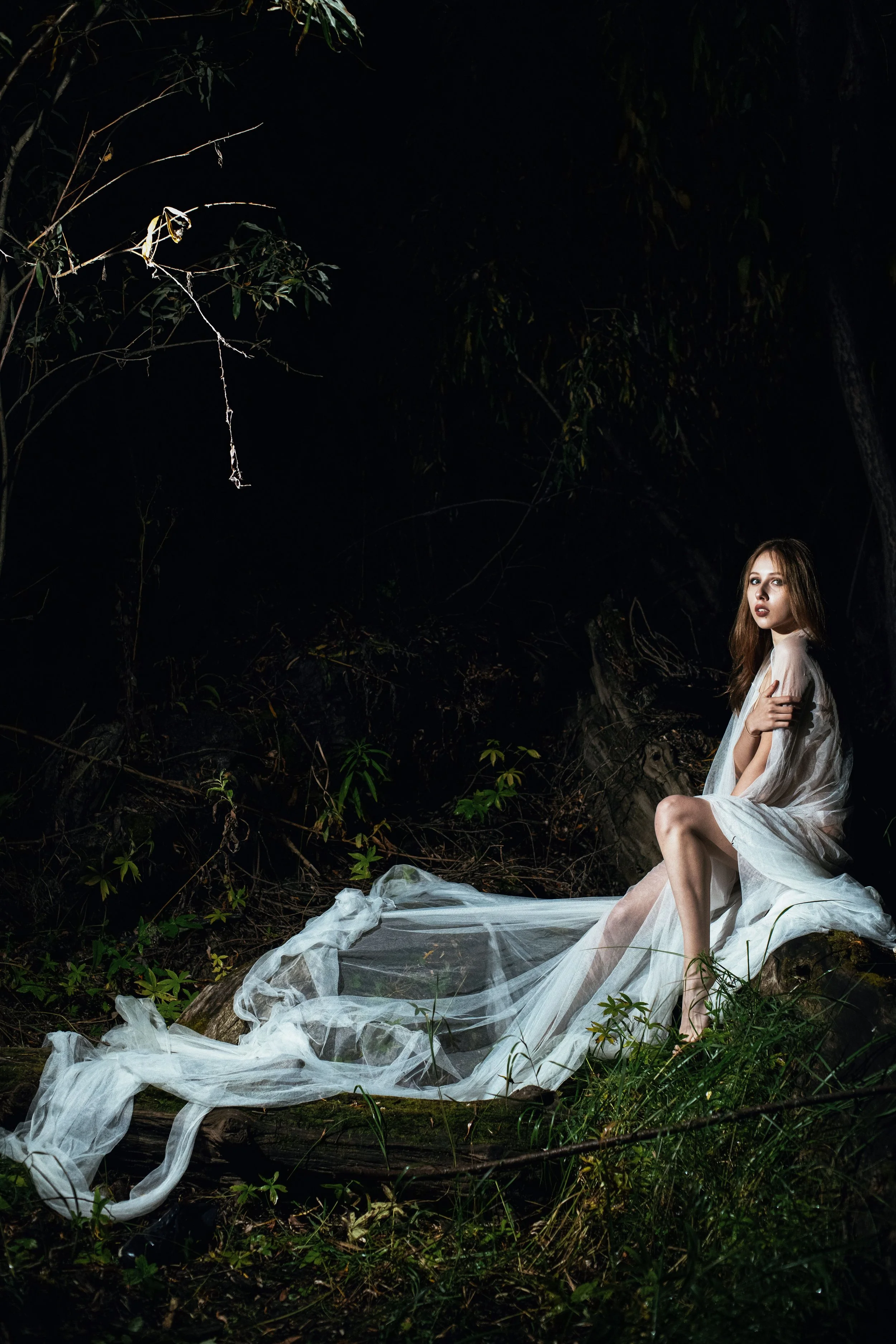
In a darkened landscape, the Maiden emerges between earth and shadow.
Virgo season arrives on August 23, carrying us out of the heat and spectacle of Leo and toward something quieter. The days may still belong to summer, but there is already a suggestion of transition beneath them. Gardens are heavy with what they have produced. Fields approach harvest. The light begins its slow change. Nature has not yet entered autumn, but it is no longer concerned only with becoming. It is beginning to gather.
It is within this threshold that the photography of Konstantin Mishchenko feels particularly at home.
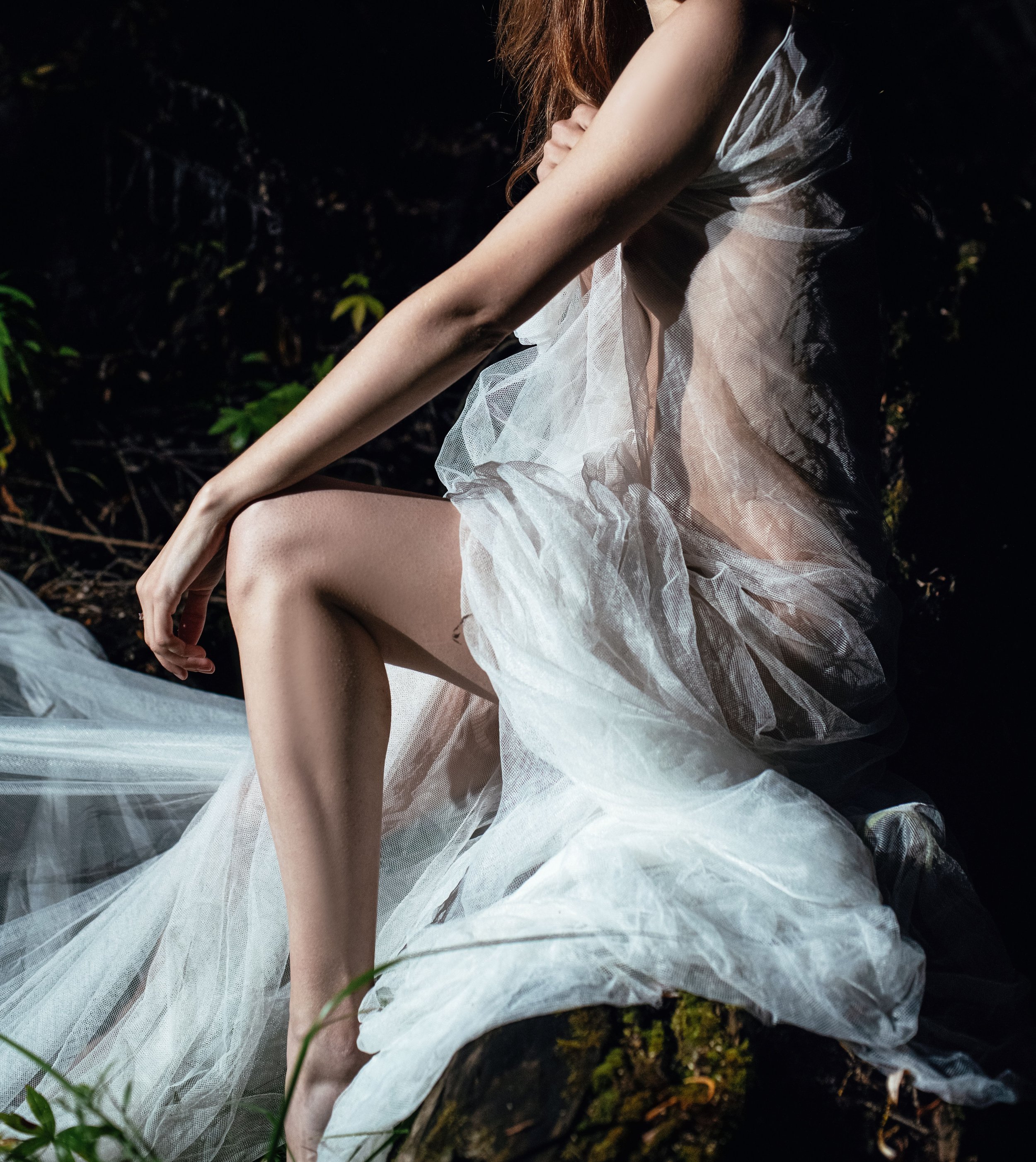
A woman sits alone within a dark landscape, her body wrapped loosely in translucent white fabric. Around her, the forest is dense and nearly impenetrable. Fallen wood, moss, grasses and tangled branches surround a figure who appears simultaneously vulnerable and entirely part of the environment. Mishchenko does not give us the polished Maiden so often associated with Virgo imagery. There is no wheat carefully arranged in her hands, no pastoral field glowing behind her. Instead, he gives us something more primal: a woman encountering the earth without much separating one from the other.
Reconsidering the Virgo Maiden
The symbol of Virgo is the Maiden, but centuries of cultural baggage have made the word virgin difficult to separate from sexual purity. Astrologically, the archetype is far more expansive. The Maiden can be understood as self-possession: a woman belonging first to herself.
That distinction changes how we might read Mishchenko's photographs.
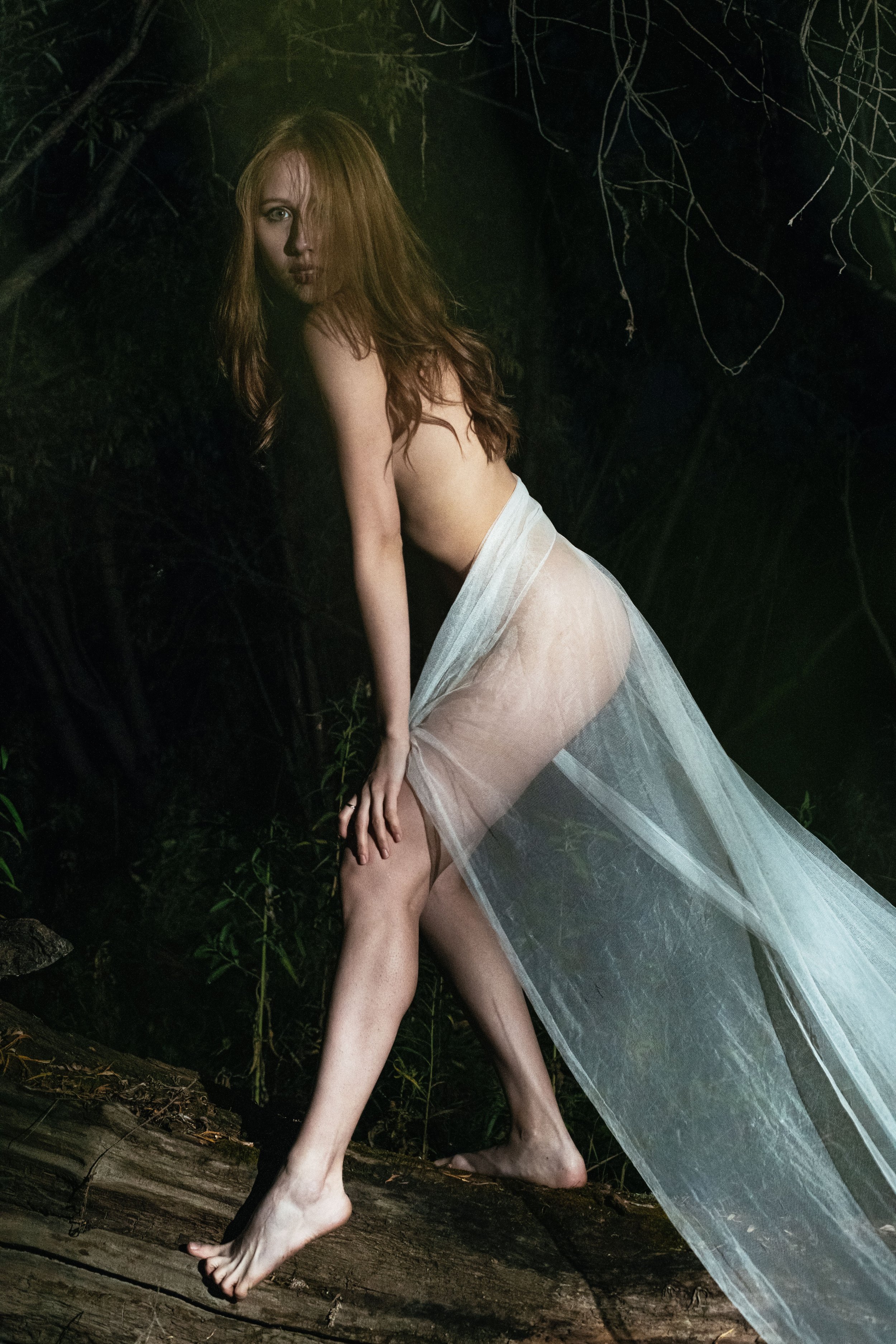
The sheer fabric exposes rather than armors the figure, yet the images do not require us to interpret exposure as availability. Her solitude feels intentional. She occupies the landscape without a companion, audience or obvious narrative explaining why she is there. At times she meets the camera; elsewhere her attention seems directed beyond it.
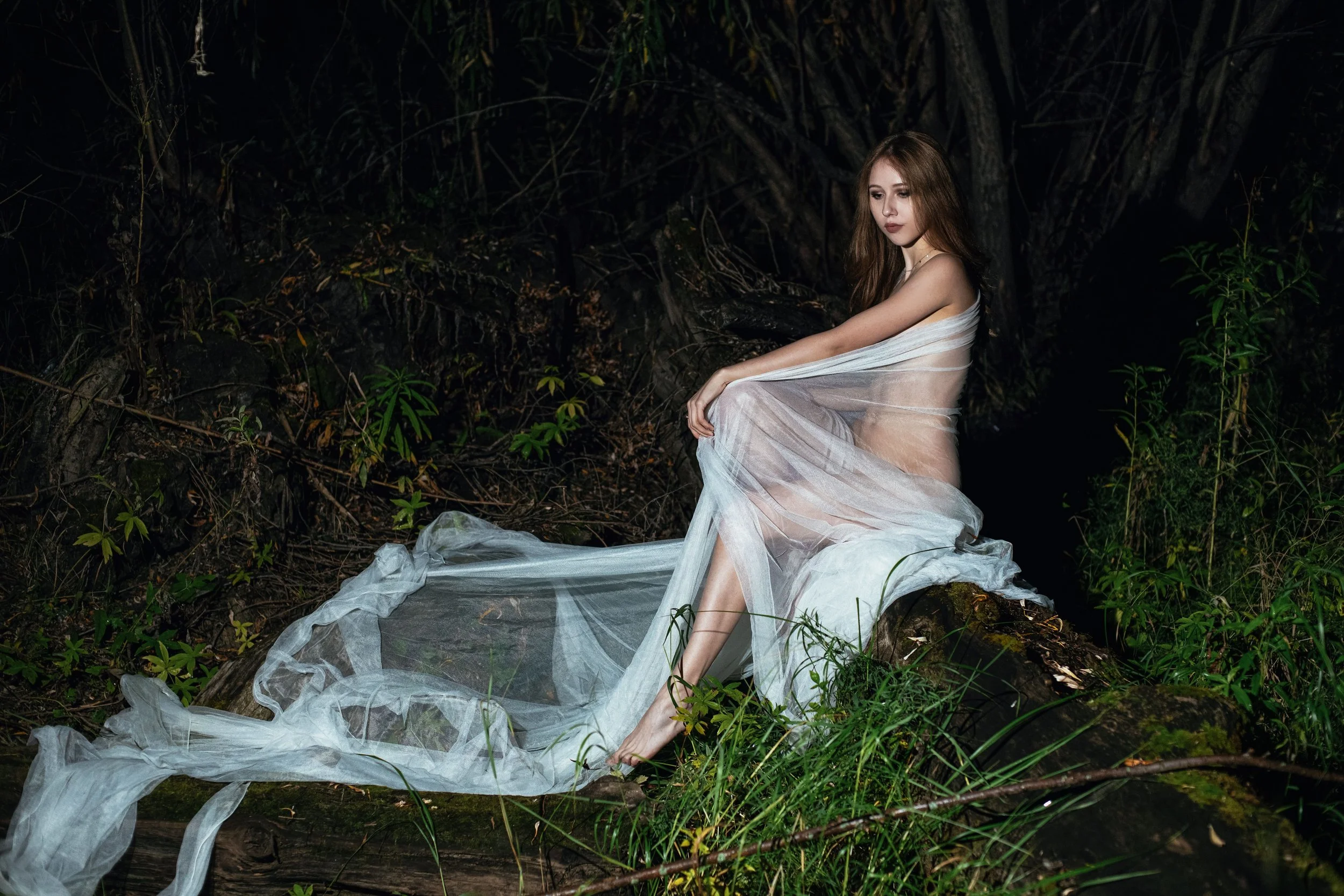
Against the darkness of the forest, the white fabric creates an immediate visual tension. It could suggest purity, but purity is almost too simple a reading. The cloth looks spectral in places, bridal in others, occasionally resembling shed skin. Its long folds travel across fallen trees and disappear into vegetation as though the boundary between body, garment and landscape is beginning to loosen.
For Virgo, an earth sign represented by a woman, that relationship feels particularly compelling.
The Body and the Earth
Earth signs are often discussed through practicality: stability, work, routine, material security. Yet earth is also profoundly physical. It is soil beneath bare feet, decomposition beneath new growth, the body as matter and the knowledge that everything living exists within cycles it cannot escape.
Mishchenko's images bring the body directly into that conversation.
There is nothing manicured about the landscape. Branches cross one another without order. Fallen trunks remain where they have collapsed. Vegetation grows around decay. The woman is not photographed against nature as though the forest were simply a backdrop. Her body becomes another organic form within it.
This is where the series begins to feel distinctly Virgo without ever needing astrological symbolism.
Virgo's earth is traditionally connected with cultivation and harvest: nature observed, understood and tended. But cultivation begins with attention. Before something can be gathered, healed, organized or refined, it must first be seen as it actually exists.
The camera does exactly that.
White Against Shadow
Visually, these photographs depend upon contrast. The forest absorbs light while the pale fabric seems to collect whatever illumination reaches it. Skin appears luminous against deep greens and blacks. The resulting images move somewhere between portraiture, fashion photography and visual mythology.
There is also something appropriately transitional about the palette.
Virgo season begins while summer is still alive but carries us toward the autumn equinox. It occupies a landscape that contains abundance and impending decline at once. The forest in Mishchenko's work mirrors that contradiction. It is lush, but dark. Alive, but filled with fallen things.
The woman at its center is similarly difficult to place.
Is she arriving or leaving?
Has she wandered into the woods, or does she belong to them?
The photographs do not answer, and they are stronger because they don't.
The Quiet After Leo
There is an interesting visual shift between Leo and Virgo. Leo is solar. Its imagery easily lends itself to gold, spectacle, heat, ornamentation and visibility. Virgo turns our attention downward.
Toward the ground.
Toward the body.
Toward what needs tending.
Mishchenko's photographs feel almost like the moment after a performance has ended. The theatricality remains in the sweeping fabric and dramatic lighting, but the environment has become private. There is no stage beyond the forest floor.
That does not make Virgo less sensual than Leo. If anything, Virgo's sensuality can be more tactile. It exists in texture, skin, fabric, plants, food, work and physical presence. It is sensuality rooted in inhabiting the body rather than displaying it.
The photographs understand this distinction intuitively.
At the Threshold
Virgo season asks for discernment before autumn arrives in earnest. What has grown? What has survived? What requires tending? What should be gathered, and what can be allowed to return to the earth?
Perhaps this is why Mishchenko's solitary figure feels less like someone lost in the forest and more like someone listening to it.
She does not conquer the landscape. She does not need to.
She sits among fallen branches and new growth, exposed without appearing powerless, wrapped in something delicate while surrounded by something ancient. The tension gives the photographs their strange beauty.
As we enter Virgo season, the Maiden offers a useful archetype when we release her from the narrow expectation of purity. She becomes the woman who can stand within the material world and remain her own. She observes. She chooses. She tends what deserves tending and understands that discernment sometimes requires leaving something untouched.
Mishchenko's photographs do not illustrate Virgo in any literal sense. They do something more interesting.
They give us a landscape in which we can find her.
Photography Credits
Photographer:Konstantin Mishchenko
Photography:Konstantin Mishchenko / Pexels
Instagram:Konstantin Mishchenko
Published by: Bruja Magazine
Editorial: Bruja Staff Writer