

Imbolc and the Sacredness of Cheese
Photographer 8pCarlos Morocho
At Imbolc, the return of milk is one of the most important seasonal signs.
In traditional agrarian cultures, early February marked the beginning of lambing season. Sheep and goats, which had been dry through the depths of winter, began producing milk again. This quiet biological shift carried enormous meaning. It signaled that fertility was returning to the land, that nourishment would soon become more accessible, and that life was beginning to move forward after dormancy.
Because of this, dairy became central to Imbolc symbolism.
Milk, butter, cream, and cheese represent maternal nourishment, fertility, and the gentle reawakening of abundance. They embody the first gifts of the season. Not excess. Not harvest. But the beginning of flow.
Cheese holds a particularly powerful place within this symbolism.
Cheese is milk transformed.
It represents the moment nourishment becomes tangible. It is the bridge between potential and form. Between fertility and sustenance. In Kitchen Alchemy, cheese can be understood as condensed life force. The essence of milk held in structure.
Soft and semi soft cheeses align especially well with Imbolc’s tender energy. They mirror the softness of early beginnings and the fragile nature of new growth. Aged, sharp cheeses often feel more aligned with later seasons of fullness, while gentle, creamy cheeses speak to the quiet promise of what is forming.
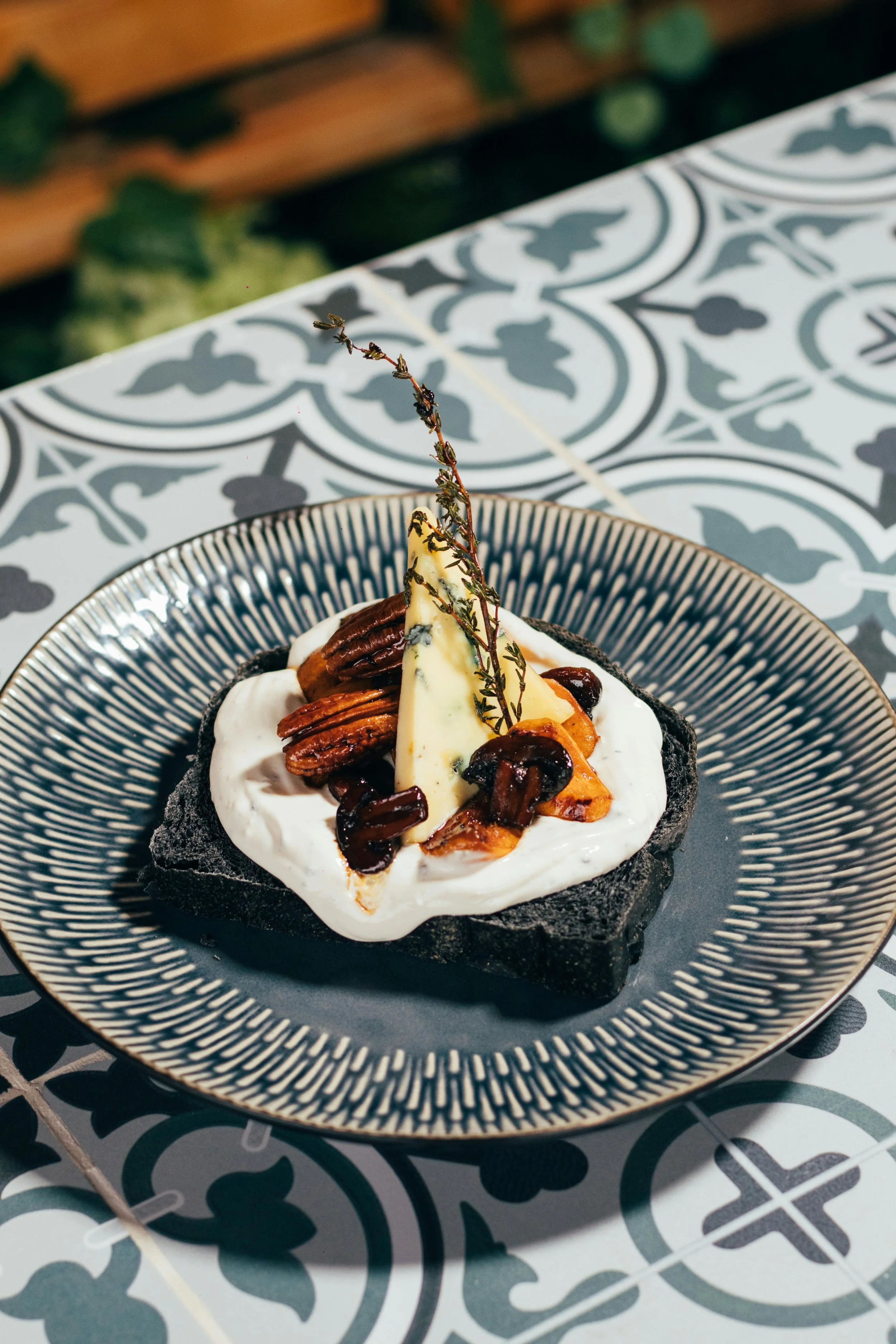
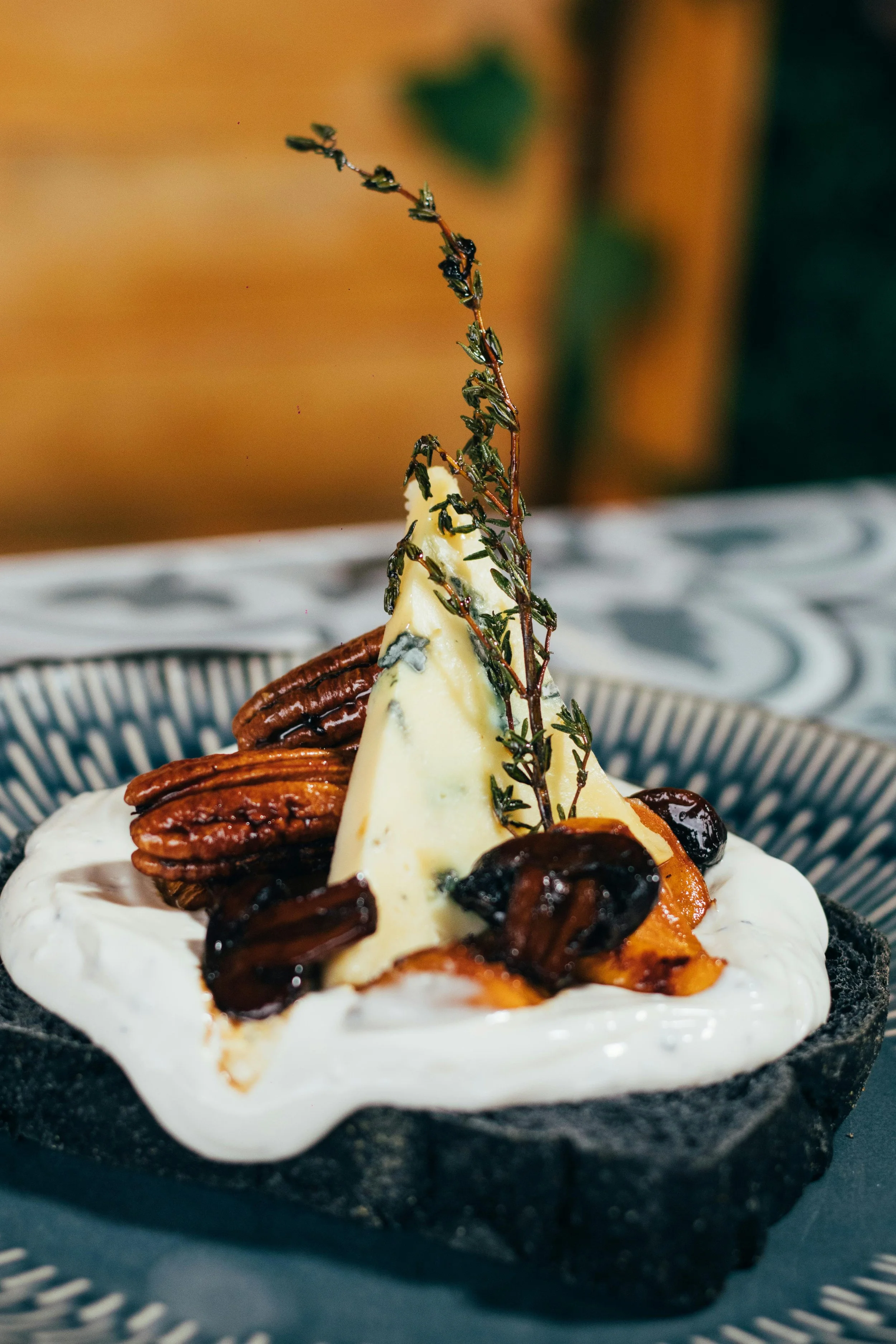
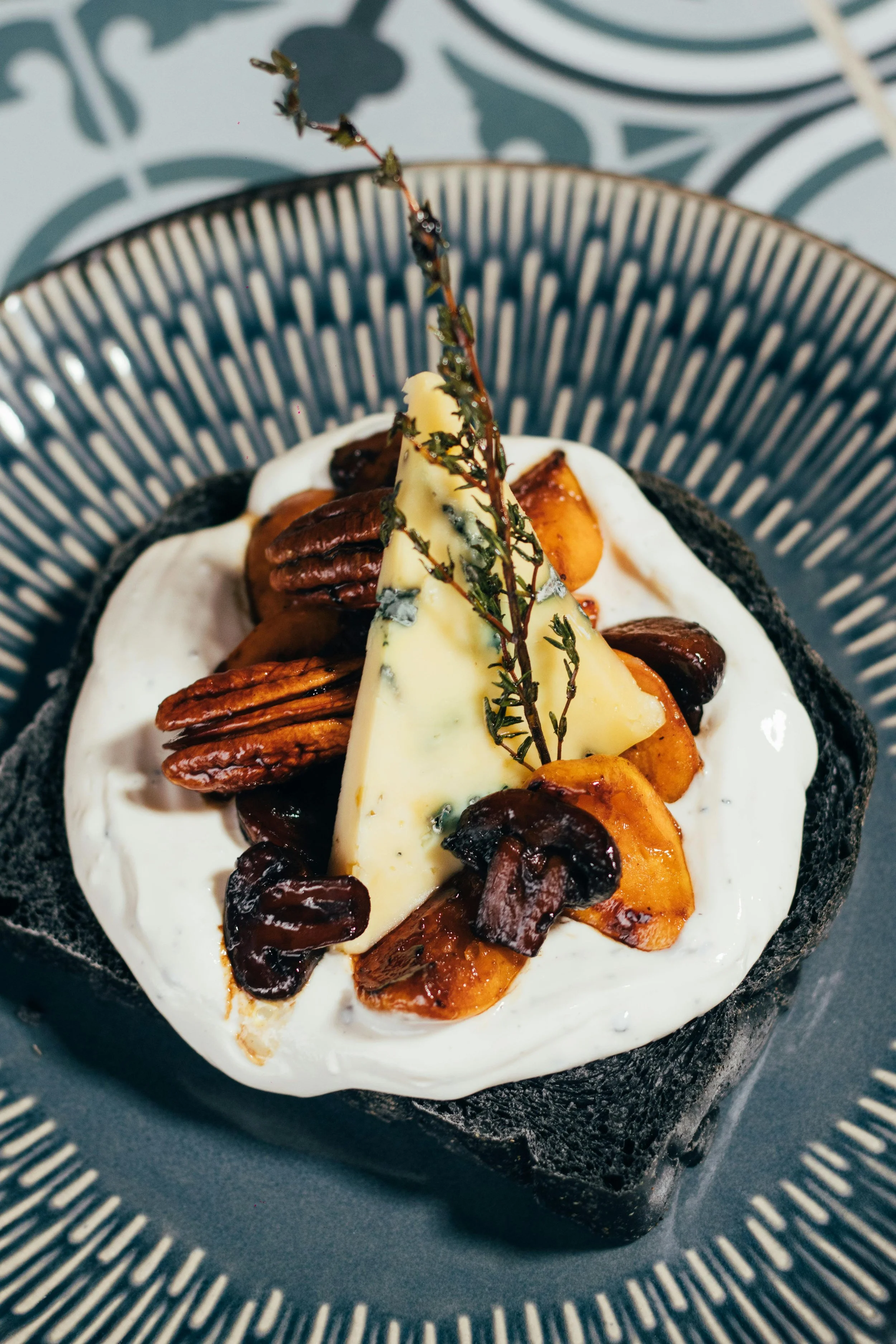
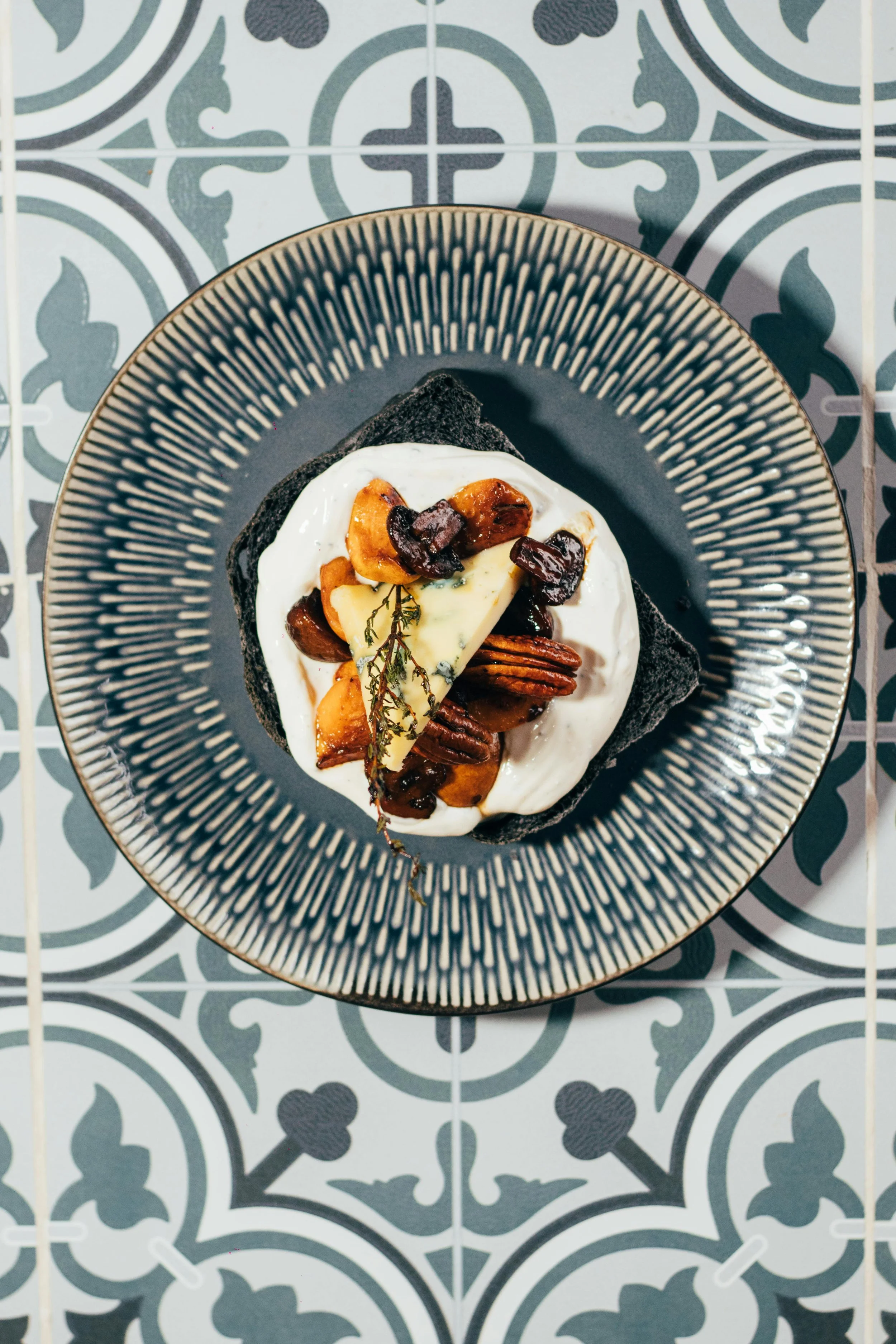
In this dish, cheese becomes the central pillar. It is elevated, literally and symbolically, resting at the heart of the plate. Surrounding it are complementary Imbolc elements that deepen the story.
Nuts such as pecans represent stored nourishment and endurance. They come from the previous year’s harvest and remind us that survival through winter was made possible by preparation and patience.
Dried fruits, including raisins, carry concentrated sweetness. They symbolize essence, preservation, and the life force held within what has been saved. Raisins, in particular, represent sweetness that has endured darkness. They remind us that pleasure, warmth, and nourishment still exist even at the coldest point of the year.
Roasted or gently caramelized fruit introduces warmth and soft fire energy. This reflects hearth, cooking, and transformation. Food becoming medicine through heat.
Herbs such as thyme or rosemary bring purification, protection, and vitality. Historically, these herbs were associated with cleansing spaces, strengthening the body, and encouraging resilience. Their presence adds a subtle green whisper of what is to come.
The base, a dark bread or toasted slice, grounds the dish. Bread at Imbolc symbolizes survival, hearth, and continuity. It honors the grain stores that carried families through winter and the human relationship with fire and flour.
Together, this dish tells an Imbolc story:
Milk returning.
Food transforming.
Sweetness preserved.
Fire warming.
Life continuing.
Imbolc meals are not meant to overwhelm.
They are meant to reassure.
They quietly say, you made it through.
They quietly say, something new is beginning.
In Kitchen Alchemy, this dish can be prepared as a devotional act. As you assemble it, you might reflect on what in your life is beginning to flow again. What nourishment is returning. What small hope is flickering.
This is not a feast for abundance.
It is a plate for continuity.
And that is sacred.
