

The Living Archive: Episode VI by Giulia Costantini | Essays
Some histories were never written down. They survived instead through bodies, gestures, remedies, rituals, and fragments of knowledge passed quietly from one generation to the next. In Episode VI, Giulia Costantini explores the living archive: the ancestral memory carried not on paper, but through practice.
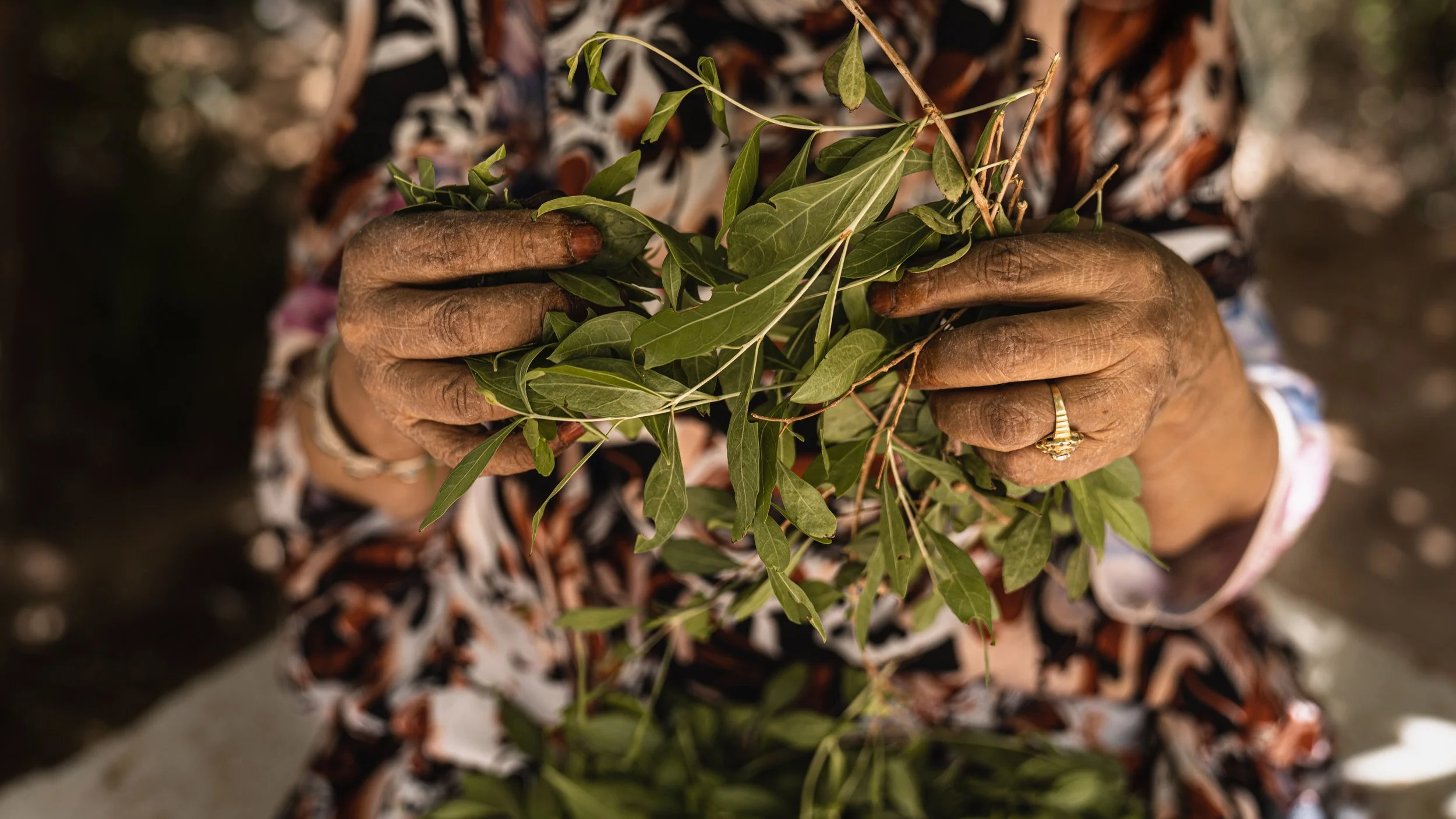
Costantini writes “Some archives live in bodies. They move through gestures repeated without remembering who first performed them. Through habits that feel older than the person who carries them. Through small practices that survive even when their meaning has partially faded. This is another kind of archive.” Image credit: YOUSSEF elbelghities
Some archives are built with paper. Shelves filled with documents, sealed records, catalogued testimonies. They promise permanence: a place where history can be preserved, consulted, verified.
But not every archive takes this form.
Some archives live in bodies. They move through gestures repeated without remembering who first performed them. Through habits that feel older than the person who carries them. Through small practices that survive even when their meaning has partially faded.
This is another kind of archive.
Not stored. Lived.
Much of what we know about the past relies on written documentation. Yet writing has never been the only way knowledge survives. For centuries, communities transmitted practical knowledge without books.
Healing methods, protective rituals, ways of interpreting illness or misfortune—all circulated through observation and repetition rather than through formal instruction.
A grandmother showing a child how to prepare an infusion. A neighbor explaining when a plant should be gathered. A gesture traced over a body in moments of fear.
These acts rarely entered official records. Yet they carried memory.
In many parts of Southern Italy, such practices persisted quietly even after the period of witch persecutions had ended. Figures known locally as macàre or masciare continued to prepare remedies and protective gestures within their communities. Their knowledge was rarely written down. It remained embedded in daily life.
Something similar could be found in Ciociaria, where small acts of protection against misfortune—especially those linked to the evil eye—were sometimes performed through simple, inherited gestures.
A prayer murmured almost automatically. Oil dropped into water to observe subtle movements. A hand placed gently on the forehead of a child.
These practices did not present themselves as archives. Yet they preserved something. Not precise historical information, but orientation. A way of responding to vulnerability, illness, or uncertainty.
The archive lived in the gesture itself.
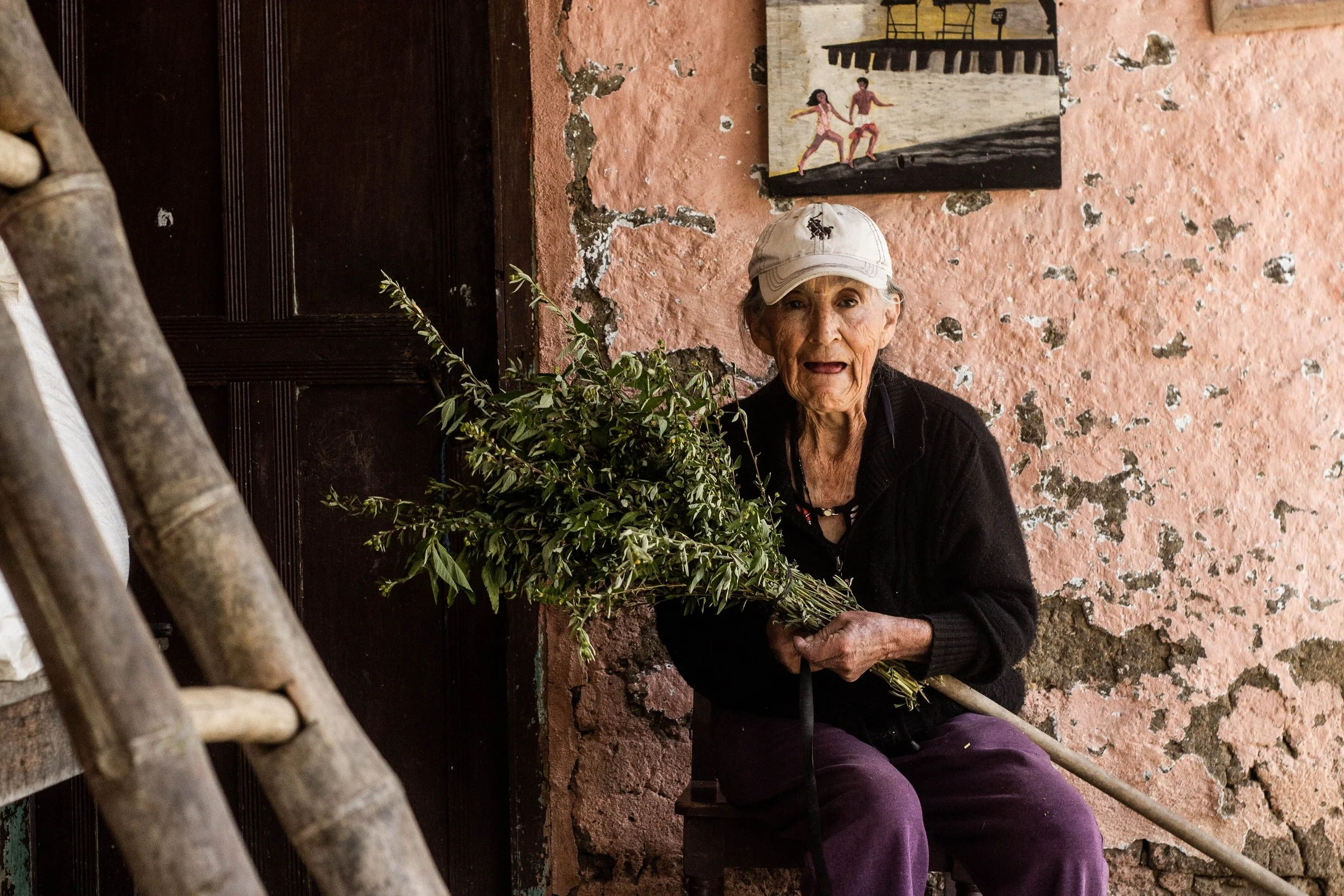
Image credit Daniel Carmago
Living archives rarely preserve knowledge in complete form. Over time, meanings shift. Words change. Rituals become simplified. Sometimes only fragments remain: a phrase whose origin is forgotten, a gesture repeated because it has always been repeated.
But fragments are still carriers.
They transmit the feeling that knowledge existed before us and continues after us. Even when explanations fade, the practices themselves keep moving through time. In this sense, memory is not always narrative.
Sometimes it is muscle memory.
The idea of a living archive challenges the way history is usually imagined. Traditional archives collect documents produced by institutions: courts, governments, churches, universities. They privilege what has been written, authorized, preserved intentionally.
But many forms of knowledge were never meant to enter those spaces. They circulated through bodies instead.
The midwife who knew how to assist a difficult birth. The healer who recognized which plants calmed inflammation. The woman who sensed that certain disturbances required protection rather than medicine.
These forms of knowledge were not catalogued.
They were practiced.
When persecution targeted these practices, it did not only attempt to destroy specific individuals. It attempted to interrupt transmission.
If women feared accusation, they might stop teaching certain gestures openly. Knowledge could retreat into smaller circles, passing only between trusted relatives or disappearing into silence.
Yet complete erasure rarely occurs.
Knowledge adapts. It becomes quieter, less visible, sometimes disguised as habit or superstition. It waits in the margins until conditions allow it to surface again.
Today, traces of these archives still appear in unexpected places. In a remedy remembered from childhood. In a protective phrase repeated without questioning it. In the instinct to gather certain plants at certain times of year.
These gestures rarely appear significant when viewed individually. But taken together, they form a network of memory that extends beyond written history.
They remind us that knowledge does not survive only through documentation.
It also survives through repetition.
To speak of a living archive is not to claim that ancient wisdom has been perfectly preserved. Much has been lost.
What remains are partial continuities: fragments of practices, echoes of older ways of understanding the body, the land, and the unseen relationships between them.
These fragments do not offer a complete reconstruction of the past. They offer something else.
They reveal that knowledge can exist outside institutional memory.
The daughters of the unwritten do not recover a finished archive waiting to be rediscovered. They inherit fragments. Gestures without clear origins. Stories that stop halfway. Instincts that feel older than personal experience.
From these fragments, they begin to listen again.
The living archive is not a place one can enter.
It is something one notices.
In the way a gesture feels familiar even when its meaning is uncertain. In the quiet persistence of practices that continue without needing explanation.
Perhaps the archive was never meant to be closed.
Perhaps it was always meant to remain in motion—carried by bodies that remember more than they can easily say.
— Giulia Costantini
Sources & References
This essay is informed by historical, cultural, and feminist scholarship on witchcraft persecutions, women's knowledge traditions, and Southern Italian folk practices.
Books
Serra, Pierluigi. Maghe e streghe d’Italia. Newton Compton Editori.
Academic & Research Texts
Federici, Silvia. La caccia alle streghe e la paura del potere delle donne. Accademia UNIDEE.
Forni, A. Donne, streghe e streghette nella letteratura per l’infanzia del secondo Novecento: dalla caccia alle streghe al femminismo magico. Quaderni di Intercultura.
Articles & Cultural Sources
Eleonora Derrico. O sottomesse o streghe: le donne dalla caccia alle streghe a oggi.
The Vision. Le femministe e la figura della strega.
The Vision. La caccia alle streghe.
Anare di Benevento e leggende della stregoneria femminile.
Donas de fuera.
Pink Magazine Italia. Historical articles on witchcraft and women's history.
Agoravox. Le masciare: streghe del Sud Italia.
Strega in Biblioteca. Streghe, maghe e donne ribelli.