Focus: An exploration of November 2026's astrological landscape, including Scorpio season, Mercury and Venus retrogrades, lunar cycles, and the symbolism of reflection and transformation.
November arrives beneath the influence of Scorpio, a zodiac sign historically associated with secrecy, transformation, intimacy, and the unseen forces that shape human experience. As autumn deepens across the Northern Hemisphere, the natural world offers its own reminder of impermanence. Leaves fall, daylight diminishes, and the landscape gradually withdraws into winter.
Within Western astrology, the celestial movements of November 2026 reflect a similar narrative of withdrawal and reconsideration.
Mercury and Venus are both retrograde as the month begins, creating an unusual overlap between two planetary cycles traditionally associated with communication, relationships, values, and personal understanding. A New Moon in Scorpio on November 9 introduces the symbolism of regeneration, while the planets' return to direct motion on November 13 marks an important transition within the month's astrological calendar.
Yet November's significance is not necessarily found in dramatic predictions or inevitable events. Its symbolism raises a more interesting question: What happens when we begin questioning the beliefs, relationships, and personal narratives we have taken for granted?
Scorpio Season: Beneath the Surface
Scorpio occupies a distinctive position in the Western zodiac. As a fixed water sign, it combines the emotional symbolism of water with the persistence traditionally attributed to fixed signs.
In classical astrology, Scorpio was ruled by Mars, connecting it to determination, conflict, and the struggle for survival. Modern Western astrologers frequently associate Scorpio with Pluto, a planet symbolically connected with power, hidden structures, and transformation.
These associations contribute to Scorpio's enduring reputation as one of the zodiac's most psychologically complex signs.
But reducing Scorpio to darkness or intensity overlooks the larger symbolism of its seasonal placement.
In the Northern Hemisphere, Scorpio season coincides with a period when much of the natural world prepares for dormancy. Plants redistribute resources, trees shed leaves, and the visible landscape changes dramatically.
What appears to be disappearance is often part of a continuing biological process.
Astrologically, this seasonal imagery has become a metaphor for examining what exists beneath appearances.
Scorpio asks us to consider the motivations behind our decisions, the attachments we maintain, and the emotional histories that continue influencing our behavior.
Its symbolism is not exclusively about endings. It is about recognizing that transformation often requires confronting what we would prefer to leave undisturbed.
Mercury Retrograde: The Language of Reflection
Mercury began its retrograde period in Scorpio on October 24 and remains retrograde until November 13, 2026.
Astronomically, retrograde motion is an apparent reversal in a planet's movement against the background stars, produced by the changing positions and orbital motions of Earth and the other planets. Mercury does not physically reverse its orbit.
In astrology, however, this apparent backward movement has acquired symbolic significance.
Mercury is traditionally associated with communication, reasoning, commerce, information, and the exchange of ideas. During retrograde periods, astrologers often emphasize reviewing information, reconsidering decisions, and examining unresolved conversations.
With Mercury retrograde in Scorpio, the symbolic emphasis shifts toward subjects that are private, emotionally significant, or difficult to articulate.
This might encourage reflection on how much of our communication is shaped by what remains unsaid.
We frequently assume that honesty means sharing information. Yet meaningful communication also requires understanding our own motivations.
Why do certain subjects make us defensive? Why do familiar disagreements repeat themselves? How often do we mistake assumptions for knowledge?
Rather than approaching Mercury retrograde as a warning that technology will fail or conversations will inevitably deteriorate, we can examine it as an opportunity to reconsider how we interpret information.
The most useful question may not be whether something will go wrong, but whether we are willing to recognize something we previously overlooked.
Venus Retrograde: Reconsidering What We Value
Venus began its retrograde cycle on October 3 in Scorpio before returning to Libra on October 25. It remains retrograde until November 13.
In traditional astrology, Venus governs relationships, beauty, pleasure, attraction, and the things people consider valuable.
Its retrograde periods are often interpreted as invitations to examine those values more carefully.
This particular cycle is especially interesting because it connects Scorpio and Libra, two signs associated with different dimensions of human relationships.
Libra emphasizes cooperation, reciprocity, and the negotiation of balance. Scorpio introduces questions about vulnerability, trust, attachment, and emotional depth.
Together, their symbolism encourages an examination of the difference between maintaining harmony and experiencing genuine connection.
A relationship can appear peaceful while remaining emotionally distant. Similarly, intense emotional attachment does not necessarily indicate mutual understanding or compatibility.
Venus retrograde offers a symbolic framework for considering these distinctions.
The same questions can extend beyond romantic relationships.
What do we consider beautiful, and who taught us to recognize beauty in that form? Which possessions carry genuine personal significance? How much of our sense of worth depends on the approval of others?
Venus is not simply the planet of romance within astrological tradition. It also represents the relationship we establish with value itself.
And value, unlike price, cannot always be measured.
November 9: The New Moon in Scorpio
On November 9, the Sun and Moon meet in Scorpio, beginning a new lunar cycle.
A New Moon occurs astronomically when the Moon is positioned near the same direction as the Sun from Earth's perspective. Its Earth-facing illuminated portion is largely hidden from view.
Across many spiritual and astrological traditions, the New Moon has become associated with beginnings, contemplation, and the establishment of intentions.
The Scorpio New Moon introduces a particularly introspective interpretation of this symbolism.
Rather than emphasizing visible achievement, it invites consideration of the underlying conditions necessary for meaningful change.
There is an important distinction between declaring a new beginning and understanding why one is necessary.
People frequently pursue transformation through external changes: a new environment, a different relationship, an altered appearance, or a revised routine.
But external changes do not automatically resolve the beliefs and behaviors that shaped previous experiences.
In symbolic terms, the Scorpio New Moon asks us to investigate the roots before expecting a different harvest.
The days surrounding November 9 may therefore serve as an occasion for journaling, private reflection, or reconsidering long-standing intentions.
These practices do not depend upon believing that the Moon directly influences human decisions. Their value can also be found in the deliberate attention we give to our lives.
November 13: Mercury and Venus Return to Direct Motion
One of the month's most notable astrological dates arrives on November 13, when both Mercury and Venus station direct.
A planetary station is the point at which a planet's apparent movement relative to the background stars slows before changing direction as observed from Earth.
Astrologically, stations are often interpreted as periods of transition.
Mercury's return to direct motion is traditionally associated with greater clarity in communication and planning. Venus turning direct represents a symbolic movement from evaluating relationships and values toward applying what has been learned.
However, neither astronomical event guarantees that confusion will disappear or that personal circumstances will suddenly improve.
Human relationships and decisions rarely resolve themselves according to a celestial timetable.
The symbolism becomes more useful when understood as a reminder that reflection should eventually inform action.
If the first half of November encourages examination, the second half asks what we intend to do with that understanding.
Some realizations require conversations. Others demand boundaries, revised priorities, or the willingness to abandon expectations that no longer correspond with reality.
Recognition alone does not create change.
Our response to what we recognize is what gives transformation substance.
November 24: The Full Moon in Gemini
As November progresses, the Sun enters Sagittarius around November 22, shifting the Western astrological emphasis from Scorpio's introspection toward exploration, philosophical inquiry, and broader perspectives.
Two days later, on November 24, the Full Moon occurs in Gemini.
In astrology, a Full Moon takes place when the Sun and Moon occupy opposite positions in the zodiac. This opposition is traditionally interpreted as a moment of culmination, contrast, or heightened awareness.
Gemini, ruled by Mercury, is associated with language, curiosity, adaptability, and the gathering of information.
The opposition between a Gemini Moon and a Sagittarius Sun introduces a familiar intellectual tension: the relationship between what we know and what we believe.
Gemini gathers possibilities. Sagittarius seeks meaning.
One asks questions; the other attempts to construct a philosophy from the answers.
This distinction offers a useful opportunity to examine how personal convictions develop.
Information is not necessarily understanding, just as certainty does not necessarily indicate truth.
After a month characterized by retrograde symbolism and introspection, the Gemini Full Moon presents a fitting conclusion: the possibility of expressing what has been reconsidered, while remaining open to further learning.
The Difference Between Celestial Movement and Personal Meaning
Astrology has occupied a complex position throughout human history, functioning at different times as a system of divination, philosophical interpretation, calendrical organization, and cultural symbolism.
Its historical influence is undeniable. Its claims about planetary influence on personality or human events, however, have not been established through reliable scientific evidence.
Recognizing this distinction does not prevent us from studying astrology as a meaningful cultural tradition.
Celestial events can provide a framework for reflection without being treated as mechanisms that control human behavior.
A retrograde planet does not force us to reconsider our relationships. A New Moon does not compel personal transformation.
But the symbolic language surrounding these events may encourage questions that we would otherwise avoid.
The value lies not in surrendering responsibility to the heavens, but in examining what their stories reveal about human experience.
November's Invitation
November 2026 presents an intriguing astrological sequence.
It begins with two personal planets appearing to move backward, introduces a New Moon associated with transformation, and gradually transitions toward renewed movement and intellectual exploration.
Within Western astrological symbolism, the pattern resembles a journey from examination to reconsideration, and finally toward expression.
Yet the most important part of that journey does not take place among the planets.
It occurs in the choices we make, the beliefs we challenge, and the willingness to approach familiar experiences with a different understanding.
The heavens have inspired human beings to search for meaning for thousands of years.
Perhaps their greatest enduring influence is not their ability to tell us what will happen next, but their capacity to remind us that there is always more to discover.
The stars may provide the symbolism, but the interpretation, and the responsibility for what comes next, remain ours.
Editorial research: Planetary retrograde dates and Scorpio/Gemini lunations were checked against the 2026 ephemeris and monthly calendars from Cafe Astrology and Time and Date
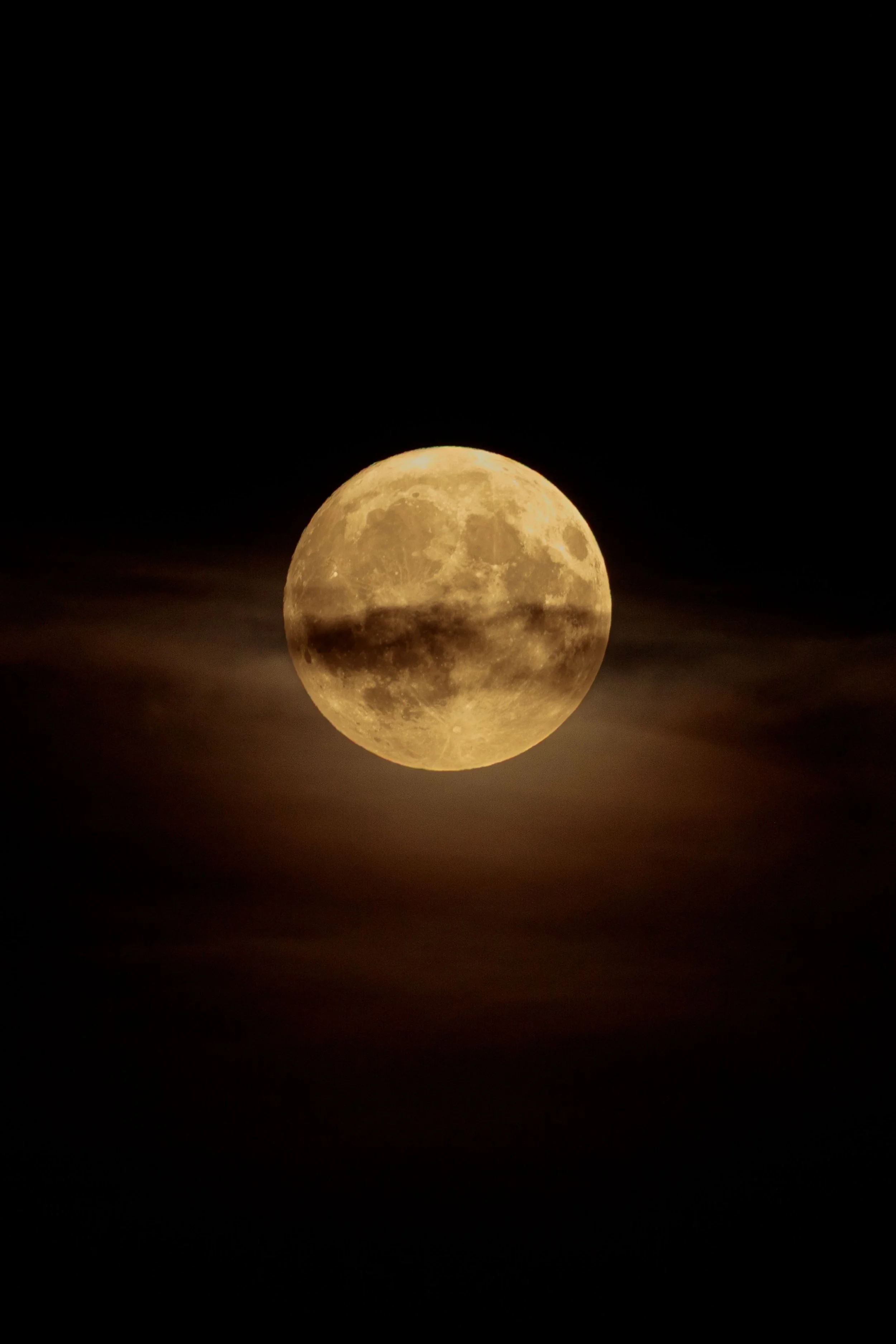
Photo credit: Benjamin Alanis Ibarra