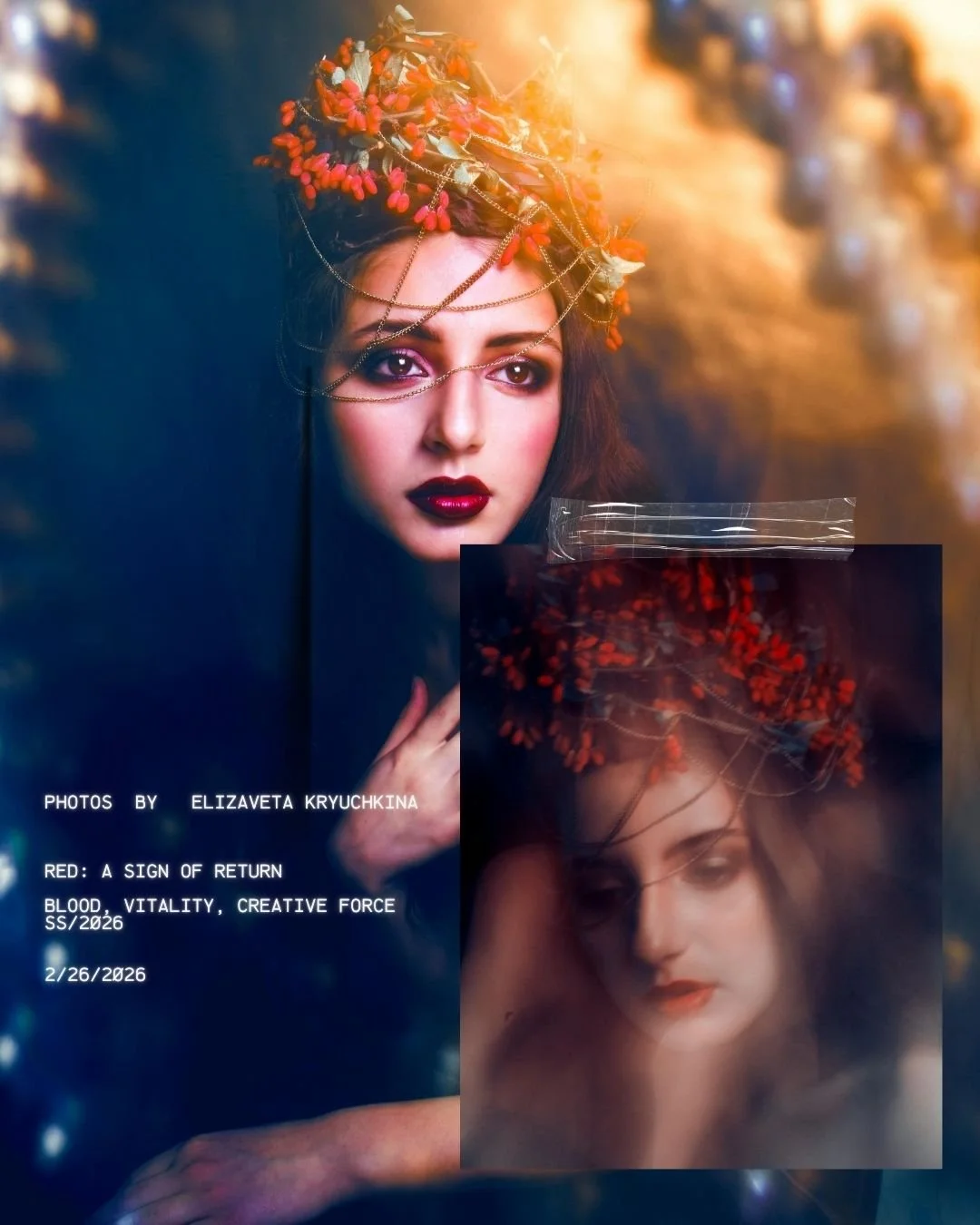
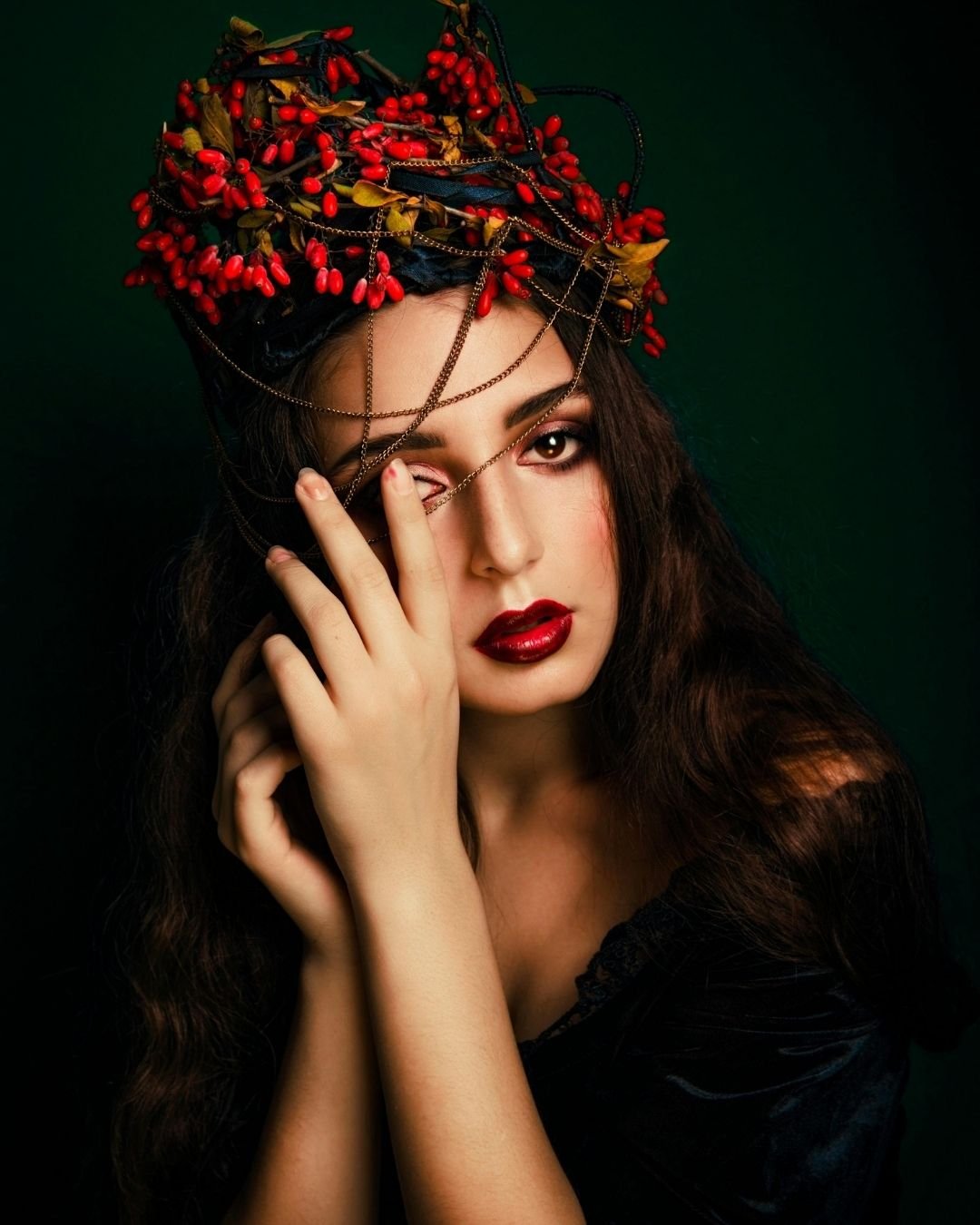
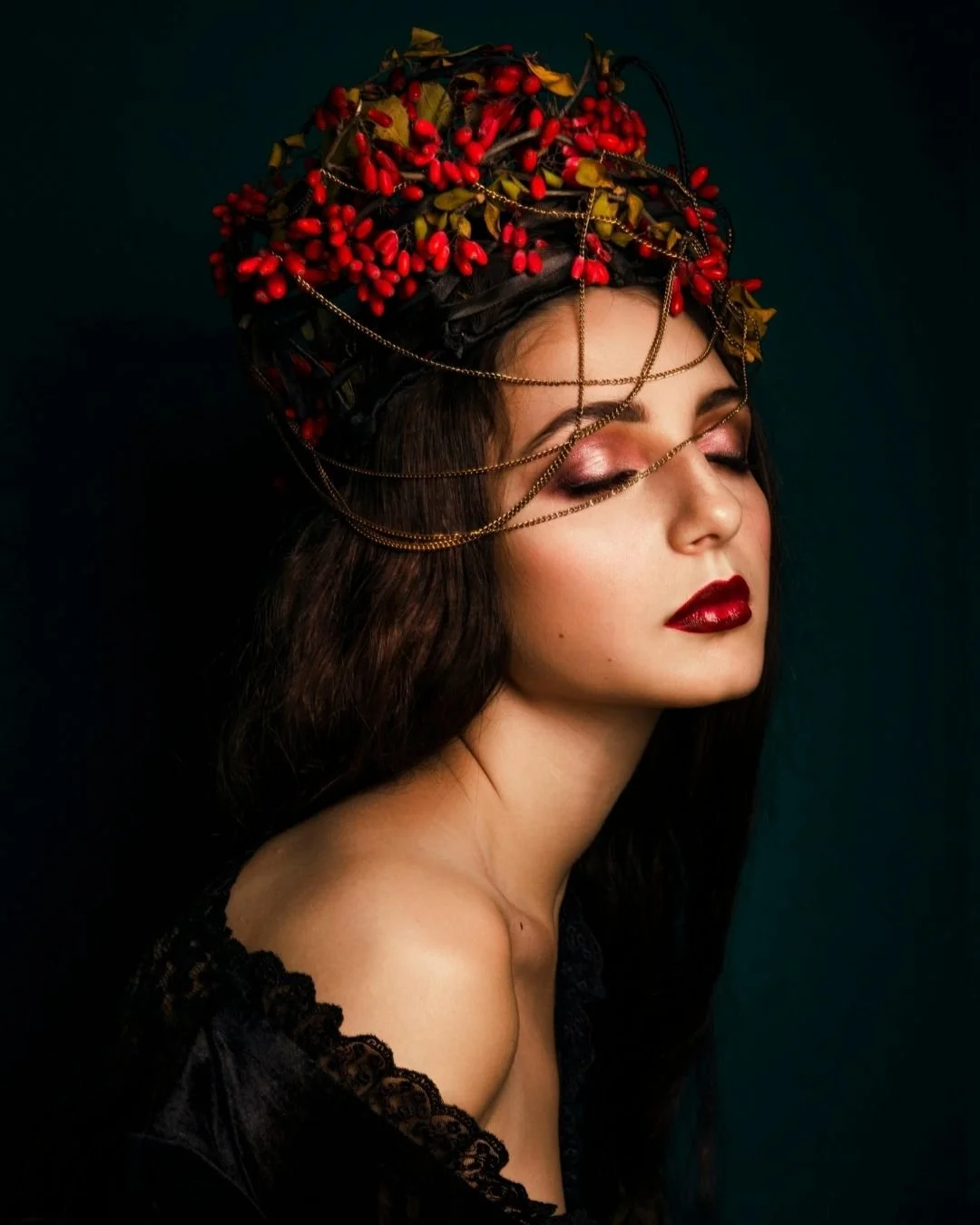
Kryuchkina’s subject does not present herself as fragile, nor as triumphant. She exists in composure. Her stillness carries authority. The darkness surrounding her does not diminish her presence. It defines the conditions through which she has passed. There is no urgency in her expression. Instead, there is an unmistakable sense of self possession. She appears neither at the beginning nor at the culmination, but in emergence.
This distinction is essential to understanding the psychological atmosphere of late February. It is a period that resists spectacle. Change does not announce itself dramatically. It reveals itself gradually. The days lengthen by minutes. The body begins to respond before the mind fully registers the shift. Creative momentum, long held in suspension, begins to move again. Kryuchkina’s use of red reflects this moment with precision. It symbolizes not completion, but activation.
Her work operates within restraint. She does not rely on excess or visual density to command attention. Instead, she constructs images that hold the viewer in a state of quiet recognition. The crown of red berries becomes both symbolic and structural. It frames the subject not as decoration, but as someone who has crossed through a period of dormancy and remains intact.
February 26 exists precisely within this threshold. It is a point within the seasonal cycle where the return of light is no longer theoretical. It has begun. The presence of red within Kryuchkina’s work mirrors this transition. It reflects warmth returning to the system. Circulation restoring itself. Creative force preparing to move outward once more.
What Kryuchkina ultimately captures is not transformation itself, but the moment that makes transformation inevitable. Her images remind us that emergence is not defined by spectacle, but by continuity. By the quiet certainty that life persists, even when it is not yet fully visible.
In this way, her work becomes inseparable from the psychological and seasonal landscape of late February. It does not illustrate the season. It embodies it.