

Last Days to Witness Cunning Folk: Before the Door Closes
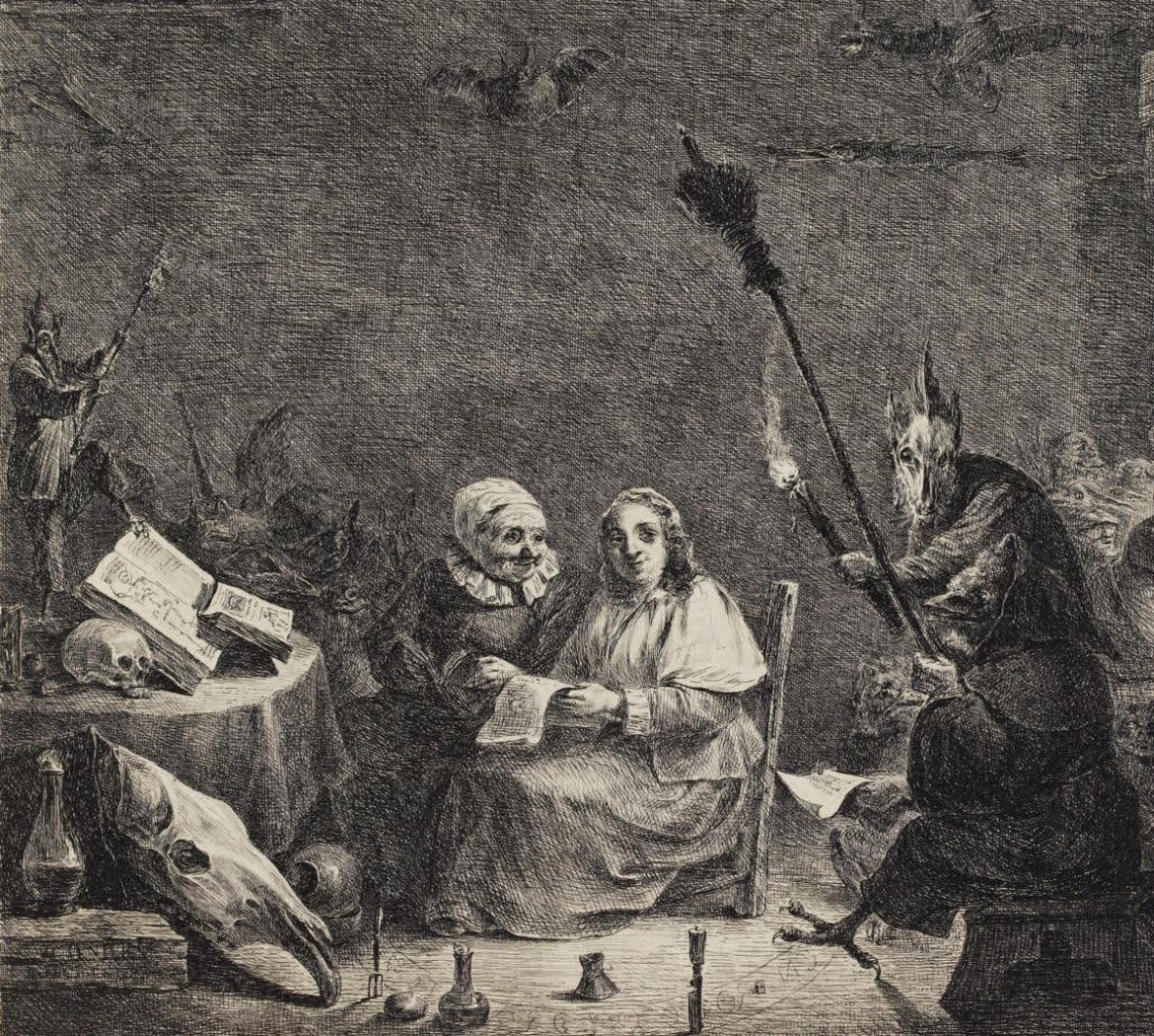
Image credit: Dominique Vivant Denon (French, 1747–1825), after David Teniers II (Flemish, 1610–1690), A Coven of Witches (detail), 18th century. Etching. Cantor Arts Center, Stanford University. Gift of William Drummond. See full exhibit at the Cantor Arts Center.
Time is narrowing around Cunning Folk.
Exhibitions like this do not exist permanently. They appear for a moment, gather objects that have survived centuries, and then quietly disperse again. What remains afterward is memory. Documentation. Absence. With its closing date set for February 22, the exhibition has entered its final days, and with it, the last opportunity to stand in physical proximity to the lives and practices it reveals.
Cunning Folk is not simply an exhibition about magic. It is an exhibition about people who lived at the edge of certainty. Individuals who carried knowledge that could not be formalized or easily explained. They were consulted in moments of illness, loss, fear, and hope. Their work existed in the space between what could be seen and what could only be felt.
What makes the closing of an exhibition like this significant is not only the removal of the objects, but the closing of the encounter itself.
To view these artifacts in person is to experience scale, texture, and presence in a way that cannot be replicated digitally. A folded charm reveals the pressure of the hand that created it. A worn amulet reflects the years it spent against someone’s body. These details resist translation. They require physical witness.
There is also something deeper happening in the act of viewing. Exhibitions like Cunning Folk restore legitimacy to forms of knowledge that were historically dismissed, feared, or misunderstood. They challenge the narrative that magic existed only as superstition. Instead, they present it as a functional system through which people understood vulnerability, protection, and influence.
As the exhibition prepares to close, the urgency is not manufactured. It is inherent.
Once the objects return to archives and collections, they resume their distance from public life. Access becomes limited again. The opportunity to stand in front of them, to observe them directly, disappears.
This is the nature of temporary exhibitions. They open a door that has otherwise remained closed. And when they close, they do so completely.
For those who feel drawn to the history of folk magic, ritual practice, and the individuals who quietly shaped their communities through unseen means, this is the final moment to enter that space. To stand within it. To witness it firsthand.
Because soon, it will no longer be available to witness at all.
